
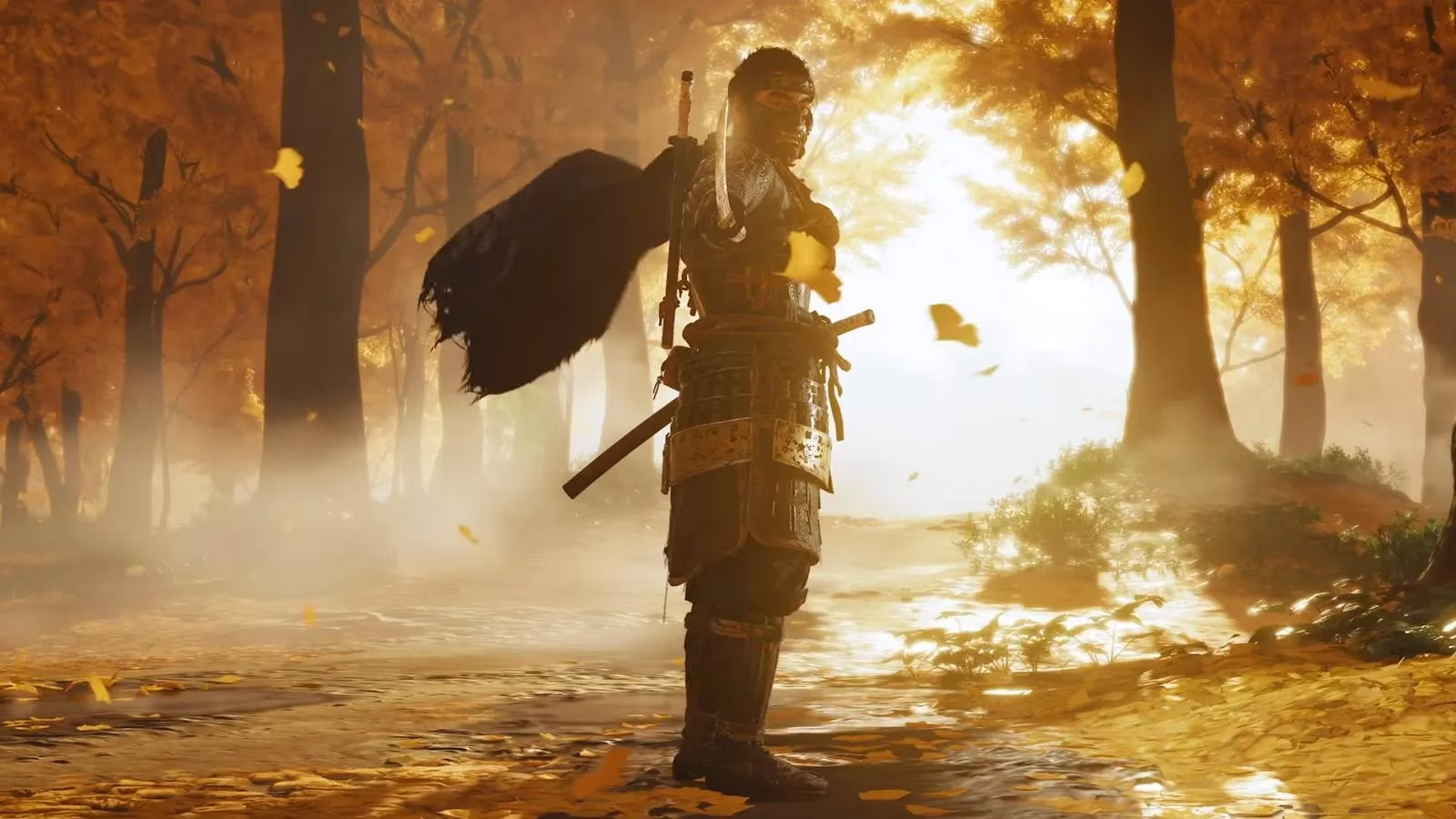
Mark had been chasing the dragon\u2014or rather, the ghost\u2014ever since the credits rolled on Ghost of Tsushima. The island of Tsushima had left a deep impression: those golden fields of pampas grass swaying under a blood-red sun, the crisp \u201cching\u201d of a perfect parry, and Jin Sakai\u2019s quiet defiance against a crumbling samurai code. Two years on, in 2026, and despite all the whispers and industry scuttlebutt, Ghost of Tsushima 2 remained a spectre. The itch was real, and it was becoming unbearable.
Scrolling through a winter Steam sale, Mark\u2019s eyes landed on a thumbnail he\u2019d skipped a dozen times before: a lone swordsman with a wide-brimmed hat, poised on a windswept cliff. The title read The Wind Road. The screenshots promised Silk Road deserts, ancient Chinese strongholds, and martial-arts combat that looked suspiciously like a love letter to his favourite PlayStation exclusive. \u201cWhat the heck,\u201d he muttered, downloading the demo. \u201cIt\u2019s not Japan, but it\u2019s got vibes.\u201d
Launched a few years back by Phoenix Games, The Wind Road is an action-RPG that wears its influences on its sleeve while carving out a distinct identity of its own. The game unfolds during a fictionalised chapter of Chinese history, when the legendary Silk Road\u2014the artery of commerce that once pumped goods from Chang\u2019an to Constantinople\u2014is under siege. A clan of bandits called the Barbarians of the Grey Wolf has overrun the strategic town of Longyou, turning the vibrant trade route into a bloodstained gauntlet. As a nameless warrior trained in the old ways of martial arts, the player must cut, parry, and qi-step their way through the bandit horde to restore peace.
Right out of the gate, the parallels with Ghost of Tsushima are impossible to ignore. Both games plant you firmly in a picturesque historical Asia, swapping out photorealistic cherry blossoms for sprawling desert oases and towering Buddhist grottoes. The painterly sunsets and howling winds could give Sucker Punch\u2019s art team a run for their money. But dig a little deeper, and The Wind Road starts feeling more like its own beast\u2014one that\u2019s less a cinematic samurai opera and more a gritty kung-fu scrap.
Where Ghost of Tsushima gave Jin a single katana and a handful of ghost tools, The Wind Road hands you an arsenal that would make a Shaolin master blush. Straight swords, broadswords, spears, and even bare-fisted boxing are all on the menu, each with unique move-sets and upgrade trees. Combat is a dance of stamina management, precise dodging, and unleashing devastating special attacks, leaning harder into Soulslike territory than the forgiving duels of Tsushima. You can also swap between first-person and third-person cameras on the fly\u2014a feature that adds a raw, visceral crunch to close-quarters encounters. The RPG elements are far more intrusive, too, with gear stats, elemental resistances, and skill crafting that demand a min-maxer\u2019s eye.
But it\u2019s not all sunshine and sand-dunes. The game\u2019s rough edges are immediately apparent, like a sword that hasn\u2019t been properly polished. The UI feels like it was stitched together by a committee that had never actually met, and the English localization\u2026 well, let\u2019s just say it\u2019s \u201cso bad it\u2019s good\u201d territory. Characters spout philosophical gibberish, and tutorial pop-ups occasionally vanish into the ether. For anyone accustomed to the buttery-smooth finish of a first-party PlayStation title, this jank can be a dealbreaker. The absence of a proper stealth system is another sore point. You can\u2019t creep through enemy camps like the Ghost; you\u2019re forced to walk right up and announce yourself with a flying kick. For Mark, who loved the quiet tension of chain assassinations, this felt like showing up to a sushi bar only to be handed a steak.
And yet, the heart of The Wind Road beats loud enough to drown out the rough spots. The side quests\u2014often tucked away in crumbling temples or whispered about by drunken caravan masters\u2014spin a web of human drama that feels grounded and surprisingly moving. The Silk Road itself becomes a character, a thread that connects not just civilizations but personal stories of loss, greed, and redemption. There\u2019s a moment when the warrior stands atop a dune, the wind carving patterns in the sand, and the sheer scale of the world hits you. That sense of being a tiny blade in a vast, unforgiving landscape is the same magic that made Tsushima unforgettable.
For PC gamers who never got to unsheathe Jin\u2019s katana, The Wind Road is an absolute no-brainer. It\u2019s also a solid holdover for anyone tapping their foot waiting for Rise of the Ronin or that ever-elusive Ghost sequel. The best part? The demo is still up on Steam, so you can waltz in, crack some bandit skulls, and see if the jank is just flavour. Mark ended up buying the full game halfway through a boss fight against a snarling Grey Wolf chieftain. As the final blow landed and the screen flooded with crimson and gold, he let out a satisfied sigh. It wasn\u2019t Tsushima, not by a long shot. But for now, it was exactly what he needed\u2014a rough, beautiful, and utterly charming road to ride.
Comments