
In 2024, a revelation from one of gaming's most revered architects sent ripples through the community. Hironobu Sakaguchi, the legendary creator of the Final Fantasy series, shared a personal preference that surprised many: his favorite PlayStation game of all time is not from the iconic RPG franchise he built, but the action-adventure epic, Ghost of Tsushima. This endorsement, coming from a figure whose name is synonymous with genre-defining storytelling and world-building, adds a profound layer of appreciation for Sucker Punch Productions' 2020 masterpiece. While Sakaguchi's legacy is forever intertwined with Final Fantasy's journey from Nintendo cartridges to PlayStation discs, his highest personal praise is reserved for a title that masterfully wove stealth, narrative, and a living world into a singular, cohesive experience.
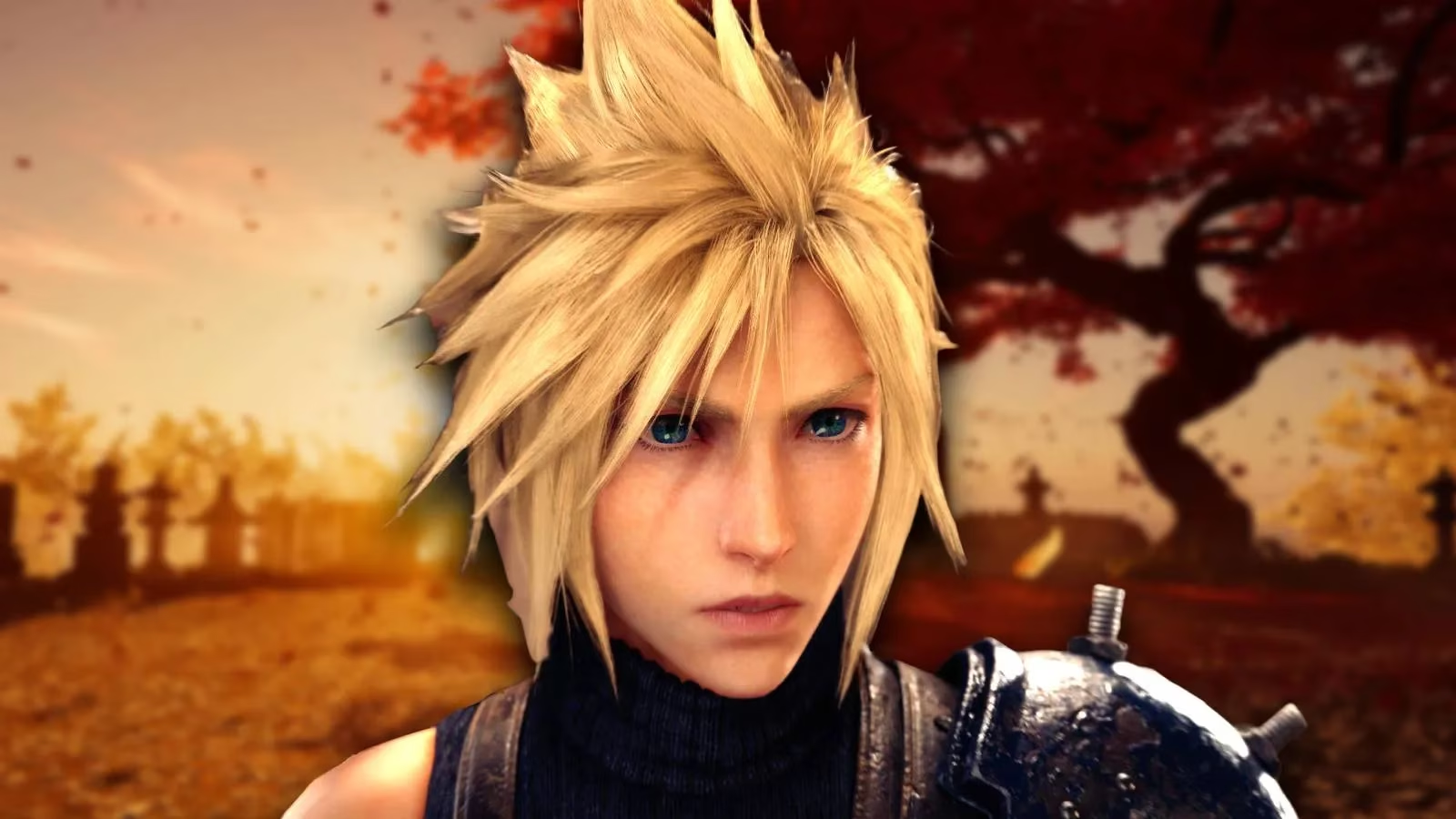
The declaration was made not in a grand keynote, but in a thoughtful email response featured on the PlayStation Blog, later highlighted by industry commentator Genki. Sakaguchi, speaking from his perspective as a developer, was unequivocal. He called Ghost of Tsushima his "favorite PlayStation game of all time." It's a significant statement, especially considering his own monumental contributions to the platform. On the same podcast, he readily acknowledged the seismic impact of Final Fantasy VII when thinking of PlayStation and celebrated the ongoing success of Final Fantasy XIV. Yet, for pure personal enjoyment and admiration as a creator, Ghost of Tsushima stood alone at the pinnacle.
This wasn't just casual praise; it was a detailed appreciation of craft. Sakaguchi specifically highlighted the game's remarkable cohesion. He felt that all its elements—the smooth action, the thrill of stealth, the well-rounded narrative, and the stunning, alive world—shared a common, unifying philosophy. This harmony is what elevated the experience for him. "I felt that all these elements share a common philosophy which made me enjoy and appreciate the game even more," Sakaguchi explained. For a visionary known for building intricate, engaging worlds in games like Blue Dragon, The Last Story, and Fantasian, this comment underscores Ghost of Tsushima's exceptional execution.
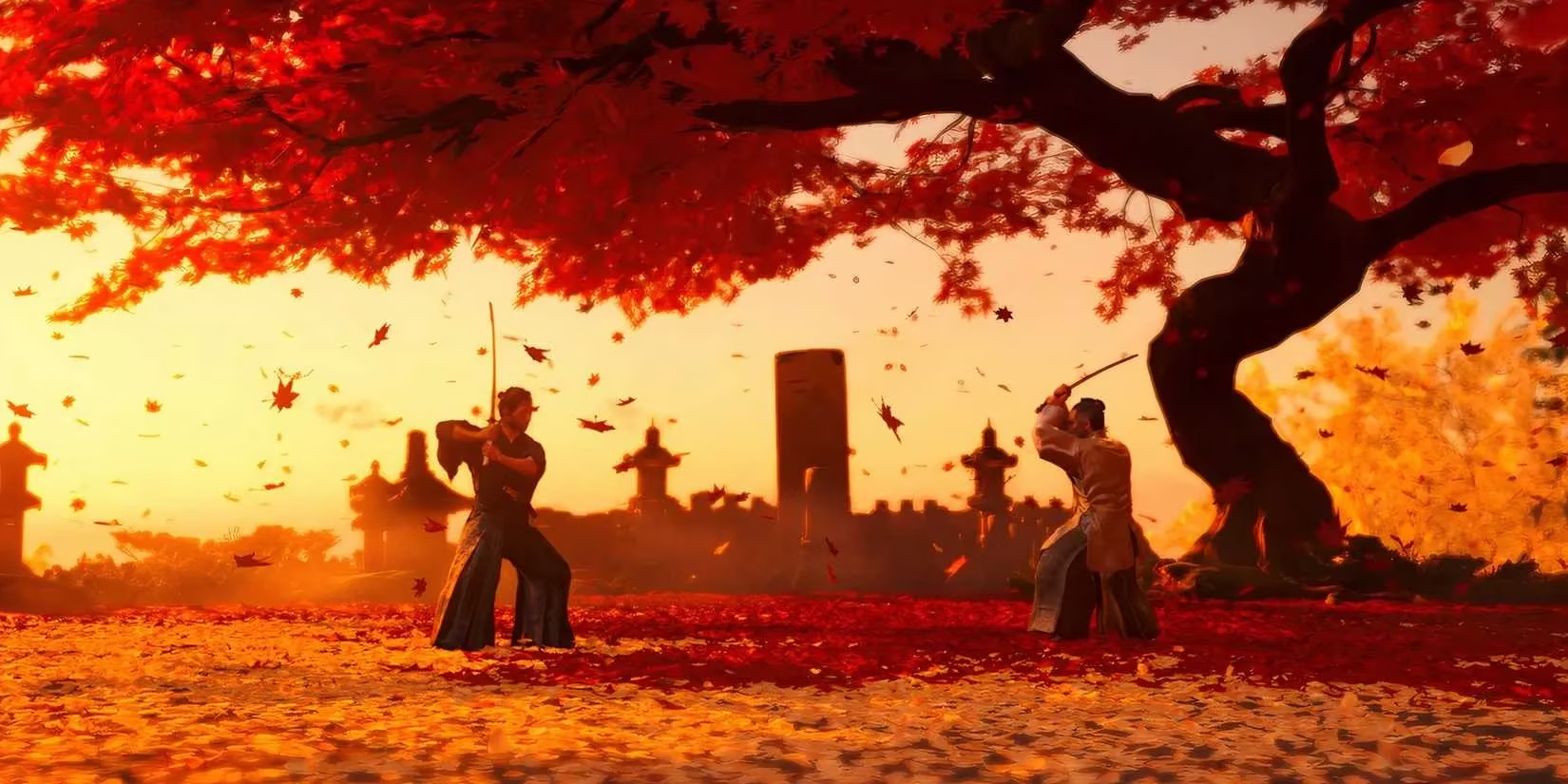
Ghost of Tsushima was already a critical and commercial success, lauded for its respectful portrayal of feudal Japan and polished gameplay. However, Sakaguchi's endorsement transcends typical positive reviews. It is a masterclass-level recognition of design integrity. In an era where open-world games can sometimes feel like a checklist of disparate features, Ghost of Tsushima's elegance stood out. Sakaguchi's praise zeroes in on this distinction. The game's famous mechanics, like using the wind to guide players instead of intrusive on-screen markers, aren't just neat tricks; they are manifestations of that "common philosophy"—a commitment to immersion and a seamless blend of form and function.
Let's break down what makes this praise so resonant:
🎯 From a Master World-Builder: Sakaguchi's entire career is built on creating beloved, immersive worlds. His praise for Tsushima's "stunning world that feels so alive" carries immense weight.
⚔️ Appreciation for Elegant Design: The game avoids feature bloat. Its systems—combat, exploration, stealth—are simple on the surface but deeply interconnected, creating the cohesive whole Sakaguchi admired.
🎭 Narrative and Gameplay Synergy: The story of Jin Sakai's transformation from honorable samurai to the stealthy "Ghost" is perfectly mirrored in the gameplay mechanics, a synergy a storyteller like Sakaguchi would deeply value.
As we look at the gaming landscape in 2026, Sakaguchi's words remain a powerful testament to timeless design principles. While personal favorites will always vary—and many might still champion Final Fantasy VII as the definitive PlayStation experience—there is something uniquely compelling about the creator of one legendary series bestowing his highest honor upon another. For the developers at Sucker Punch, this praise from a peer of Sakaguchi's stature is undoubtedly priceless. It reinforces that Ghost of Tsushima succeeded not just as a thrilling game, but as a thoughtfully crafted piece of interactive art where every element sings in harmony. In the end, Sakaguchi's favorite PlayStation game reminds us that beyond franchises and genres, the most enduring experiences are those built with a singular, cohesive vision.
Comments