
Open-world games have become a staple of the gaming industry, offering players vast landscapes to explore and endless adventures to undertake. From the rooftop-jumping antics of Assassin's Creed to the stealthy espionage of Metal Gear Solid 5, the genre has evolved dramatically since its humble beginnings. As of 2026, open-world titles continue to dominate sales charts and captivate audiences, but their journey to this point is a fascinating tale of innovation and experimentation. It's been a wild ride. Gamers today might take for granted the freedom to roam freely, but it took decades of technological leaps and creative risks to get here.
The Dawn of Open Worlds
The concept of an open world can be traced back to 1970 with Sega's Jet Rocket, an arcade game that allowed players to fly freely and shoot at objects. It was a rudimentary experience by today's standards, but it laid the groundwork for future exploration. Jet Rocket also served as a precursor to flight simulators. A decade later, Elite (1984) pushed boundaries with 3D graphics and open-ended gameplay, proving that space could be a playground. These early titles showed that players craved more than linear paths; they wanted to chart their own course.
The Legend of Zelda and the 1980s
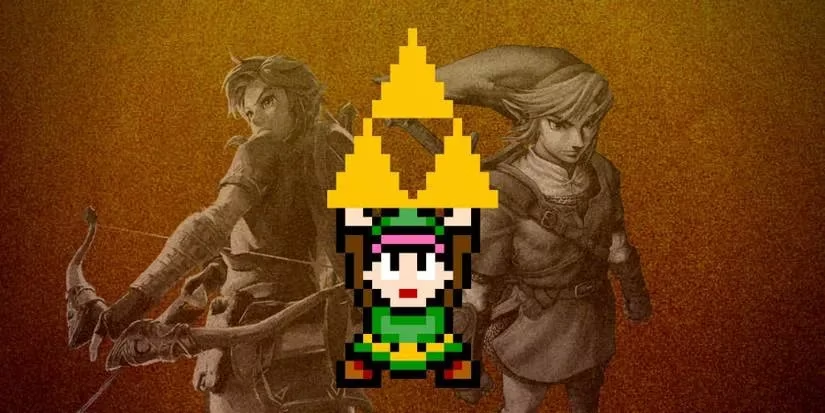
In 1986, The Legend of Zelda arrived and redefined action-adventure games. Its top-down perspective and non-linear exploration set a new standard. The series would go on to revolutionize the genre repeatedly, from Ocarina of Time to Breath of the Wild. Other 1980s titles like Wasteland (1988) and Turbo Esprit (1986) contributed to the evolution, though their blocky graphics and dated mechanics might make modern gamers cringe. Still, they were essential steps.
GTA 3 and the 3D Revolution
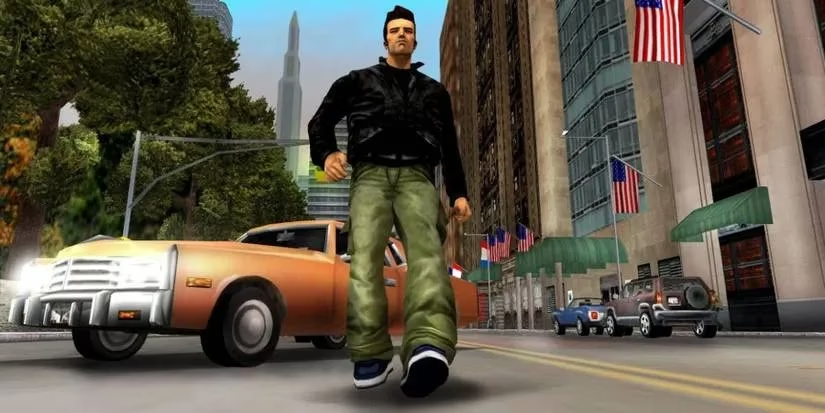
The Grand Theft Auto series, created by David Jones and Mike Dailly, began with a top-down view. But Grand Theft Auto 3 in 2001 changed everything. It offered a fully 3D world, unprecedented freedom, and a level of realism that stunned players. The game's controversial content sparked debates about violence in video games, but its impact was undeniable. GTA 3 inspired a wave of clones like Saints Row, True Crime, and Watch Dogs, making the urban open-world formula ubiquitous.
The Sandbox and Endless Worlds
The sandbox subgenre took open-world gaming to new heights, allowing players to mold worlds to their liking. Roblox and Minecraft, the bestselling game of all time, exemplify this appeal. Meanwhile, procedural generation enabled vast universes like No Man's Sky (2016), with billions of planets to explore. Though some critics found the exploration monotonous, it amassed a dedicated fan base. The sheer scale of these worlds is a testament to technological progress.
The Fatigue and the "Less is More" Approach
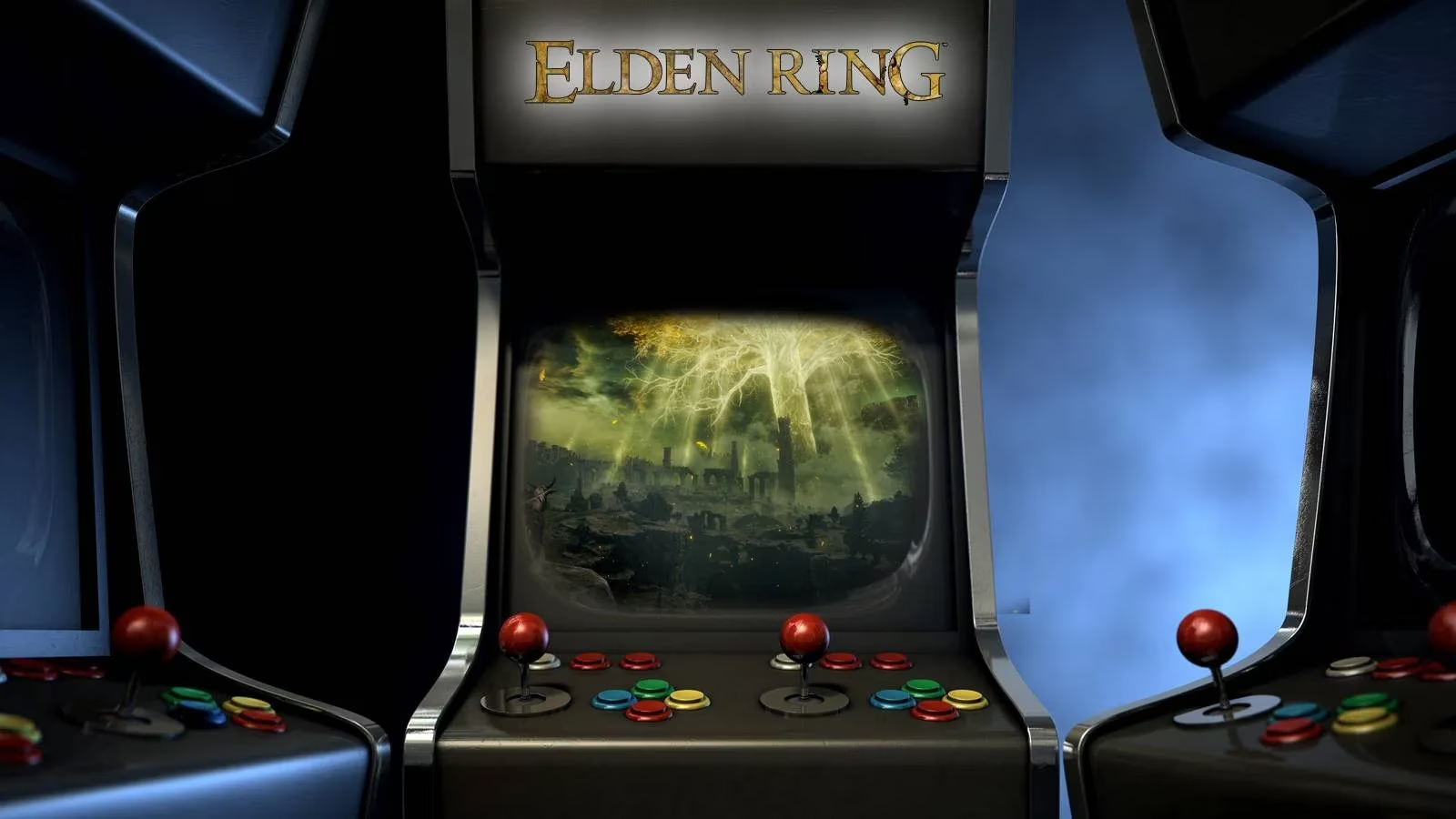
As open-world games proliferated, a sense of fatigue set in. Many modern titles, especially those from Ubisoft, feature cluttered HUDs and maps littered with markers. While this provides clear objectives, it can strip away the joy of discovery. Gamers know the feeling: instead of exploring, they're just ticking off icons. However, some games have pushed back. The Legend of Zelda: Breath of the Wild and Elden Ring (2022) embraced minimal HUDs and left players to get lost. Elden Ring proved that less hand-holding can be liberating. This design philosophy, combined with greater realism and interactivity, may define the future.
The Future of Open-World Gaming
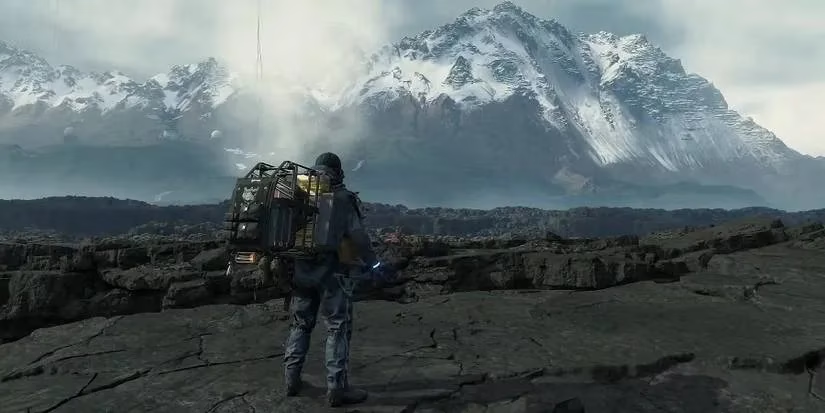
As of 2026, the genre shows no signs of slowing down. Games like Ghost of Tsushima and Horizon Forbidden West demonstrate that the modern formula, when executed well, still captivates. Meanwhile, titles like Death Stranding cater to those seeking something different. Technology continues to improve, with seamless worlds, enhanced verticality, and realistic weather effects. It's no secret that open-world games have endured for decades and will likely remain a staple for many more. Yet, one must wonder: will the next revolution come from even less guidance, or from something entirely unexpected? Only time will tell.
Comments