
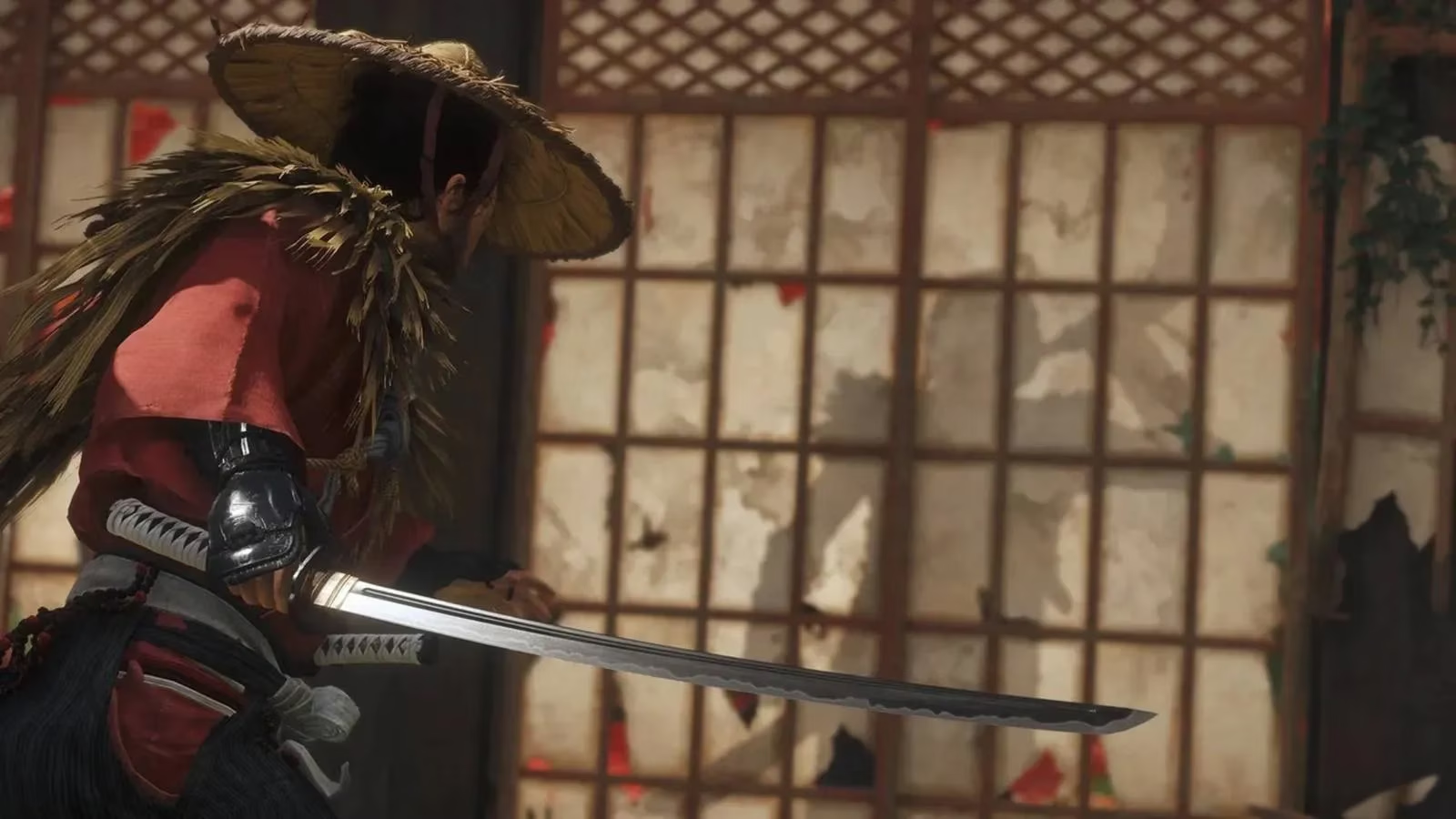
For someone who typically struggles with exploration in games, the open-world genre has always been a source of anxiety rather than excitement. The author admits to being someone who gets lost easily, preferring linear experiences where the path forward is always clear. Games like Dead Space with its brilliant navigation system that literally points the way, or classic Crash Bandicoot titles where directional confusion was never an issue, were much more comfortable territory.
When open-world games became the industry standard, the approach was cautious—like a nervous bird eyeing a tasty french fry near noisy humans. The typical pattern became monotonous: place a map marker, travel there, immediately place the next marker, repeat. While The Legend of Zelda: Breath of the Wild began to chip away at this mindset, it was Sucker Punch's 2020 masterpiece Ghost of Tsushima that truly revolutionized the experience.
🌬️ The Winds of Change
What immediately stands out about Ghost of Tsushima is its cinematic presentation and minimal UI. The developers intentionally stripped away directional markers and minimap icons to immerse players in the world. Instead, they implemented a beautifully artistic navigation system where the wind guides players to their destinations. For those who need a little more guidance (like the author), the Enhanced Wind Visibility setting provides additional help without breaking immersion.
The Joy of Discovery
For extended periods, the author found themselves abandoning objectives entirely, simply mounting their horse and exploring whatever caught their eye. This represented a fundamental shift—from watching distance counters decrease to genuinely absorbing and appreciating the world. The combat system, while not the game's strongest aspect, proved varied and satisfying with significant customization through equipment. Particular enjoyment came from Tadayori's Armor, which enhances archery abilities and makes stringing together headshots feel incredibly rewarding.
💯 Completion Without Compulsion
The game's impact was profound enough that the author achieved 100% completion in the main game and enthusiastically tackled the Iki Island DLC. What made this remarkable was that side stories and collectibles never felt like busywork—they were genuinely rewarding pursuits. While unlockable tracking skills helped with completion, the journey itself became more important than checking off objectives.
An Emotional Journey
Jin Sakai's story is harrowing, filled with emotional blows and devastating losses. The narrative weight combines with lovingly crafted gameplay to create an experience that fully deserves the praise it has received. As the sequel Ghost of Yōtei approaches, there's excitement about connecting with new protagonist Atsu while acknowledging how Ghost of Tsushima fundamentally changed the author's relationship with open-world games.
The game succeeded where others had failed by making exploration feel natural rather than obligatory. It transformed someone who typically follows safe routines into a player who genuinely enjoys getting lost in a virtual world—a testament to its masterful design and immersive qualities.
Critical reviews are presented by Eurogamer, a leading source for gaming news and analysis. Eurogamer's coverage of open-world titles like Ghost of Tsushima often emphasizes the importance of environmental storytelling and intuitive navigation, echoing the sentiment that the game's wind-guided exploration system sets a new standard for immersion and player agency in the genre.
Comments