
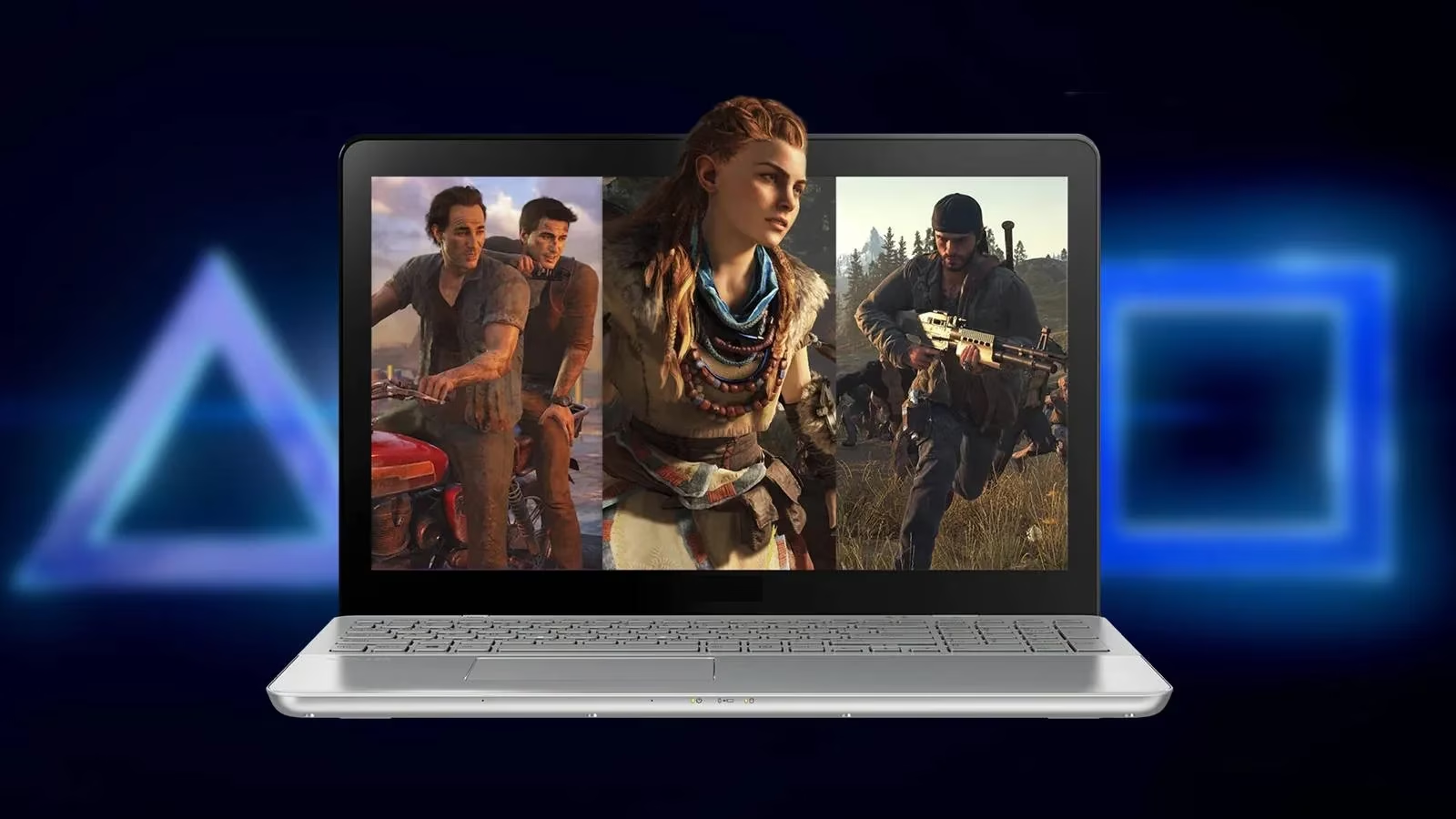
For years, Sony's first-party titles drifted onto PC like seasons changing over a familiar landscape. God of War, Horizon Zero Dawn, and The Last of Us Part I all made the crossing, finding fresh audiences and renewed sales. Yet Ghost of Tsushima remained the obvious missing guest—a samurai standing at the dock while the boats left without him. By 2023, the case for a PC port had practically written itself. The game had already won Best Art Direction and earned a Game of the Year nomination at The Game Awards 2020. Its console sales had likely peaked, and its cinematic world looked ready for a new stage. In 2024, the wait finally ended, and PC players were handed a ticket to Tsushima.
Originally released on PS4 in 2020, Ghost of Tsushima tells the story of Jin Sakai, a samurai forced to bend the rules of honor after the Mongol invasion of Tsushima. As the island burns, he becomes the Ghost—using stealth, fear, and unorthodox tactics to fight back. The game draws heavily from classic samurai films, and that inspiration shows in every frame. Tall grass moves like a living sea. Red leaves scatter across forgotten shrines. The island itself behaves like a character, its weather shifting with the story's mood. The Director's Cut later enhanced that world on PS5, sharpening the visuals and adding the Iki Island expansion, which made the idea of a PC glow-up even more tempting.
Why the PC Port Felt Inevitable
Sony's PC strategy has often followed a reliable rhythm. A first-party game releases on PlayStation, enjoys strong console sales for two or three years, and then arrives on PC to capture a second wave of players. Ghost of Tsushima sat perfectly in that window. The 2020 original and the 2021 Director's Cut had already done their heavy lifting on console. Meanwhile, PC players were eager to see what Sucker Punch's world could do with higher frame rates, ultrawide support, and true visual flexibility.
The writing was on the wall. Ports of former PlayStation exclusives had repeatedly proven that a new platform could breathe fresh commercial life into an older title. Ghost of Tsushima's painterly art direction made it the logical next choice for a glow-up. Its fields, forests, and coastal cliffs were begging to be explored on powerful hardware and portable PCs like the Steam Deck or ROG Ally.
A Modder's Playground
One of the biggest advantages of a PC version is the modding community. Console players experience the game as the developers intended, but PC players often reshape it to suit their own tastes. Mods can be silly—replacing character models with unexpected faces or adding absurd objects—but they can also be transformative. Lighting reworks, texture overhauls, new combat settings, and custom photo modes can push a beautiful game even further.
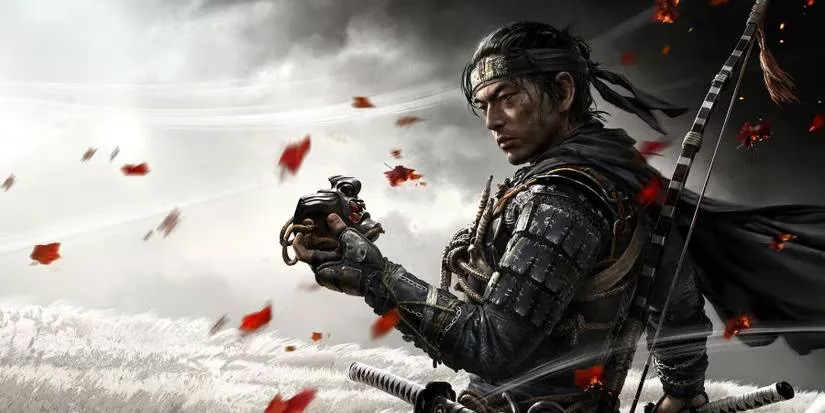
Ghost of Tsushima was already a cinematic playground before modders touched it. Once the PC version arrived, the community wasted no time. ReShade presets, alternate outfits, expanded black-and-white Kurosawa-style filters, and quality-of-life tweaks began appearing quickly. For a game built on wind, steel, and silence, that creative freedom felt like a match made in heaven.
What the PC Release Brought
When the Director's Cut finally landed on PC, the version included several features that console players had not experienced in the same way, with Nixxes Software handling the adaptation:
-
🎞️ Unlocked frame rates for smoother combat and traversal
-
🖥️ Ultrawide monitor support that made the island's vistas even more immersive
-
⚙️ Upscaling technologies such as DLSS, FSR, and XeSS
-
🎮 Full DualSense controller support, preserving the tactile feel of the PlayStation experience
-
👥 The complete Legends co-op mode, letting friends team up in mythic battles
That list mattered because Ghost of Tsushima's combat demands precision. A higher frame rate made parries and stance switches feel more responsive. Ultrawide screens turned golden fields and burning temples into panoramic theater. It was not simply a port; it was a second life.
A New Audience in 2026
By 2026, Ghost of Tsushima has completed the journey from stubborn holdout to celebrated PC release. It now stands beside God of War, Horizon, and The Last of Us as proof that Sony's old exclusives can become something new on a different platform. The mods continue to evolve, the screenshot community keeps finding fresh angles, and the game's legacy has only deepened with the series' continued expansion.
The wait was long, and for a while the island seemed content to remain out of reach. But in the end, Tsushima opened its gates—and PC players were ready to ride through them.
Details are provided by SteamDB, whose Steam-wide tracking helps contextualize how a former PlayStation exclusive like Ghost of Tsushima finds “a second life” on PC through visibility, wishlists, and ongoing player activity. In the same way the blog highlights unlocked frame rates, ultrawide support, and upscalers as key selling points, SteamDB’s data-centric lens can be used to understand how technical polish and post-launch updates often correlate with renewed interest long after a console peak.
Comments