
The gaming world is abuzz with the announcement of Ghost of Yotei, and for those who found its predecessor, Ghost of Tsushima, to be a visually stunning but ultimately generic open-world homage to samurai cinema, this sequel promises something radically different. While Tsushima reveled in a surface-level, almost fetishistic celebration of iconic Japanese imagery—from katanas to haikus—Yotei appears poised to dive into the complex, often dark history of Japan's northern frontier. Shifting the setting from the well-trodden Tsushima Island to the rugged, contested lands of Ezo (modern-day Hokkaido) in 1603, developer Sucker Punch isn't just offering a new map; it's potentially offering a profound narrative about colonization, cultural extinction, and identity. This isn't merely another 'Japan game'—it's an opportunity to explore a near-forgotten indigenous culture through the eyes of an outsider protagonist, Atsu, in a tale that could boldly critique the very notions of empire and homogeneity that its predecessor unconsciously celebrated.
From Samurai Clichés to Cultural Critique: Why Yotei Intrigues
Ghost of Tsushima certainly had its admirers, primarily for its breathtaking vistas and cinematic Kurosawa-inspired black-and-white mode. However, for many, its world felt like a checklist of Japanese cultural tropes assembled for Western audiences, with historical anachronisms aplenty. Fox shrines, onsens, and hwacha were presented with reverence that sometimes bordered on fetishism, creating a beautiful but sanitized version of history. Ghost of Yotei seems determined to subvert these expectations from the ground up.
-
A New Protagonist, A New Perspective: The focus on Atsu, a female lead, is noteworthy, but her gender is less revolutionary than her potential role in the narrative. She is not explicitly called a samurai, and she carries a shamisen—a hint that her story may be one of music and refuge as much as blade and vengeance.
-
Setting as Statement: The year 1603 marks the dawn of the Edo shogunate, a period of relative isolation but also the precursor to Japan's colonial expansion northward. Ezo was not 'Japan' at this time; it was 'the land of the barbarians,' home to the indigenous Ainu people.
-
Cultural Shift: Instead of recycling samurai iconography, Yotei has the unique opportunity to depict Ainu customs—tattooing, fishing, hunting, and their sacred relationship with bears—before they were systematically erased by forced assimilation policies.
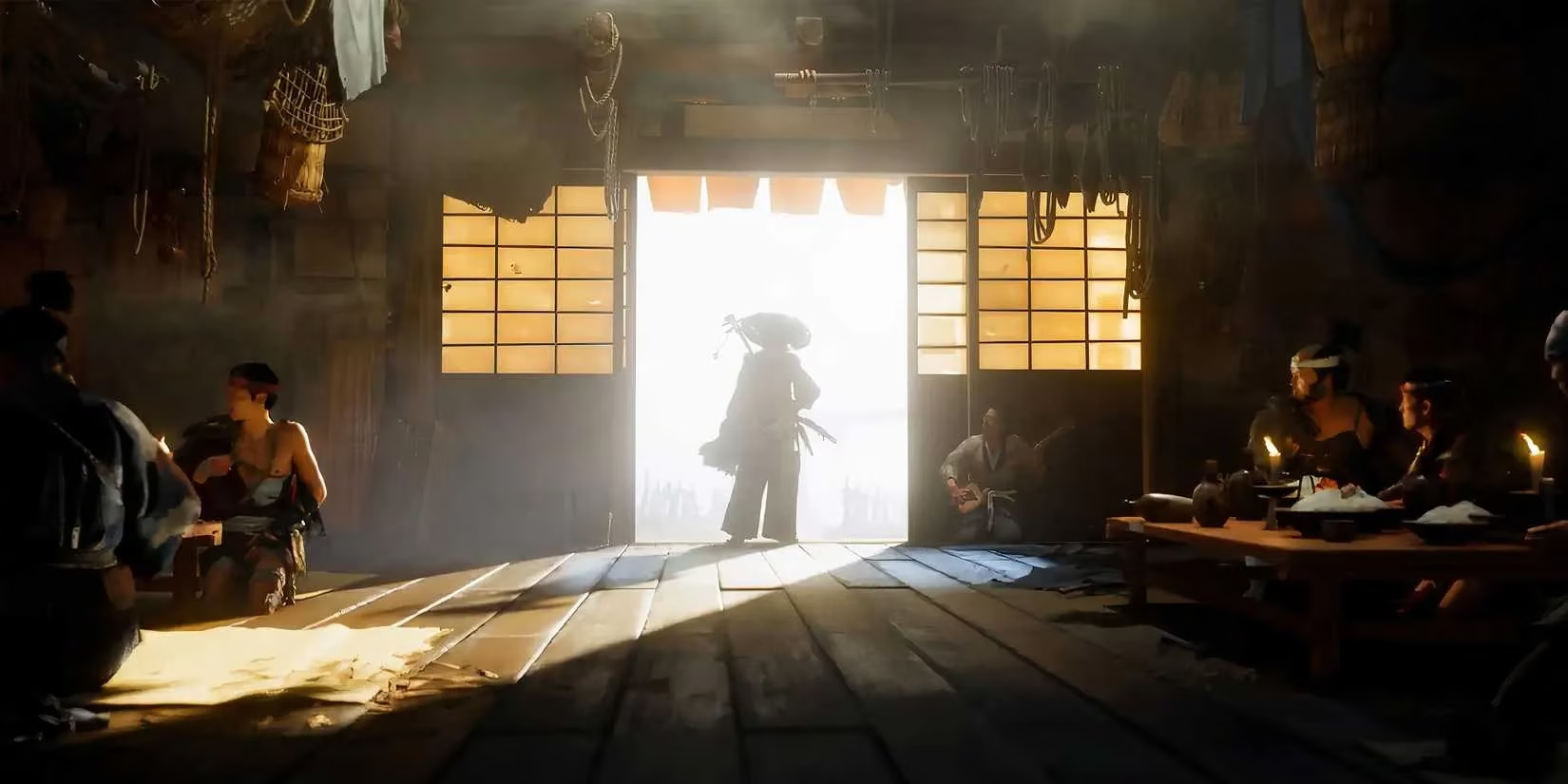
The trailer's score masterfully blends themes reminiscent of a Spaghetti Western with the melancholic twang of the shamisen, symbolizing this fusion of perspectives. It suggests Sucker Punch is not trying to mimic a samurai film but is engaging in a deeper cinematic dialogue, much like how classic Westerns and samurai movies have always influenced each other. This outsider perspective might be the key to tackling subject matter that domestic Japanese studios, often bound by conservative corporate hierarchies, might shy away from.
Ezo and the Ainu: Illuminating a Near-Extinct Culture
The true genius of Ghost of Yotei's setting lies in its potential to be an educational and empathetic experience. The Ainu people, only formally recognized as an indigenous people by Japan in 2019, endured centuries of oppression, land theft, and cultural genocide. By setting the game in 1603, Sucker Punch can portray Ezo and the Ainu at a critical juncture—on the brink of catastrophic change.
| Ainu Cultural Element | Potential In-Game Depiction | Historical Significance |
|---|---|---|
| Tattooing (尤其是女性) | Ritualistic body art, possibly tied to spiritual or coming-of-age ceremonies. | Banned during the Meiji era as part of forced assimilation. |
| Fishing & Hunting | Core gameplay mechanics for survival and trade within Ainu communities. | Traditional lifeways disrupted by Japanese colonization and resource exploitation. |
| Bear Worship (Iomante) | Spiritual quests or narrative moments involving the sacred bear. | A central religious practice that was systematically suppressed. |
| Language & Oral Tradition | Dialogue, place names, and mythic storytelling woven into the world. | The Ainu language was forbidden, pushing it to the brink of extinction. |
This isn't about creating a simplistic 'noble savage' narrative. It's about presenting a living, breathing culture with its own complexities, on the cusp of a devastating collision. The game's core theme of 'underdog vengeance' could brilliantly reframe when Atsu, fleeing 'every ronin,' finds sanctuary among the Ainu. Her personal quest for retribution could transform into a mission to protect her newfound community from the advancing tide of Japanese colonization—making the invaders the antagonists this time around.
The Outsider's Advantage: Critiquing Empire from a Safe Distance
Why is a Washington-based studio like Sucker Punch potentially the perfect entity to tell this story? 🤔 Because external creators often possess the critical distance necessary to examine a nation's historical shadows without the same societal pressures. Just as non-American filmmakers have produced the sharpest critiques of American imperialism, a non-Japanese studio can explore the darker chapters of Japan's past with a bolder, less nationalistic lens.
-
Beyond the Myth: Ghost of Tsushima was fundamentally about defending Japan (a noble cause). Ghost of Yotei could deconstruct the myth of a unified, homogeneous Japan by showing its expansionist, assimilative underbelly.
-
A Brave Direction: This approach maintains the series' core—a lone warrior in a stunning feudal landscape—while adding immense moral and narrative complexity. It challenges players to reconsider what they are fighting for and against.
-
Global Resonance: Stories of colonization, cultural erasure, and resistance are tragically universal, from the British Empire to countless others. Yotei could resonate by telling one specific story with profound empathy.
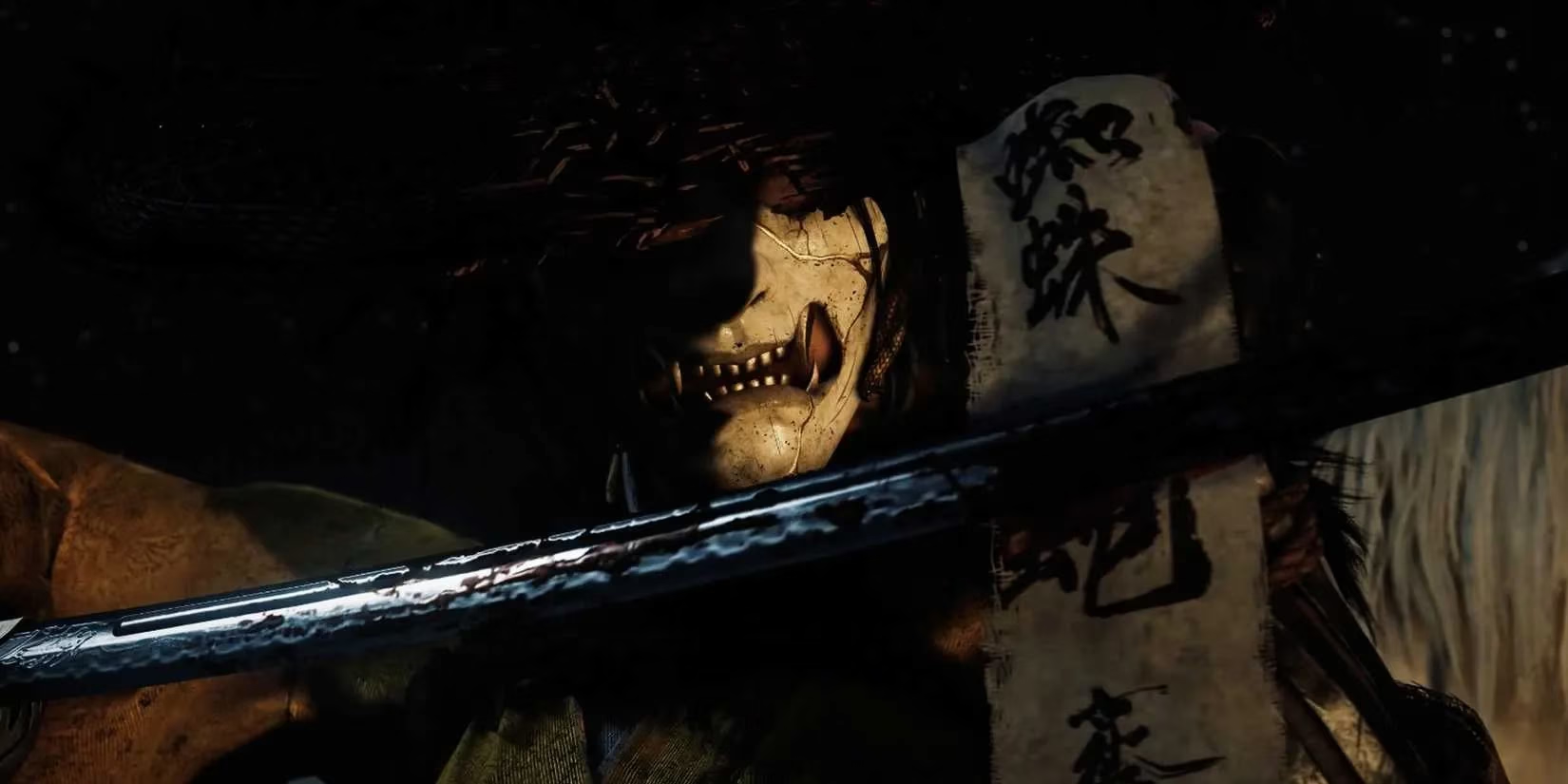
Embracing this perspective doesn't mean hating Japan; it means engaging with its full history, warts and all—an attitude reflected in nuanced works like Pachinko, which explores Korean discrimination in Japan. It's the opposite of naive idolization. Whether Sucker Punch fully commits to this ambitious, politically charged narrative remains to be seen. The inclusion of firearms for Atsu already hints at a break from 'pure' samurai combat, suggesting a pragmatic, survivalist ethos that fits a frontier setting. If they follow through, Ghost of Yotei won't just be an iterative sequel; it will be a landmark title that uses the power of interactive entertainment to explore a silenced history, making it infinitely more compelling and important than its predecessor ever aspired to be. The stage is set not for a celebration of an idealized past, but for a confrontation with a forgotten one.
Comments