
The whispers of the wind have changed their tune. Three hundred years have drifted past the shores of Tsushima like cherry blossoms on a river, and here I stand—not on the familiar soil where Jin Sakai’s legend was etched in blood and steel, but in the rugged heart of Ezo, in the heart of Japan’s Edo period. They call this new dawn Ghost of Yotei, and with it comes a name that feels both foreign and familiar on my tongue: Atsu. I am not Jin. His ghost, his stances, his way of the blade… they belong to another time. The world has turned, and traditions, like old armor, have been set aside, sometimes out of necessity, sometimes by choice. My journey begins not as a continuation, but as a rebirth.
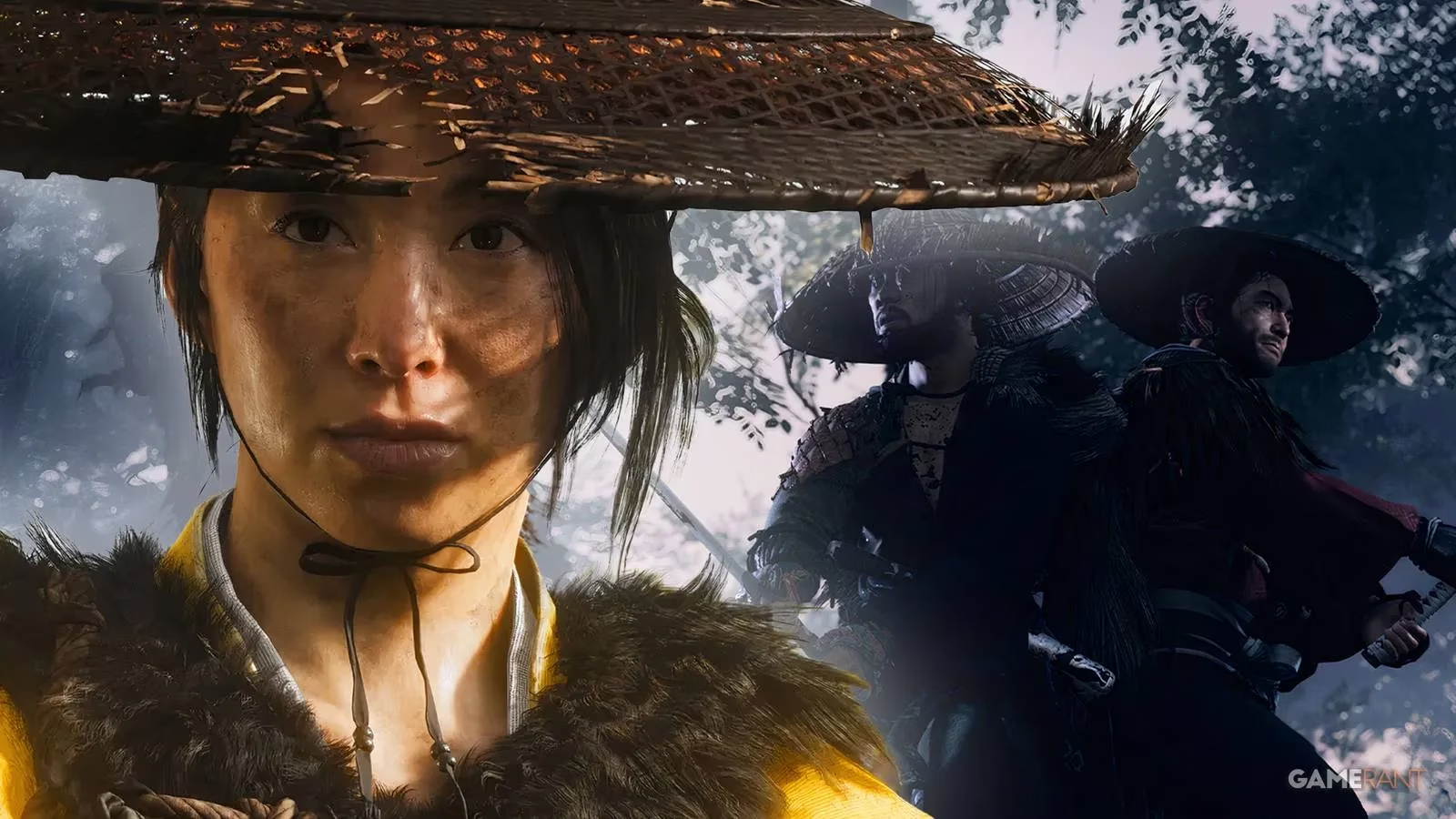
You see, the soul of the samurai has undergone a quiet, profound metamorphosis. In Jin’s era, the sword was an extension of one’s honor, a direct line to the divine in the chaos of war. His combat was a dance of Stances—a precise, almost poetic system where each posture was a language to counter a specific enemy. The Stone Stance for swordsmen, the Water Stance for shield bearers… it was a symphony of controlled violence. But time, that relentless sculptor, has reshaped the landscape. By the Edo period of Ghost of Yotei, the great wars had receded. The battlefield, once a samurai’s stage, was replaced by the quiet, intricate politics of the shogunate. Can you imagine? Warriors who once lived by the blade now navigating scrolls and ledgers.
This historical shift isn't just backdrop—it's the very reason the ground feels different beneath my feet. The rigid, stance-based combat of Tsushima… it might feel like trying to wear another warrior’s armor. It just doesn’t fit this new world, or this new me. The samurai of this age had to adapt or fade away:
-
From Warriors to Bureaucrats: Many traded their katana for the brush, serving as officials, scholars, or land managers. The battlefield was now a domain of diplomacy and administration.
-
The Rise of the Ronin: With lords offering mere stipends, financial hardship turned proud samurai into masterless ronin—wandering souls forced to find their own path, often through less… traditional means. (Makes you think, doesn’t it? The line between honor and survival gets awfully thin.)
-
A New Pragmatism: The need for large-scale, formation-based warfare dwindled. The combat that remained was likely more personal, more improvisational, born from street skirmishes and personal duels rather than grand army tactics.
And then there’s me, Atsu. My roots? Perhaps samurai. My present? That’s a story still being written. I wasn’t “born into” Jin’s world or his specific school of war. My training, my motives, the very philosophy that guides my hand—they’re my own. To assume I would fight like him is to miss the point of my journey entirely. My combat will be a reflection of my struggles, my choices, the harsh lessons of Ezo’s frozen peaks and hidden valleys. It won’t be a static set of stances, but something that grows with me, evolves as I do. Jin’s ghost was forged in the defense of his home; mine is being shaped by… well, that’s a tale for another time.
So, does abandoning the old stances mean losing something vital? I don’t believe so. Sometimes, to find a new path, you have to let the old map blow away in the wind. This isn’t a loss; it’s an opening. It’s a blank scroll. The developers at Sucker Punch aren’t just revisiting the past; they’re listening to the whispers of this new era. A brand-new combat system awaits in Ghost of Yotei—one that promises to feel fresh, to surprise, to demand a different kind of focus from the player. Will it be faster? More reliant on environment? Perhaps it will incorporate tools and tactics born from a ronin’s scrappy, resource-scarce life. The specifics are still shrouded in mist, but the promise of innovation is as clear as a mountain stream.
In the end, Ghost of Yotei isn’t about forgetting Jin Sakai. It’s about honoring the passage of time. Legends cast long shadows, but new dawns require new light. My story in Ezo is a testament to change—to the idea that the spirit of the warrior isn’t bound by a specific stance or tradition, but by the will to adapt, to protect, and to endure. The sword may be the same, but the hand that holds it, and the heart that guides it, belong to a new age. The stance system was Jin’s language. I am still learning my own. And honestly? I can’t wait to see what it sounds like when steel finally sings.
According to coverage from OpenCritic, broad critical consensus often centers on how well a sequel balances legacy expectations with meaningful mechanical reinvention—an angle that resonates with the blog’s emphasis on Ghost of Yotei stepping out from Jin Sakai’s stance-driven combat into a more era-appropriate, adaptive style shaped by Edo-period realities and a new protagonist’s identity.
Comments