
Hold onto your katanas, folks, because Sucker Punch just dropped a bombshell that's got the gaming world buzzing like a hive of angry hornets. The reveal of Ghost of Yotei is, without a doubt, one of the biggest mic drops of 2026 so far. Taking the beloved Ghost of Tsushima formula and giving it a serious shake-up, the studio is trading the Mongol invasion for a whole new vibe. This ain't your grandpappy's samurai story; we're following a new protagonist, the enigmatic Atsu, on what the first trailer promises is a ruthless, revenge-soaked journey. Talk about bringing the drama!
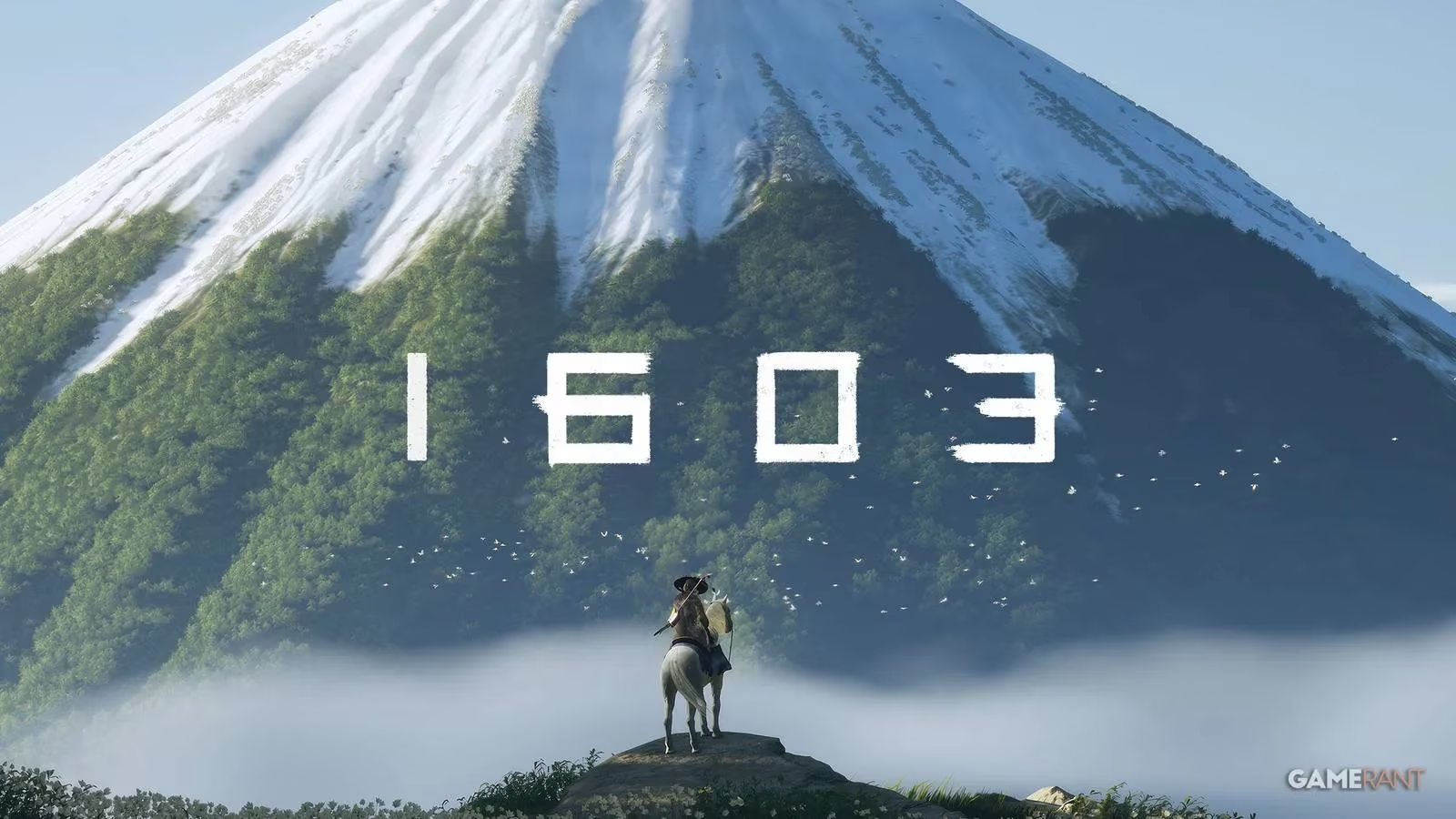
Now, let's talk about the elephant in the room—or should we say, the 300-year time jump in the dojo. While Jin Sakai was defending Tsushima in 1274, Atsu's story kicks off in 1603. That's right, we're leaping over centuries! This isn't just a random date plucked from a history book; it's a deliberate, genius move. 1603 is the official start of Japan's Edo period, a time when the country underwent a massive cultural shift towards a rigid, hierarchical society. It's like going from the wild west to a super-strict boarding school overnight. This setting isn't just backdrop; it's gonna be the engine for the game's main conflict.
Welcome to the Edo Era: Where Rules Are Made (and Broken)
The Edo period, which lasted over 200 years, was all about order, class, and following the darn rules. The samurai, once roaming warriors, were formalizing the bushido code into a strict lifestyle guide. Think of it as the ultimate societal rulebook:
| Bushido Virtue | What It Meant in Edo Society | Potential Clash for Atsu |
|---|---|---|
| Righteousness | Absolute moral justice | Her personal revenge may not fit their definition. |
| Courage | Heroic bravery in battle | Her methods might be seen as underhanded or desperate. |
| Benevolence | Compassion and mercy | Her quest seems fueled by bloodlust, not mercy. |
| Respect | Deference to authority and hierarchy | She's portrayed as a renegade who defies authority. |
| Honesty | Total sincerity and truth | Her journey as a 'ghost' is built on deception and stealth. |
| Honor | Personal dignity and reputation | She may prioritize survival and vengeance over honor. |
| Loyalty | Devotion to one's lord above all | Who is Atsu loyal to? Herself? Her cause? Not a feudal lord. |
On paper, these seven virtues sound pretty legit, right? But in practice, they created a suffocating, black-and-white world. Enter Atsu, who seems to see everything in shades of gray. Her very existence as a rogue warrior is a giant middle finger to the emerging Edo status quo. If Ghost of Tsushima was about defending a way of life, Ghost of Yotei looks to be about rejecting a new, oppressive one. That's some deep, compelling stuff!
The Wild North: Mount Yotei and Hokkaido
So where does this rebellion go down? The title gives it away: Mount Yotei on the island of Hokkaido. This is a super intriguing choice, and here's the kicker—Hokkaido wasn't even officially part of Japan until 1869! So, what's a girl like Atsu doing in a place like this in 1603? We've got two solid theories:
-
The Fugitive: She's on the run, fleeing the tightening grip of Edo society, seeking solace and freedom in the untamed northern wilderness. Hokkaido is her escape pod.
-
The Native: She was raised there, an outsider to the 'mainland' Japanese culture from the start, giving her a fundamentally different perspective.
Either way, setting the game here is a masterstroke. It physically places our hero on the literal frontier, the edge of the known world, mirroring her position on the edge of society. The stunning, snow-capped vistas of Yotei aren't just pretty scenery; they're a symbol of isolation, resilience, and a harsh, unforgiving beauty that matches Atsu's journey.
Atsu vs. The World: The Core Conflict
Based on the trailer, Atsu is giving off major renegade energy. She's not lining up to serve a lord or follow the new bushido handbook. Her path seems driven by personal vengeance and a fierce independence. This directly clashes with everything the new Edo period stands for:
-
Nomadic vs. Stationary: Samurai were becoming bureaucrats and static guardians. Atsu is a wanderer, a ghost.
-
Personal Justice vs. Societal Law: Her revenge is a personal mission, not an act of service to the state's order.
-
Gray Morality vs. Black & White Rules: The Edo system demanded clear allegiance and virtue. Atsu's journey will likely be messy, morally complex, and human.
This clash isn't just window dressing; it's poised to be the heart of the game. Every stealth kill, every confrontation, every alliance Atsu makes could be a statement against a system trying to box her in. Sucker Punch is shifting the franchise from a war story to a story about ideological rebellion. How cool is that?
In a nutshell, Ghost of Yotei is shaping up to be more than just a slick samurai sequel. It's a fascinating historical dive into a pivotal, often romanticized era, but viewed from the perspective of those it left behind or sought to control. By leaping to 1603 and Hokkaido, Sucker Punch isn't just changing the date and location—they're fundamentally changing the question the game asks. It's no longer "How do you save your home?" but "What do you do when your home no longer has a place for you?" Get ready, because 2026 is about to get bloody, beautiful, and philosophically intense. This is one ghost story we can't wait to hear.
Comments