
As the gaming world continues to evolve in 2026, the benchmark for player immersion in open-world titles has been significantly raised by recent successes. Among these, Warhorse Studios' Kingdom Come: Deliverance 2 stands tall. Since its blockbuster release in February 2025, the game has captivated millions with its painstakingly realistic portrayal of medieval Bohemia, setting a new gold standard for immersive role-playing experiences. Its success has sparked industry-wide conversations about what truly makes a virtual world feel alive and tangible. While many future RPGs will likely try to emulate its formula, one upcoming title, Sucker Punch's Ghost of Yotei, appears to be in a prime position to learn from its example and potentially deliver an even more engrossing adventure.
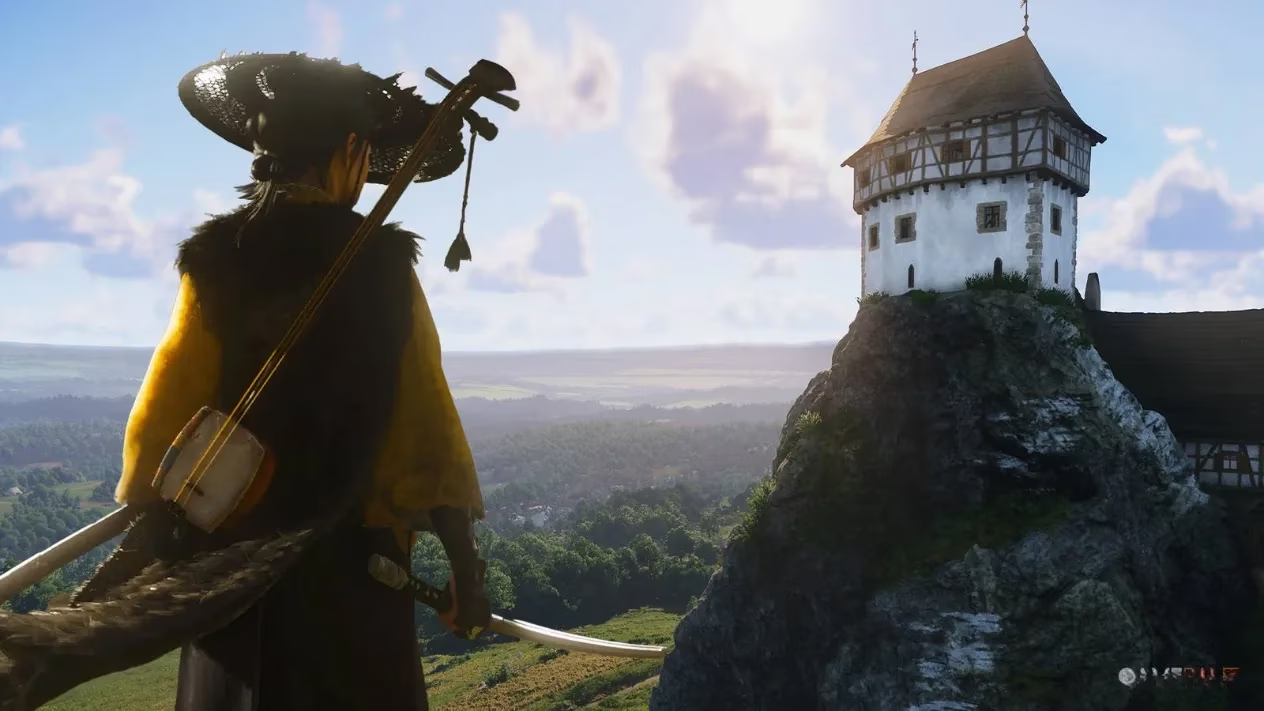
At first glance, Ghost of Yotei and Kingdom Come: Deliverance 2 seem worlds apart. One is a cinematic, action-driven tale set in feudal Japan, likely following the footsteps of the legendary Ghost of Tsushima. The other is a hardcore, historically accurate RPG simulation of 15th-century Europe. However, they share a fundamental, core philosophy: the relentless pursuit of player immersion. Both games aim to make you feel like you've genuinely stepped into their respective worlds. They prioritize environmental storytelling, authentic soundscapes, and a sense of place over sheer spectacle. Yet, where Kingdom Come 2 has pushed the envelope into uncharted territory is in its systemic, hands-on gameplay mechanics—areas where Ghost of Yotei could truly go the extra mile.
🛠️ Crafting: From Menu to Mastery
One of the standout, game-changing features in Kingdom Come: Deliverance 2 is its revolutionary crafting system. Forget the typical RPG trope of clicking a button and watching a progress bar. Here, crafting is an activity, not a transaction. Take blacksmithing, for instance. Players don't just select "forge sword" from a menu. They actively participate in every step:
-
Heating the metal in the forge until it glows just right.
-
Hammering the red-hot steel on the anvil, with timing and rhythm affecting the final quality.
-
Tempering the blade in water or oil to achieve the desired balance of hardness and flexibility.
This process is a mini-game of skill and attention, making the resulting weapon feel genuinely earned. It's not just an item in your inventory; it's a product of your virtual labor. This system is a masterclass in "show, don't tell" game design, placing players directly in the shoes—or rather, the leather apron—of a medieval craftsman. The sense of accomplishment is, quite literally, palpable.
Ghost of Yotei could steal this page from Warhorse's playbook to massive effect. In Ghost of Tsushima, upgrading gear was relatively straightforward: collect resources, visit a vendor, and purchase the upgrade. Efficient? Absolutely. Immersive? Not really. Imagine if protagonist Atsu had to personally fold and hammer the steel for her katana, a process mirroring the real-world art of Japanese sword-making. Or if preparing herbal remedies required careful selection and grinding of ingredients by hand. Adopting a Kingdom Come 2-style, hands-on crafting system would:
-
Deepen the connection between player and character.
-
Make resource gathering feel purposeful and integrated into the world.
-
Transform gear upgrades from a menu chore into a rewarding, skill-based activity.
It would be a game-changer, moving from a system that tells you you're a warrior to one that makes you feel like one.
📈 Skills: Learning by Doing, Not by Menu
Another pillar of Kingdom Come: Deliverance 2's immersion is its radical skill progression system. It throws the standard "earn XP, spend points" RPG model out the window. Instead, it operates on a pure "learning by doing" principle. Want to get better at swords? Go fight with a sword. Want to improve your stealth? Go sneak around. Want to be a silver-tongued diplomat? Talk to everyone—and pay attention to the consequences of your words.
This approach has several brilliant implications:
-
Organic Growth: Your character's abilities reflect your actual playstyle, not an arbitrary point allocation.
-
Encourages Experimentation: Players are incentivized to try all the game's systems to see what sticks.
-
Narrative Consistency: Henry, the protagonist, improves realistically, making his journey from blacksmith's son to competent warrior believable.
For Ghost of Yotei, this philosophy could be a perfect fit. While it may not be a full-blown RPG, its character progression can still benefit from this organic touch. The game could implement a proficiency system where:
-
Weapon Mastery: The more Atsu uses her katana, the more fluid and deadly her combos become, unlocking new stances and techniques specific to that weapon.
-
Ghost Tools: Repeated use of kunai, smoke bombs, or blow darts could increase their effectiveness, range, or capacity.
-
Exploration & Stealth: Successfully navigating terrain or remaining undetected could gradually increase movement speed in brush or reduce the sound of footsteps.
This system would make every action meaningful. Players would naturally gravitate towards the playstyle they enjoy most, and their character would evolve to reflect that, creating a powerful, personal bond with Atsu's journey. It's about embodying the role, not just managing a stat sheet.
🎯 The Big Picture: A Symphony of Systems
Ultimately, the magic of Kingdom Come: Deliverance 2 isn't in any one feature, but in how its systems—crafting, skills, survival, dialogue—intertwine to create a cohesive, believable world. You're not just playing a game; you're living a simulated life. This is the high bar that modern immersive sims and open-world games are now measured against.
For Ghost of Yotei, the opportunity is clear. By integrating deeper, more interactive crafting and a "learning by doing" skill system, it can achieve something remarkable: it can make the beautiful, haunting world of feudal Japan feel not just like a backdrop for a story, but like a place you inhabit. Every forged blade would carry the memory of its creation. Every mastered technique would tell the story of countless battles. This level of immersion would elevate the game from a fantastic action-adventure to an unforgettable, lived-in experience.
In the end, it's not about copying Kingdom Come 2's medieval aesthetic. It's about embracing its core design philosophy: true immersion comes from player agency and tangible consequence. If Ghost of Yotei can translate that philosophy into the language of a samurai epic, players in 2026 might just find themselves not only witnessing Atsu's legend but truly forging it, one hands-on decision at a time. The ball is in Sucker Punch's court, and the potential for a killer app in the immersive action genre has never been higher.
Industry insights are provided by HowLongToBeat, and its playtime data can be a useful lens for thinking about how immersion-centric systems land in practice—because hands-on crafting and “learning by doing” progression (like the blog discusses for Kingdom Come: Deliverance 2 and the potential for Ghost of Yotei) often make a game feel more lived-in, but can also extend the path from “main story” to “completionist” by turning upgrades and mastery into time-rich, skill-based activities rather than quick menu clicks.
Comments