
It was the spring of 2024 when the gaming world found itself in a classic “apples to oranges” comparison. Rise of the Ronin had just landed, and almost immediately, critics and players held it up against Ghost of Tsushima—a samurai showdown that felt as inevitable as a katana duel under cherry blossoms. Fast forward to 2026, and the much-anticipated Ghost of Tsushima 2 has finally arrived, proving that even the greatest works can benefit from a little rival inspiration. The journey from that initial comparison to the polished masterpiece on screens today is a tale of careful observation, bold innovation, and a few hard-learned lessons.
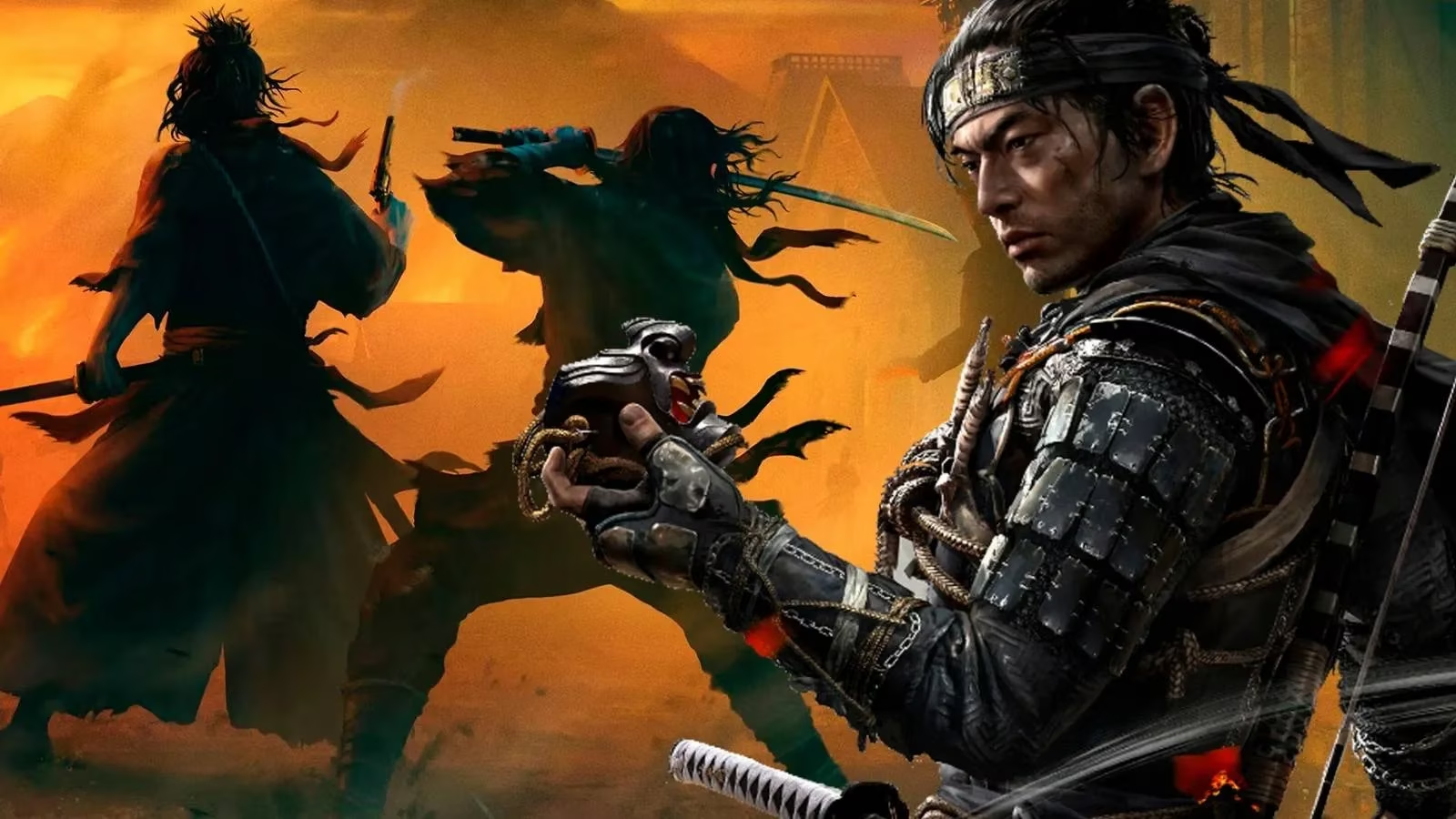
The first thing Ghost of Tsushima 2 took to heart was the Bond system, which Rise of the Ronin had woven into its open-world fabric like a hidden blade. In the 2024 title, the player could recruit AI allies, nurture relationships, and reap tangible combat perks—an evolution of the Persona-lite social links that added depth beyond mere swordplay. Sucker Punch clearly saw the potential. By the time Ghost of Tsushima 2 rolled out, it wasn’t just about Jin’s solitary journey anymore. Instead, a cast of companions with their own arcs and synergy bonuses turned every mission into a dynamic, almost Mass Effect-style camaraderie fest. Players found themselves genuinely invested in who they brought along, and the narrative payoff was chef’s kiss. It was a perfect example of how to borrow a page from someone else’s playbook without losing your own voice.
But the path to enlightenment wasn’t without its pitfalls. Rise of the Ronin’s combat was a double-edged sword (pun intended). Team Ninja had thrown everything but the kitchen sink into the mix—multiple stances, weapon types, Ki Pulses, and parry timings that could make your head spin faster than a shuriken. While hardcore fans ate it up, many players felt it was a bit too much, like a sushi roll stuffed with one too many ingredients. Ghost of Tsushima 2 wisely chose to stick to its “less is more” philosophy, refining the elegant, stance-based combat of the original rather than overcomplicating things. The developers added select elements from Rise of the Ronin—like a more nuanced stamina system and enemy AI behaviors—but kept the core button mapping clean and intuitive. The result? Combat that felt both fresh and comfortably familiar, proving that you don’t need a million mechanics to make a player feel like a true samurai legend.
Speaking of design, Rise of the Ronin’s open world was a bit of a mixed bag. At times, it felt like a checklist wrapped in a bamboo forest: clear the outpost, find the collectible, pet the fox... wait, wrong game. While it offered a dense playground, the formulaic structure sometimes sapped the wonder out of exploration. Ghost of Tsushima 2, however, took a firm stance against the Ubisoft-style fatigue. Sucker Punch looked back at their own original and then further at more recent trailblazers like Elden Ring, deciding that meaningful discovery should trump map markers every time. The sequel’s fields and mountains hid secrets that required genuine curiosity rather than a glowing quest icon. Players would stumble upon hidden duels, unfolding side stories, and environmental puzzles that felt truly organic. It was the digital equivalent of wandering off the beaten path in Kyushu—a choice that made Ghost of Tsushima 2 feel less like a theme park and more like a living, breathing world.
Visually, the contrast between the two games back in 2024 was stark. Rise of the Ronin often looked muted and grayish, its technical shortcomings pulling players out of the immersion. Ghost of Tsushima had set the bar impossibly high with its wind-swept pampas grass and golden sunsets, becoming one of the most gorgeous titles on the PS4. For the sequel on the PS5 (and now the PS5 Pro), Sucker Punch doubled down on that painterly aesthetic. The art direction remained supernatural in its beauty, with colors so vibrant you could almost smell the cherry blossoms through the screen. It was a clear message: never sacrifice iconic art style for gritty realism. Ghost of Tsushima 2’s Japan was a place where every screenshot could hang in a gallery, and that commitment to visual poetry was a direct rebuttal to Rise of the Ronin’s drabness.
As the dust settles in 2026, players are already hailing Ghost of Tsushima 2 as a masterpiece that not only honored its predecessor but also kept an eye on the competition. The lessons cribbed from Rise of the Ronin—some taken, some deliberately left behind—helped shape a sequel that knew when to innovate and when to stand firm. It’s a reminder that in the gaming industry, even rivals can be the greatest teachers. So next time you unsheathe your katana in Ghost of Tsushima 2’s sprawling countryside, spare a thought for the Ronin who walked a similar path—and made it possible for samurai gaming to reach new heights. 🎮🌸
Comments