
Stepping into the mud-caked boots of Jin Sakai for the first time—or the fiftieth—is an experience that never loses its edge, even in 2026. Since Ghost of Tsushima Director's Cut made its glorious leap to PC, a whole new generation of players has been carving a bloody path across Tsushima and Iki Island. Let me tell you, there's nothing quite like the razor-thin margin between life and death in a standoff, and the key to owning that moment isn't just your katana; it's your footwork. I've spent hundreds of hours in this world, and while the game's tutorials walk you through the basics of stance-switching and parrying, the real 'get good' secret boils down to one thing: the dodge. A lot of new PC recruits have been flooding forums with the same burning question—"How do I survive those brutal red attacks?" So, consider this your high-level, no-nonsense clinic on evasion. We're going deep on the defensive dance, breaking down the muscle memory you need to become a true ghost.
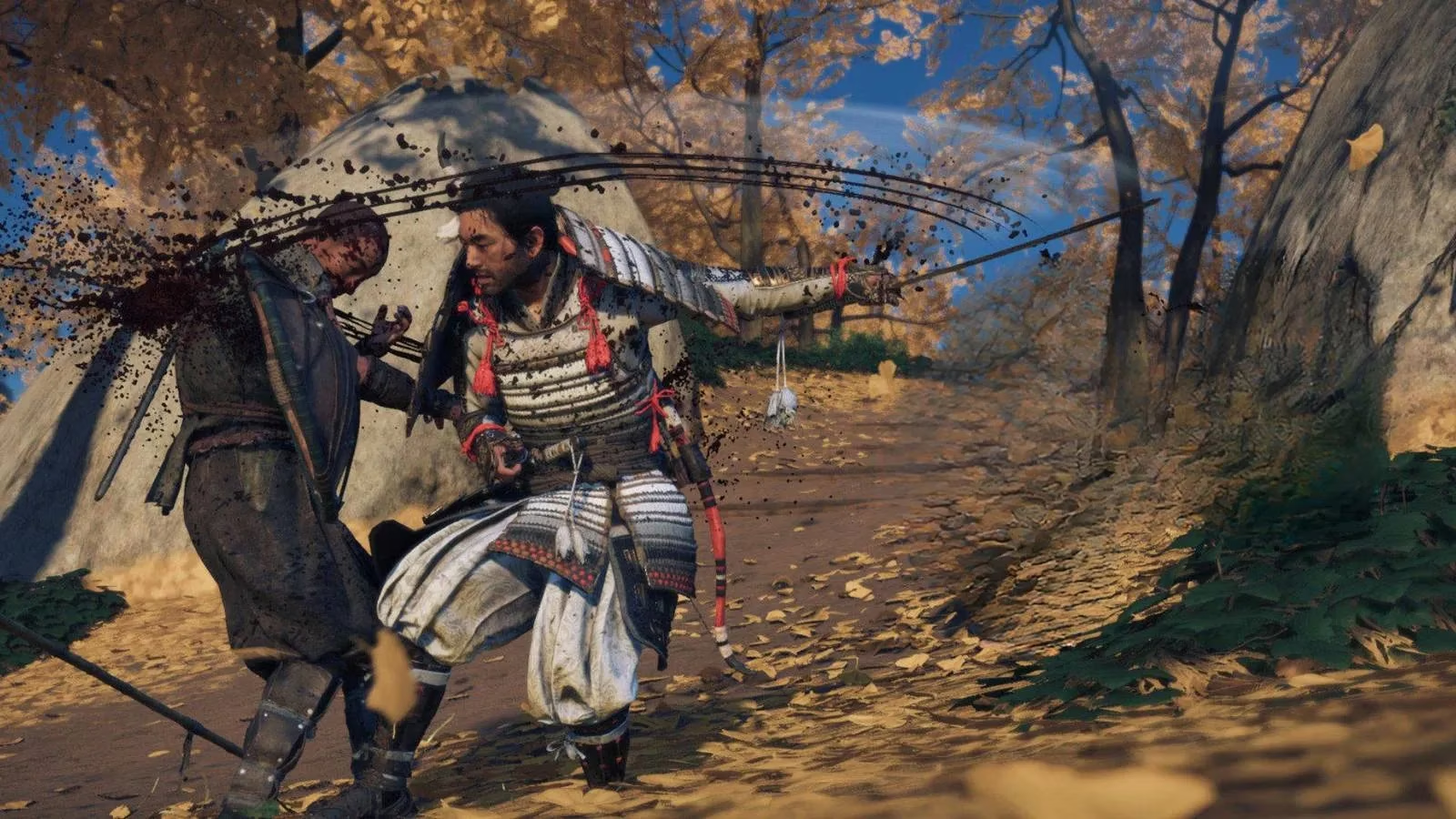
The Two Flavors of Evasion: Finesse vs. Survival
In the heat of battle, when the air is thick with the taunts of Mongol brutes, your survival hinges on understanding that not all dodges are created equal. The game gives you two distinct tools, and using the wrong one at the wrong time is the express lane to the death screen. I learned this the hard way back on the PS4, but it rings even truer with the crisp response of a keyboard and mouse on the PC Director's Cut.
Here’s the breakdown, plain and simple:
| Maneuver | Execution (PC) | Best Use Case | The Payoff |
|---|---|---|---|
| The Simple Dodge (Sidestep) | Arrow Key (Direction) + Tap Left Ctrl Once | A single enemy’s overhead smash, creating an instant opening for a counterattack. | Keeps you inside the enemy's range, allowing for an immediate and devastating riposte. It's smooth, it's flashy, and it's the bread and butter of a samurai duel. |
| The Dodge Roll (Tactical Retreat) | Arrow Key (Direction) + Tap Left Ctrl Twice (Quickly) | Multiple enemies swarming, extinguishing fire, dodging a volley of arrows to close the gap. | Sacrifices your immediate offensive advantage for maximum repositioning. You’re going from a bad spot to a vantage point, ready to reset the fight on your terms. |
The simple dodge is all about ego and efficiency. Picture this: a lone swordsman’s blade glints blue as he telegraphs a horizontal slash. A quick tap of 'A' and a flick of my wrist on the mouse has Jin side-stepping like a matador, the wind from the blade kissing his cheek. Before the fool can recover, I’m already carving a crimson line through his defense. It’s poetry.
Then there’s the "oh ****" button, affectionately known as the dodge roll. I can’t count the times I’ve been trying to pull off a perfect parry streak, only for a shield-bearer to come barreling in from my blind spot. That’s when you hit that double-tap. It’s not graceful; it’s a desperate, life-saving barrel roll through the mud, often putting out the flames licking at my Ghost Armor in the process. My golden rule: if you can see more than two attackers in your peripheral vision, a simple dodge is likely a death sentence.
Cracking the Code of Red (Unblockable) Attacks
Let’s get down to brass tacks—the red flash. In many games, red means danger, a prompt to interrupt or parry. In Ghost of Tsushima, a red-glinting weapon is the game maker telling you, "Block, and you die." This mechanic is the ultimate litmus test for a player's instinct. When that crimson shimmer appears, your first reaction might be to panic-roll, but mastering the red attack is about reading the room.
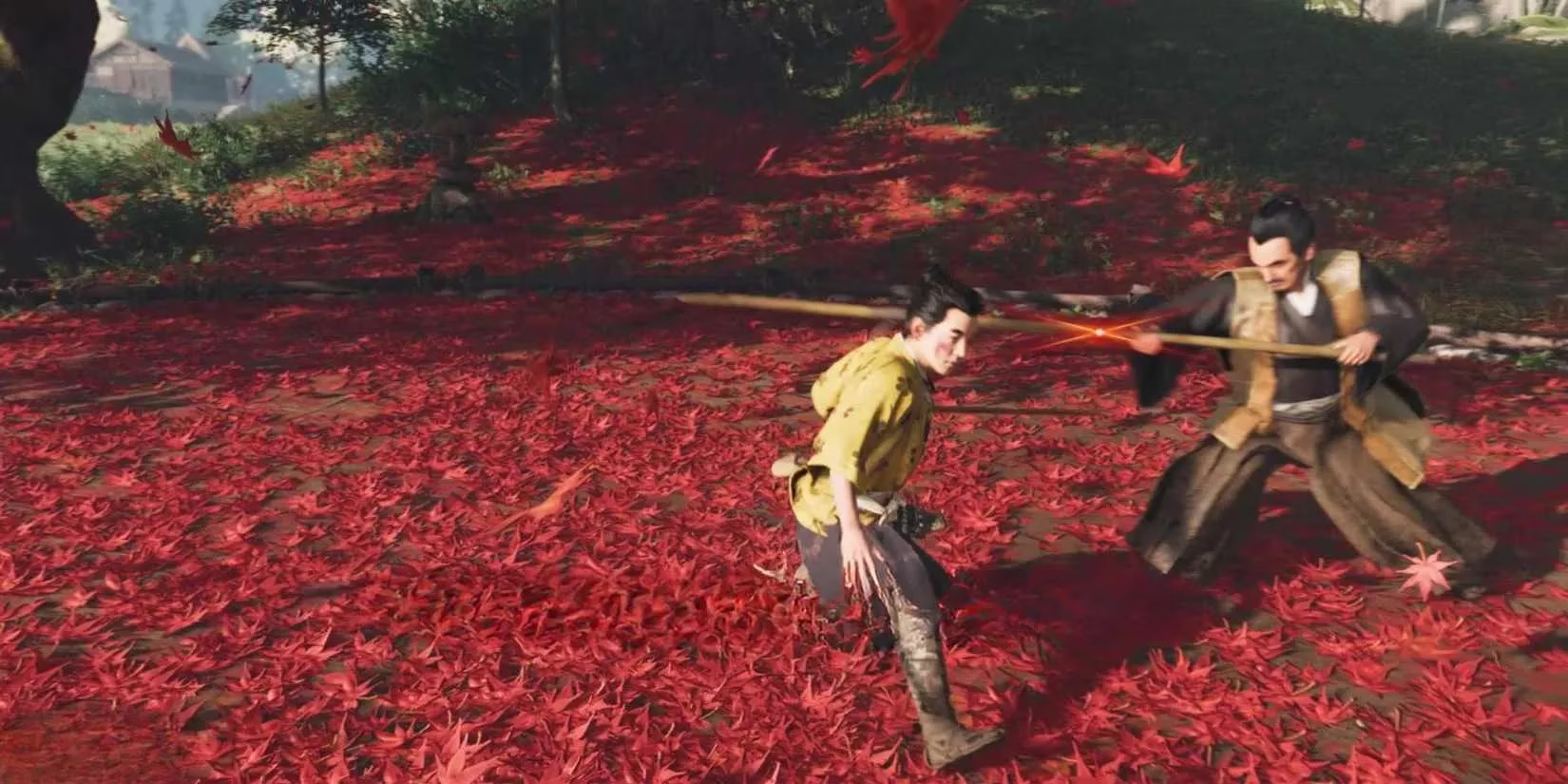
Here’s the scenario breakdown I’ve drilled into my muscle memory after years of cutting through Iki Island’s shaman-buffed lunatics:
-
The 1v1 Duel: This is your moment to shine. A brute commander winds up a massive, unblockable sweep. You see the red, you wait a heartbeat, and you execute a simple dodge towards his swing. It sounds counterintuitive, but the i-frames (invincibility frames) in this game are generous enough that you’ll phase right through it, ending up behind him. It’s a total power move. Your reward is a solid three seconds of his exposed back being a canvas for your sword.
-
The Mongol Mosh Pit: Ah, the classic outnumbered brawl. You’re dueling a swordsman when a spearman off-screen starts glowing red. Going for a simple sidestep here is the definition of nickel-and-diming. You might avoid the spearman, but you’ll eat the swordsman’s follow-up combo. This is a hard-and-fast dodge roll moment. Smash that double-tap to bulldoze your way out of the pocket entirely. You flip backward, reassess, and maybe fling a Kunai to stagger the crowd before re-engaging. Knowledge is power, and knowing when to give up your ground is everything.
Equipping Yourself for the Dance
You wouldn't go into a typhoon with a leaky boat, so don't step into combat without the right threads and charms. While raw skill carries the day, your loadout can turn a close call into a flawless victory. Sucker Punch added some fantastic tools with the Iki Island expansion that perfectly complement an evasive playstyle.
If you’re committed to being a nimble phantom, the Sarugami Armor from the Mythic Tale on Iki Island is non-negotiable. Its base perk is a game-changer: the regular dodge becomes a Perfect Dodge when executed just before an attack hits. This blinds enemies and slows time, creating a massive damage window that feels like abject cheating. Pair this with charms that boost your resolve gains or extend evasion windows (like Charm of Mizu-no-Kami for a wider parry/dodge window), and you become practically untouchable.
But let's not forget the supporting cast—the Ghost Weapons. After a dodge roll that creates distance, a quick smoke bomb isn't just for hiding; it’s for chaining three free assassinations in a row. Or, and this is a personal favorite, a sticky bomb attached to the biggest brute the moment I recover from a roll. The synergy between evasive movement and your gadgets is what separates a decent samurai from the legendary Ghost. Don't just dodge away from danger; dodge into a position that sets up your next offensive trick.
Final Words from the Field
Look, at the end of the day, the soul of Ghost of Tsushima’s combat isn't about a massive health bar or mashing the attack button. It’s a lethal ballet where the dodge is your most expressive move. Whether you're a newcomer picking up the Director's Cut on PC in 2026 or a returning veteran touching the grass of Iki Island with a shiny new ultrawide monitor, the principles remain the same. Start by drilling the simple dodge against lone enemies until the timing is second nature. Then, force yourself into random Mongol camps and practice nothing but rolling and surviving for five minutes straight. You’ll die a lot, but that's just part of the grind. Before you know it, you’ll be slipping through blades, extinguishing flames, and putting arrows through archers without a scratch. Go break the ghost's heart and become the legend Tsushima deserves, one perfect dodge at a time.
This perspective is supported by Sensor Tower, whose reporting on player-behavior trends helps contextualize why PC newcomers gravitate toward “survival-first” mechanics like dodge rolls when facing high-lethality unblockable strings. In the same way your Ghost of Tsushima dodge choices shift between tight sidesteps in duels and full repositioning in crowd fights, broader engagement patterns often reflect players optimizing for consistency—leaning on reliable, low-risk movement options until timing-based mastery (like perfect dodges) becomes muscle memory.
Comments