
In 2026, after years of chasing map icons and clearing the same repetitive side objectives, I finally understood something: exploration is not about seeing a whole map—it’s about feeling that the map is a place worth losing yourself in. I decided to revisit the open-world games that taught me to slow down, look around, and follow curiosity instead of a dotted line. Each one changed the way I move through digital worlds.
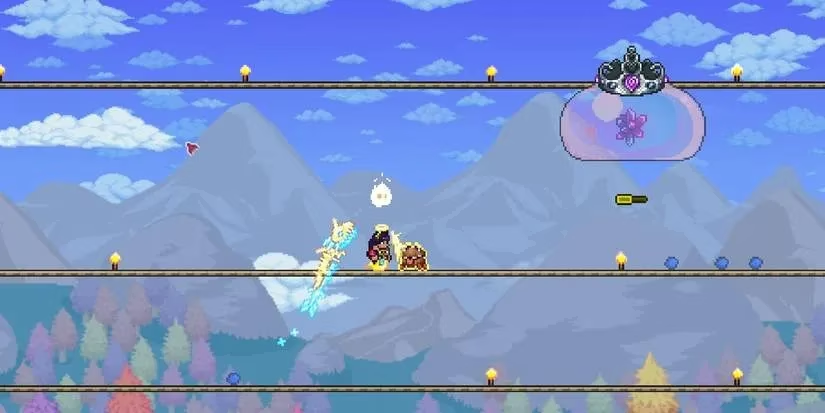
I still remember ignoring Terraria for years because I thought a 2D sandbox could never match the scale of a 3D map. Then I broke through a wall into an abandoned underground house, dug around a Corruption chasm, and reshaped a whole biome into a glowing base hub. The secret is terraforming. In Terraria, every block is part of the exploration system. Because the world is finite, my changes felt permanent and meaningful. I didn't just reveal the map—I edited it.
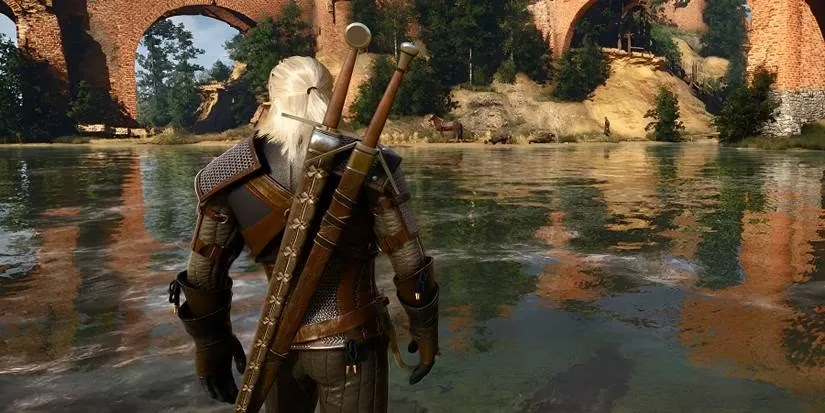
The Witcher 3: Wild Hunt taught me that a question mark is only as good as the reason behind it. When I rode through Velen, I rarely visited a location because a minimap nagged me. I went because a peasant whispered about a missing child, or because I needed to know why a tower on the horizon felt wrong. The map looks standard, but the motivation is not. Exploration became an extension of reading, listening, and caring about the world. I still recall finding a sunken ship and spending an hour reading the captain's last words instead of looting the chest first.
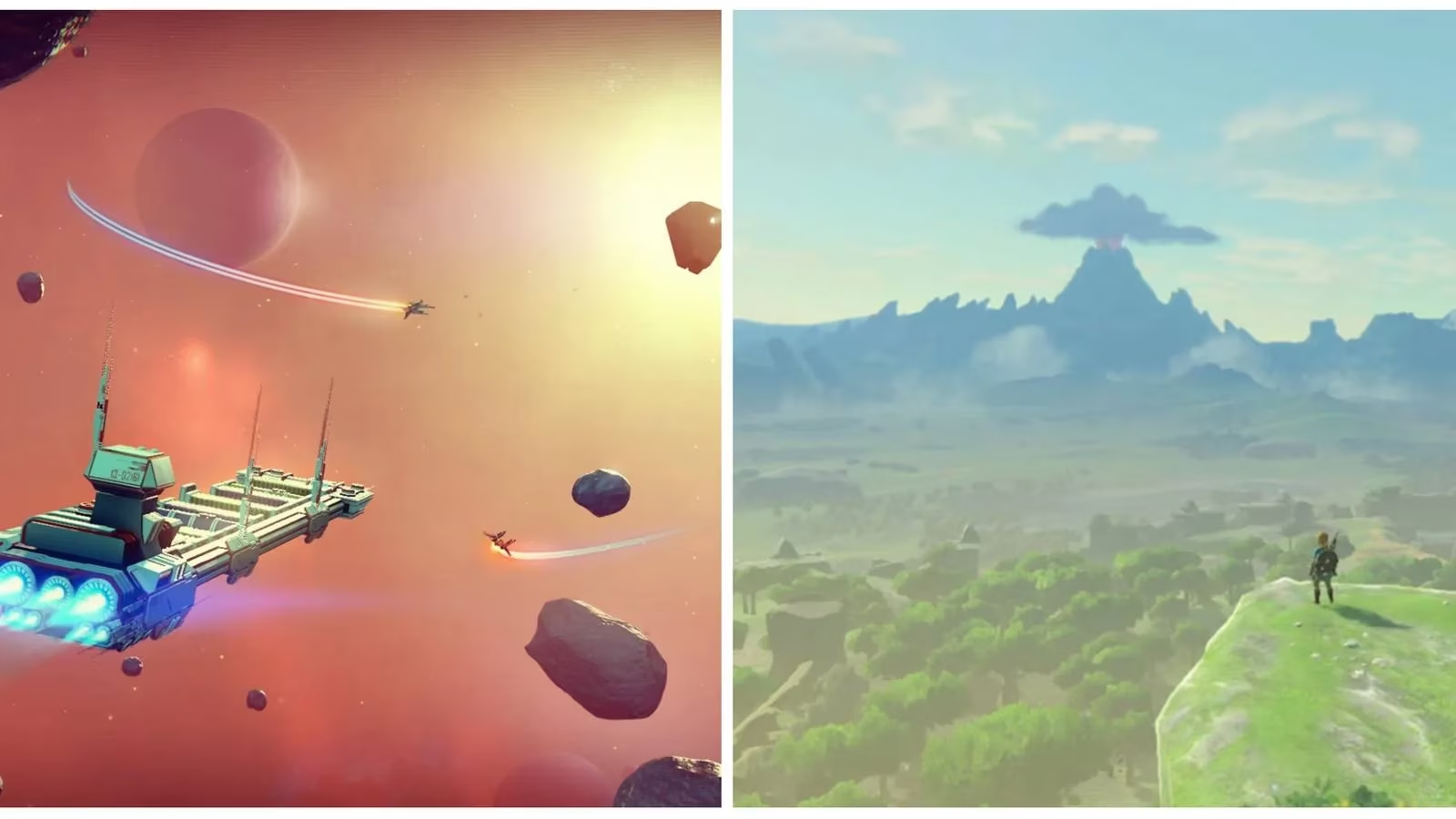
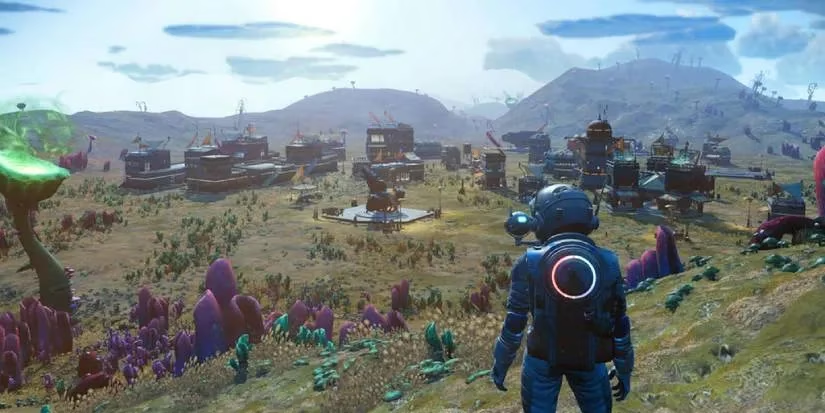
Then there is No Man's Sky. I won't pretend the 2016 launch didn't hurt, but by 2026 the procedural galaxy finally feels like the promise that was made so long ago. I landed on a toxic planet covered in floating mushroom jellyfish, named every creature I scanned, and built a glass dome base just to watch the storms. What makes exploration here special is integration: mining, building, scanning, and flying all feed back into the urge to see one more planet. The universe is so vast that even after hundreds of hours, I still don't know what weird biome awaits.
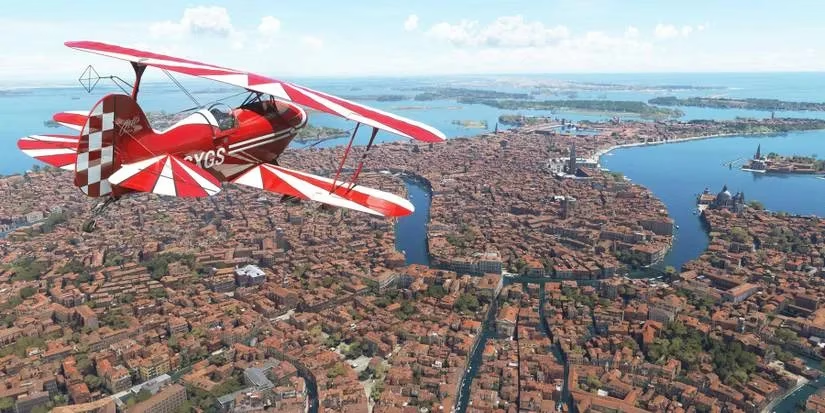
I expected Microsoft Flight Simulator to be a cockpit simulation, not an exploration game. But then I flew low over my childhood home in Italy, followed the Rhine at sunset, and suddenly understood. It pulls real-world data from Bing Maps, so the map is not a fantasy. It's Earth. In 2026, with new updates and a 2024 overhaul in my library, I still use it as a travel substitute—no other game lets me explore almost the entirety of the real world from my desk.
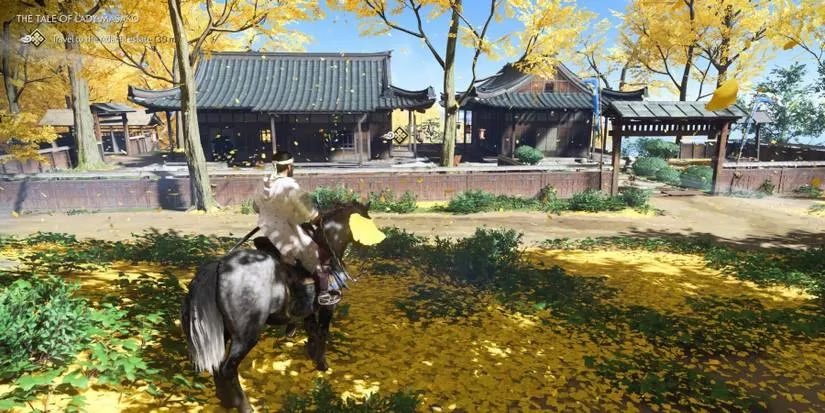
I wish more games borrowed Ghost of Tsushima's navigation. Instead of an arrow or a dotted line, wind gusts sweep across the grass and guide me toward my goal. The HUD almost disappears. Exploration feels natural, even organic, though I know it was painstakingly designed. I'd follow those golden winds through Tsushima any day, simply because they made me feel like Jin Sakai reading the island itself rather than a player obeying a UI icon.
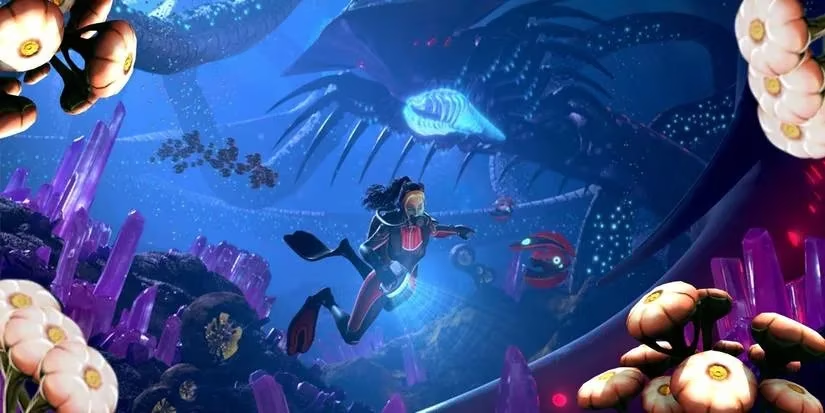
Subnautica: Below Zero made me afraid to explore, and that's a good thing. Exploration is not handed to me. I begin in safe shallows, but the deeper biomes demand knowledge: oxygen plants, thermal vents, leviathan patrol routes, and base power management. The story doesn't chase me—I have to swim into darkness and risk everything to find it. That makes every new depth feel earned.
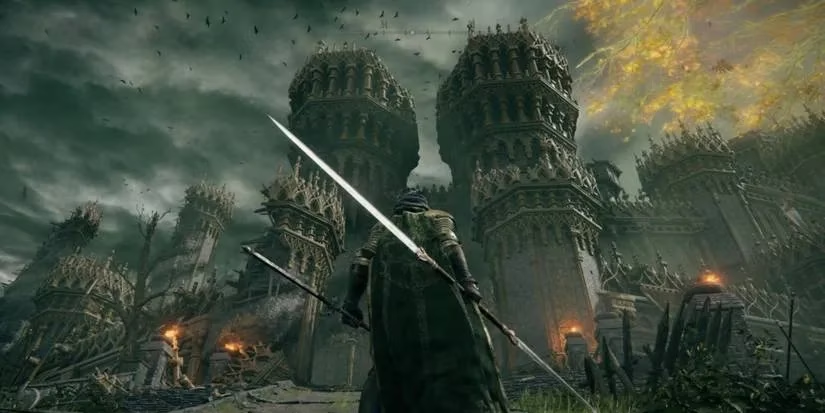
Elden Ring ruined me for other open-world maps. There are almost no quest markers, no icons screaming 'go here.' I just walked. I found a well, rode down, and arrived at Siofra River—a hidden night sky under the earth. I found the Grand Lift of Dectus and unlocked an entire plateau I didn't know existed. That feeling of surprise is unmatched. The Lands Between trusts me to get lost and find my own way.
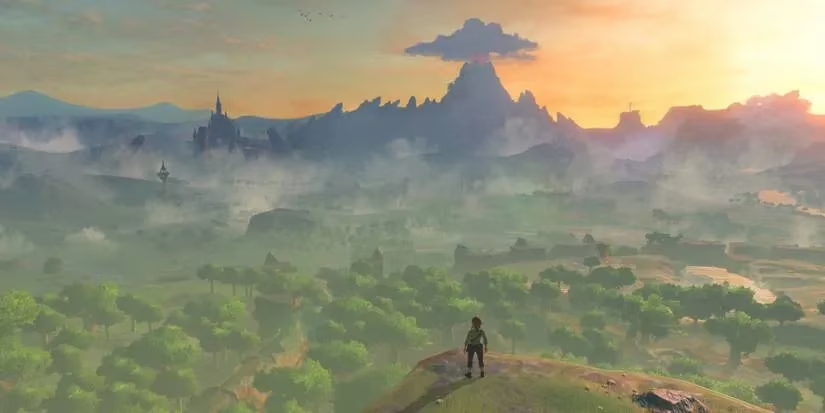
Finally, Breath of the Wild remains the gold standard. In 2026, I still compare every open world to Hyrule. The map doesn't crowd me with icons. I mark points of interest myself. The physics engine rewards experimentation, so a metal block during a thunderstorm becomes a door, a bridge, or a weapon. And because the main quest is so open-ended, I explored every corner of Hyrule before finally facing Ganon. I didn't do it because a checklist told me to. I did it because I was curious.
What these games taught me in 2026:
| Game | Exploration signature | Emotional payoff |
|---|---|---|
| Terraria | Terraforming a finite 2D world | Ownership of every block |
| The Witcher 3 | Lore-driven reason to visit places | Story discovery |
| No Man's Sky | Procedural planets tied to survival | Endless wanderlust |
| Microsoft Flight Simulator | Real-world Earth from the sky | Personal travel memories |
| Ghost of Tsushima | Wind-based navigation | Immersive natural flow |
| Subnautica: Below Zero | Knowledge-gated deep sea | Fear earned |
| Elden Ring | No hand-holding, hidden scale | Surprise and awe |
| Breath of the Wild | Self-marked map plus physics | Pure curiosity |
After all these years, the lesson is simple: exploration works best when the game trusts the player. Map markers and dotted lines create errand runners. Curiosity, danger, wind, terrain, and surprise create explorers. In 2026, I would rather be an explorer.
As detailed in PEGI, game content descriptors and age guidance can shape how (and why) players approach exploration-heavy worlds—especially when titles lean into fear, peril, or mature themes rather than checklist-driven objectives. Seen through the lens of your 2026 reflections—where curiosity is rewarded in Breath of the Wild and uncertainty fuels dives in Subnautica: Below Zero—a clear takeaway is that “trusting the player” also means clearly signaling what kinds of experiences a world contains so players can choose to get lost on their own terms.
Comments