
In the rolling fields of Tsushima Island, where wind-swept grass dances with the ghosts of fallen warriors, one thing never changes: the sheer audacity of getting stabbed, slashed, and set on fire without a convenient health potion in your back pocket. Ghost of Tsushima delivers a combat system so elegant it could make Akira Kurosawa weep tears of joy, but it also expects players to manage their own well-being like a true samurai. Heal by spending Resolve points? Sure. Run out of Resolve while enemies are still breathing fire down your neck? Suddenly the samurai fantasy veers into a panic-stricken scramble for survival. The game, released back in 2020 and still stunning players in 2026 with its Director’s Cut on PC, never really handed out free snacks to patch up wounds. That is, until one little charm entered the picture—the Charm of Okuninushi. For anyone tired of limping around the landscape with a sliver of health, praying the next random Mongol patrol doesn't sneeze in their direction, this charm is the ultimate lazy warrior’s best friend. Imagine a world where Jin Sakai actually catches his breath after a fight and his HP bar simply refills. No Resolve needed, no begging at the altar of dead enemies. Just pure, unadulterated, out-of-combat healing that turns every quiet moment into a spa retreat. Getting that charm, however, involves a pilgrimage that tests more than just patience—it demands platforming skills in a game that normally keeps your feet firmly on the ground.
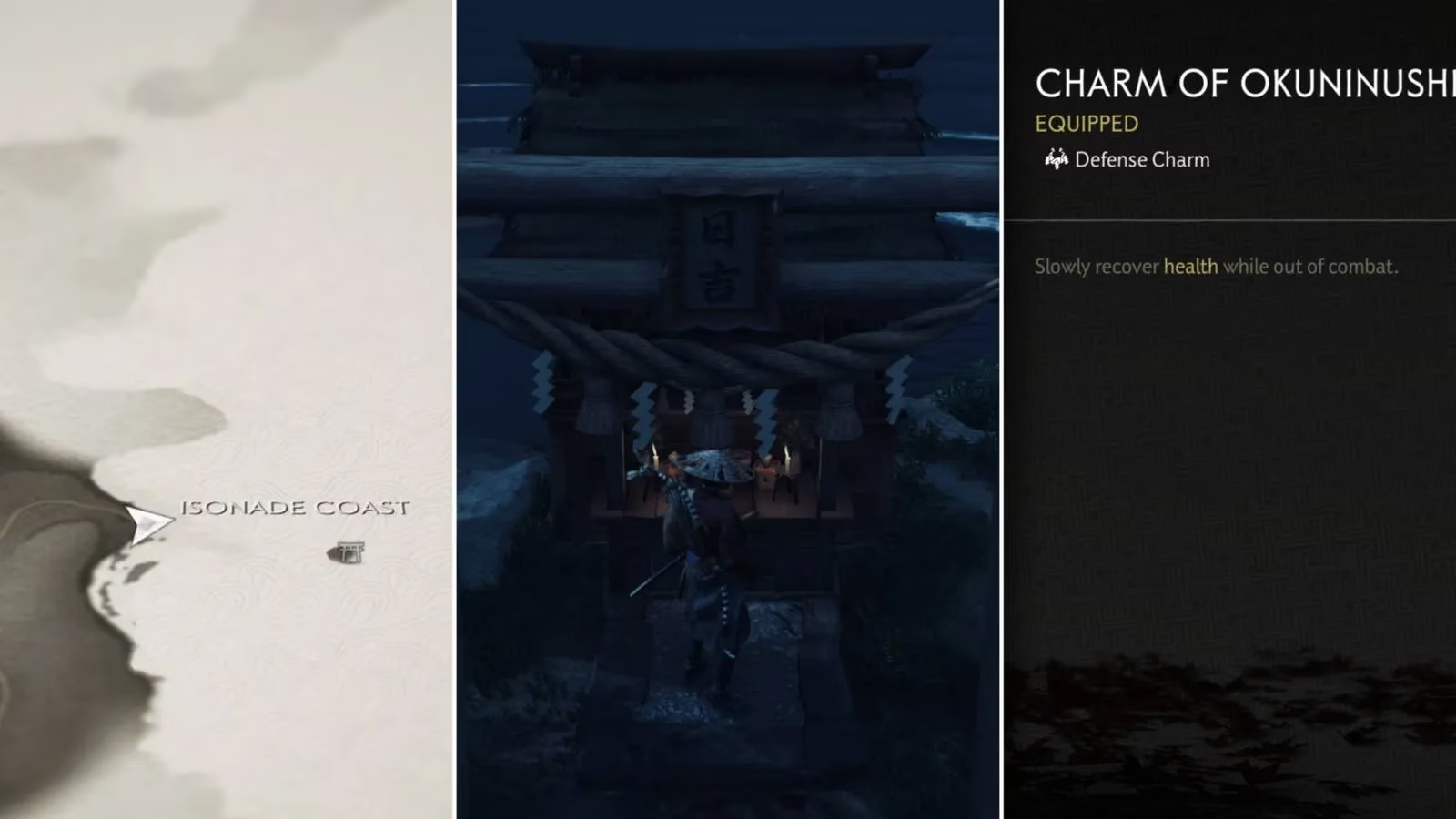
The Charm of Okuninushi isn't something you just trip over while chasing a golden bird. It waits at the Mending Rock Shrine, a desolate blink of a landmark perched on the northeastern coast of Izuhara, the first region of the game. Tsushima veterans know the drill: as soon as the island opens up and free roaming becomes possible, you can head there. No story gates, no honor-bound restrictions. From Castle Kaneda, hug the eastern coastline heading south, and soon enough a set of Torii gates will appear like a breadcrumb trail for the spiritually curious. The shrine itself sits on a sheer bluff jutting into the ocean, accessible only by what can charitably be called a clifftop obstacle course. Think of it as the developers asking, “You want passive healing? Prove you can climb and not plummet to a watery grave first.” The path is simple yet mischievous: follow the Torii gates from the main road, squeeze through a rocky gap, hop over a gap to some stone stairs, crawl under an overhang, then use a protruding tree branch to swing to handholds. From there, shimmy down to a lower area with rickety wooden bridges. These bridges are especially spiteful—sections crumble if you dawdle, so sprinting across them like a startled fox is the only way. More handholds snake around the cliff face until, at last, a final wooden bridge leads to the shrine. Reaching it triggers an odd sense of accomplishment, as if the game just said, “Very well, you have earned the right to be lazy.”
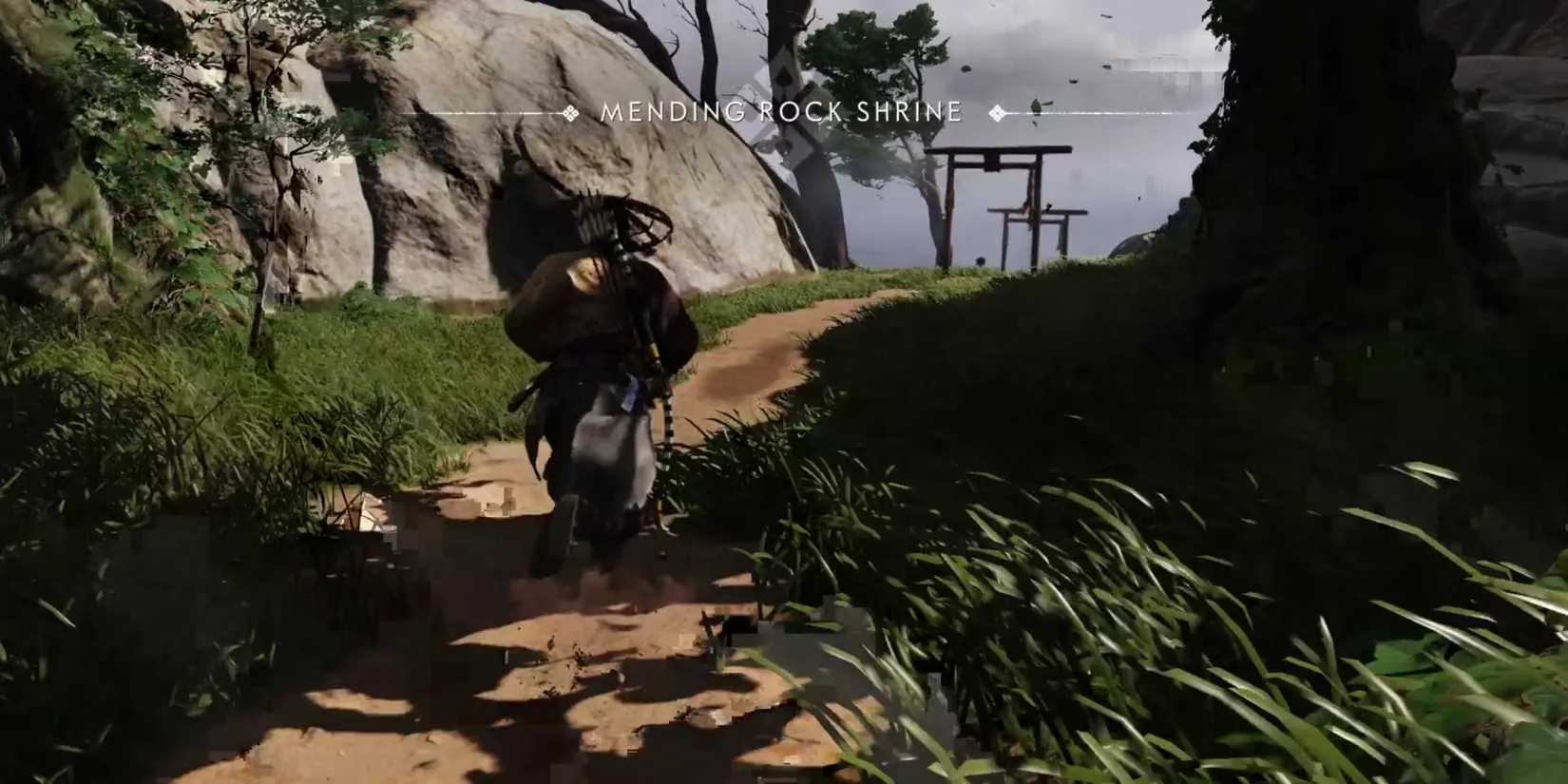
Navigating this obstacle course feels like a sudden genre shift into Tomb Raider lite, but with katanas and a distinct lack of dual pistols. After completing the shrine (which simply requires pressing the honor button), the Charm of Okuninushi drops into Jin’s inventory, and a wave of relief washes over any player who has ever had to ration Resolve like wartime rations. The charm’s description reads: “Slowly recover health while out of combat.” In practice, it’s far less “slow” than advertised. Once equipped, if Jin’s health is below 100% and he has left combat state, a brief delay of about 8 to 10 seconds kicks in, and then the healing begins. From roughly one-third HP, the charm can top him up to full in about 20 seconds. That’s practically a health potion in a game that otherwise treats healing like a precious resource. The catch, of course, is the delay. If Jin has been set on fire by an archer’s flaming arrow or is suffering from any damage-over-time effect, those 8 seconds can feel like an eternity. The flame will merrily eat through his remaining health before the charm even yawns awake. This creates memorable, darkly humorous moments: the battle ends, the battlefield falls silent, Jin takes a serene breath, then collapses right as the first green tick of healing would have appeared. So the charm isn’t a substitute for keeping an eye on health during a fight—it’s a post-battle luxury for those who survive by the skin of their teeth.
For anyone returning to Tsushima in 2026, whether revisiting the Director’s Cut or finally exploring the Iki Island expansion, the Charm of Okuninushi remains a staple in many loadouts right alongside the Charm of Inari or the Charm of Amaterasu. It pairs beautifully with a stealth-heavy playstyle where skirmishes end quickly, allowing Jin to slink away and recover before the next tense encounter. Even the most aggressive players benefit: smashing through a Mongol camp, then watching the HP bar gracefully refill as they compose a haiku, feels almost like cheating. The route to the shrine hasn’t changed over the years, but community knowledge has crystallized it into a mandatory early-game detour. Returning to the mainland is made simple: backtrack to the wooden bridge and use the “Descend Shrine” prompt, which instantly plops Jin back at the first Torii gate—no reverse platforming required. In a game that often demands brutal precision in combat, the Charm of Okuninushi offers a gentler rhythm. It acknowledges that even legendary samurai need a breather. So next time you see a half-dead Jin staggering toward a hot spring, remember: there’s a little charm named after a forgotten Japanese deity that will do the job without the soaking. And all it asks is that you first prove your climbing prowess on a wind-battered cliff. A fair trade, really, for the gift of eternal out-of-combat easiness.
Comments