
For years, a persistent claim has circulated through boardrooms and online forums: single-player games are dying, undesirable, or financially risky. That argument ignores the evidence. Since 2018, some of the best-selling, most profitable, and most culturally visible releases have been experiences built primarily for one player. They do not rely on annualized sports rosters, battle passes, or mandatory matchmaking. They sell millions, win awards, and keep conversations alive years after launch. By 2026, the idea that single-player games cannot compete looks less like a business insight and more like a myth.
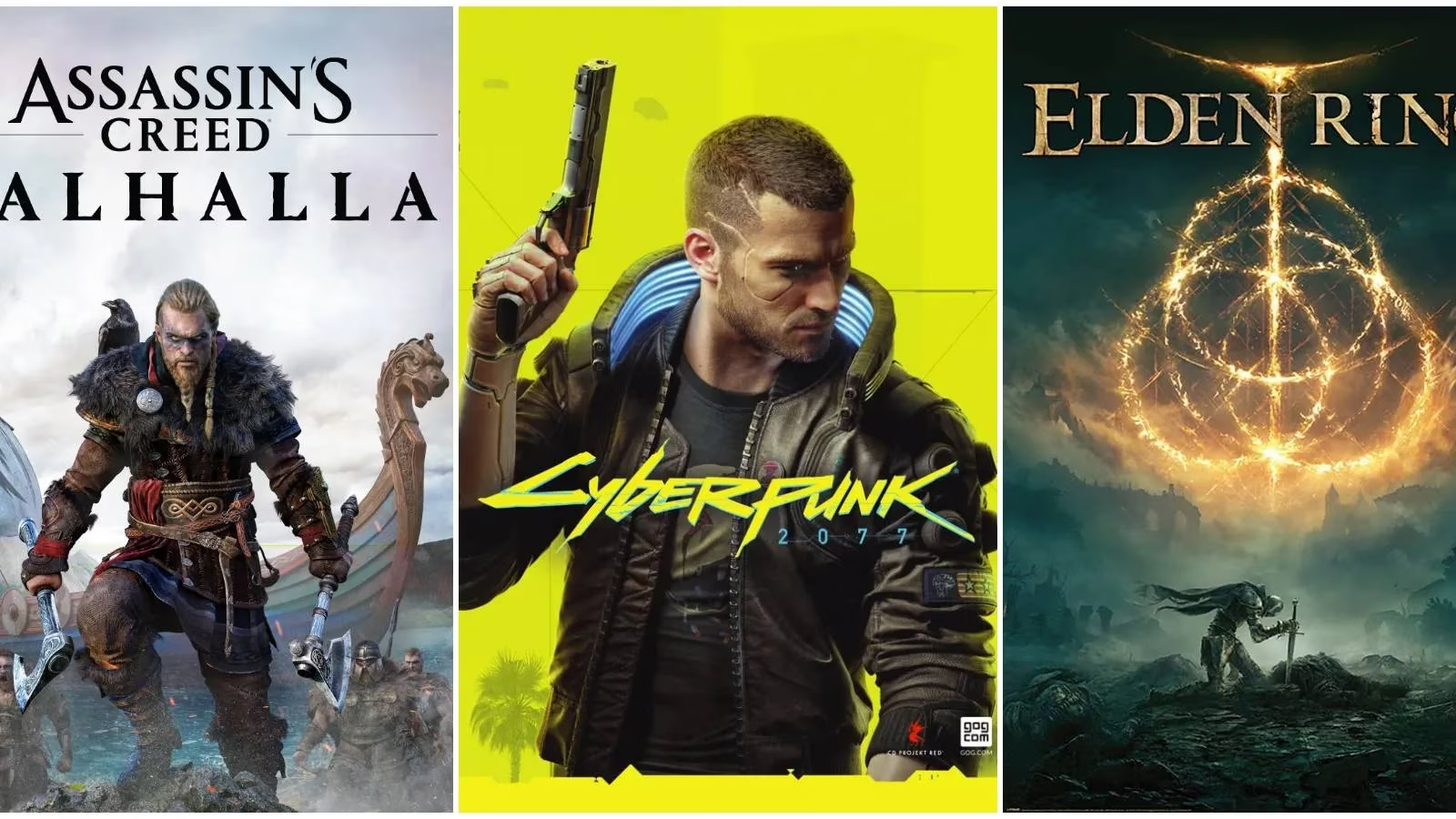
Elden Ring: A Soulsborne Titan 🏆
Elden Ring arrived in February 2022 and immediately became a commercial monster. Publisher Bandai Namco reported 13.4 million copies sold by March 2022, and the game kept climbing throughout the year. While it includes co-op and invasion mechanics, those systems are optional and often janky. The core experience remains a vast, solitary exploration of the Lands Between. By 2026, cumulative sales have surpassed 28 million, helped by the Shadow of the Erdtree expansion and steady word-of-mouth. FromSoftware proved that players are not tired of Soulsborne design; they simply want it executed with confidence.
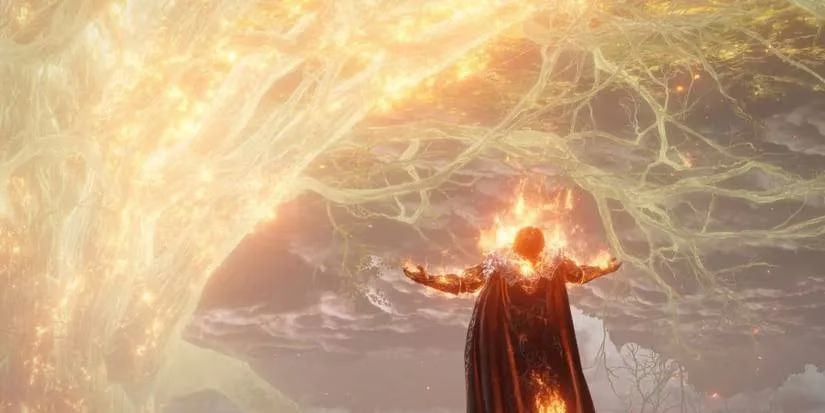
Assassin's Creed Valhalla: A Billion-Dollar Viking Saga 💰
Assassin's Creed Valhalla could have been a messy cocktail of hooded assassins, Norse warriors, and familiar RPG systems. Instead, it became Ubisoft's commercial high point. The game attracted nearly 2 million players during its first week, and by 2022 it had generated roughly $1 billion in revenue, making it Ubisoft's second most profitable title. The publisher has not disclosed exact unit sales, but the Viking setting clearly resonated. Even as the series moved toward Assassin's Creed Mirage and Assassin's Creed Shadows, Valhalla remained a benchmark for what a large single-player adventure can achieve.
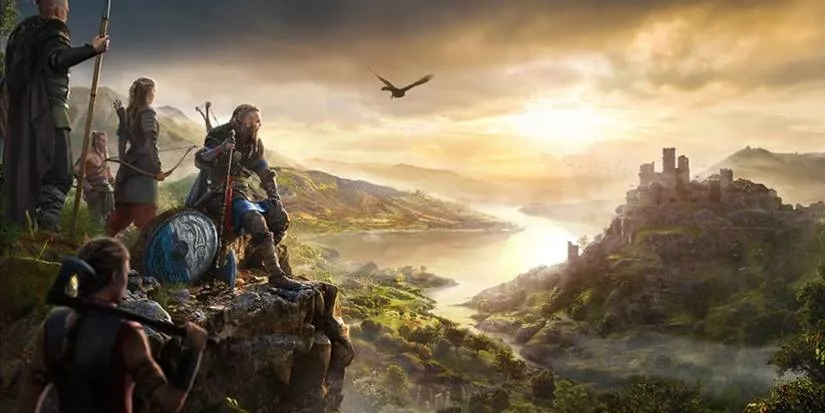
Cyberpunk 2077: From Disaster to Redemption 🔧
Cyberpunk 2077 had one of the most notorious launches in gaming history. Yet its commercial performance was never weak. It sold 13.7 million copies in 2020 and another 4.3 million in 2021. Only about 33,000 copies were refunded, even after Sony temporarily removed it from the PlayStation Store. Updates such as patch 1.5, the 2.0 overhaul, and the Phantom Liberty expansion transformed the game's reputation. By 2026, total sales exceed 30 million. This exclusively single-player RPG made history in both sales and recovery, showing that a strong post-launch commitment can rewrite a game's legacy.
 .jpg?q=50&fit=crop&w=825&dpr=1.5)
The Last of Us Part 2: PlayStation's Emotional Heavyweight 🎭
The Last of Us Part 2 could have sold less and still blamed its PlayStation exclusivity. Instead, Naughty Dog confirmed 10 million copies sold by spring 2022. The game is a linear, story-driven action-adventure, much like God of War (2018). Both titles proved that Sony's single-player exclusives can rival annualized sports franchises in cultural impact. The HBO adaptation in 2023 and the 2024 remaster further expanded the audience. By 2026, The Last of Us Part 2 remains a flashpoint for discussions about narrative ambition in games.
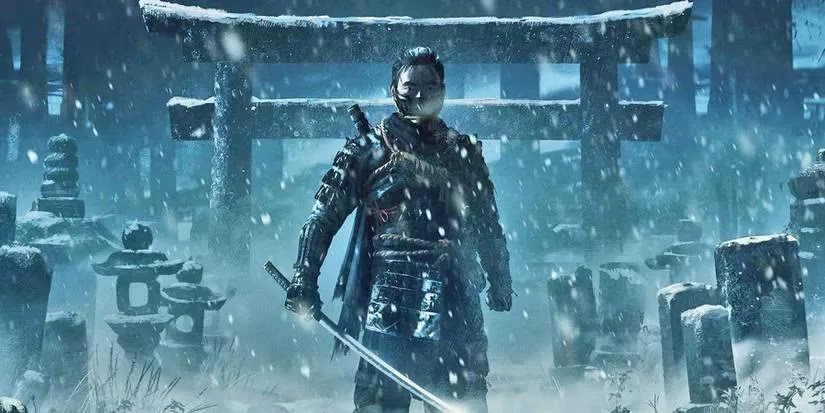
Ghost of Tsushima: Stylish Open-World Success ⚔️
Ghost of Tsushima launched in 2020 as another PlayStation exclusive and sold 8 million copies by 2022. Its sales were close to The Last of Us Part 2, partly due to the PS5 re-release and Director's Cut. The game includes a casual multiplayer mode called Legends, but its heart is a single-player samurai story. Its striking art direction, strong cast, and respectful portrayal of Tsushima's setting earned widespread praise. By 2026, lifetime sales are estimated to have passed 13 million, cementing it as one of Sony's most successful new properties.
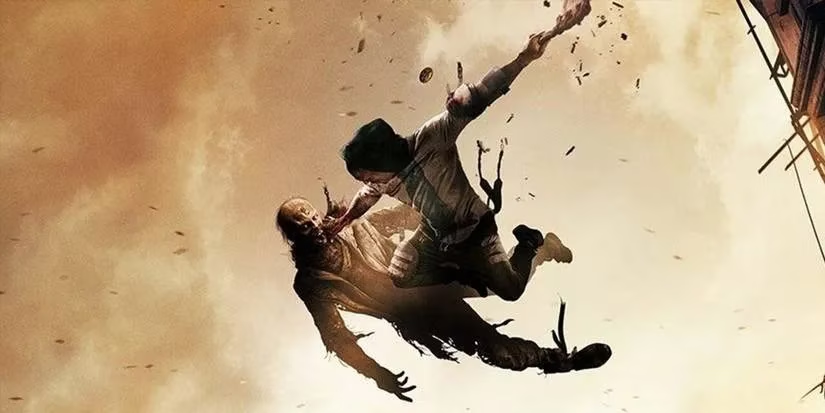
Dying Light 2: Stay Human: Parkour Horror With Legs 🧟
Dying Light 2: Stay Human sold more than 5 million copies within its first month after launching in February 2022. That figure may look modest next to Elden Ring, but it was only the beginning. Techland supported the original Dying Light for years, and it has done the same for the sequel. Co-op exists, but the campaign and exploration are clearly built for solo play. By 2026, the game has attracted over 10 million players across platforms, and continued updates have kept the post-apocalyptic city of Villedor alive.
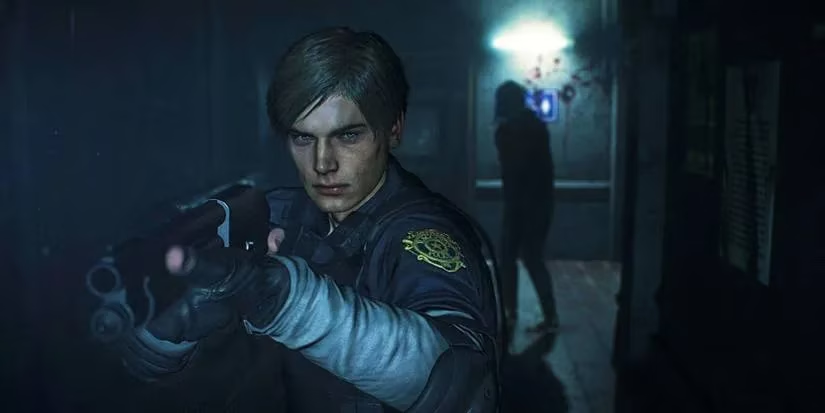
Resident Evil 2: A Remake That Outsold the Original 👻
Resident Evil 2 may have been released in 2019, but its sales continued to grow for years. By December 2021, Capcom reported 9.3 million copies sold; by 2022, that number reached 9.6 million. The remake eventually surpassed the original 1998 version financially. By 2026, lifetime sales are above 14 million, an impressive feat for a single-player horror game. Resident Evil Village also performed well, but Resident Evil 2 remains the franchise's gold standard for modern remakes.
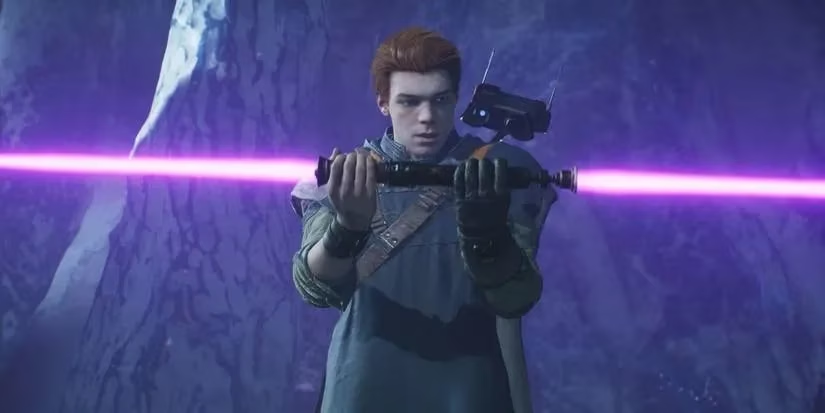
Star Wars Jedi: Fallen Order: EA's Accidental Victory 🌌
EA has sometimes questioned the value of single-player games, yet it published Star Wars Jedi: Fallen Order in 2019. The game sold 10 million copies by March 2020 and reached 20 million players by July 2021. Its sequel, Star Wars Jedi: Survivor, launched in 2023 and further expanded the series. The irony is difficult to miss: the same publisher that occasionally dismisses single-player experiences has benefited enormously from one. By 2026, the Jedi series stands as a reminder that narrative-driven adventures can thrive even inside large public companies.
The Numbers Speak for Themselves 📊
| Game | Publisher | Reported Sales or Revenue | 2026 Status |
|---|---|---|---|
| Elden Ring | Bandai Namco | 13.4 million by March 2022 | Over 28 million |
| Assassin's Creed Valhalla | Ubisoft | $1 billion revenue | Franchise peak |
| Cyberpunk 2077 | CD Projekt | 18 million+ by 2022 | Over 30 million |
| The Last of Us Part 2 | Sony | 10 million by spring 2022 | Over 10 million, boosted by show |
| Ghost of Tsushima | Sony | 8 million by 2022 | Over 13 million |
| Dying Light 2 | Techland | 5 million+ by 2022 | Over 10 million players |
| Resident Evil 2 | Capcom | 9.6 million+ by 2022 | Over 14 million |
| Star Wars Jedi: Fallen Order | EA | 10 million by 2020 | 20 million+ players |
These titles span fantasy, horror, sci-fi, historical fiction, and post-apocalyptic survival. They are not identical, and they do not all avoid multiplayer entirely. What they share is a commitment to a primarily single-player experience. That commitment has generated billions of dollars and millions of passionate fans. The claim that single-player games are dead is not just premature; it is contradicted by the industry's own sales charts. In 2026, the mode is alive, profitable, and still evolving.
The following analysis references OpenCritic, where aggregated review data consistently shows that major single-player releases such as Elden Ring, Resident Evil 2, and The Last of Us Part II earned strong critical reception alongside commercial success, reinforcing the blog's argument that focused solo experiences remain highly competitive in both prestige and market impact.
Comments