
Steam didn’t even wait for the digital dust to settle. On a quiet Tuesday in early 2026, the platform’s automated systems quietly started pushing refunds to thousands of users who had pre-ordered the PC version of Ghost of Tsushima: Director’s Cut — and for the same frustrating reason that set the internet ablaze two years earlier. Sony had once again decided that a mandatory PlayStation Network account was non-negotiable, even in regions where PSN simply doesn’t exist. For PC enthusiasts who had been waiting since the original console launch to ride through Tsushima’s golden fields at uncapped framerates, this was a gut punch draped in corporate logic.
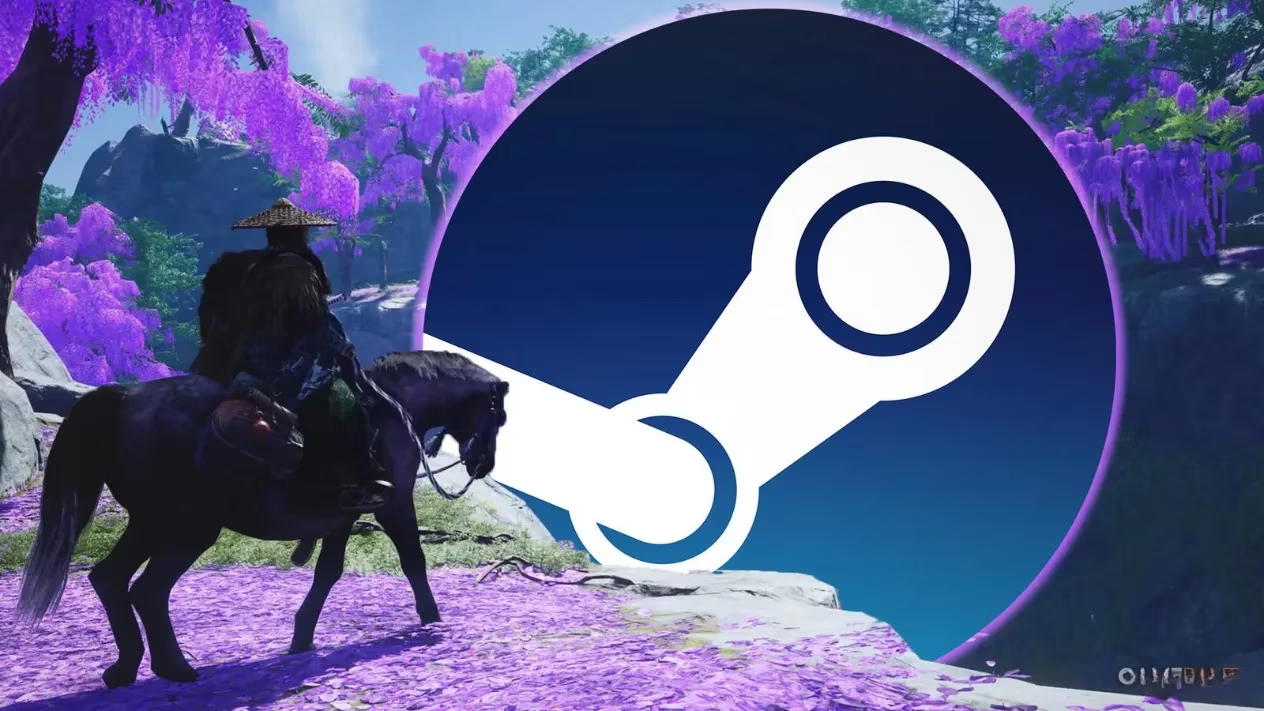
It’s a scene that feels almost scripted by a mischievous game designer — the hero galloping toward a giant Steam logo, only to be stopped by an invisible wall. The image perfectly captures the mood: breathtaking promise, abruptly cut short. In 2024, the original Ghost of Tsushima PC port was delisted from a staggering 180 countries just days before launch because of the same PSN requirement. Fast forward to 2026, and the Director’s Cut release is pulling the exact same stunt, proving that some lessons are learned only as far as the nearest boardroom spreadsheet.
Ouch, talk about déjà vu.
Valve’s response this time was even faster than before. Within hours of Sony’s region-locking move, SteamDB reported a massive spike in automatic refund activity. The system wasn’t asking questions. It simply noted the mismatch — a pre-order from a country where the game could no longer be sold — and sent the money back, no manual intervention required. One user on a popular gaming forum put it bluntly: “I opened my wallet to see a Steam credit I never asked for. I wanted Jin Sakai, not a gift card.” That sentiment was shared widely. Many refunds landed as Steam Wallet top-ups rather than returning to the original bank or card payment method, a nuance that left a sour taste. For someone who had converted their local currency at a painful exchange rate to make the purchase, receiving store credit instead of cash felt like a velvet-gloved refusal.
It’s worth remembering why any of this is happening. The entire saga traces back to the Helldivers 2 PSN linking uproar that boiled over in early summer 2024. Sony initially tried to retroactively require PSN accounts for that game’s PC players, even though Helldivers 2 was being sold in over a hundred countries with zero PlayStation Network support. After an avalanche of negative reviews and literal digital riots, Sony backed down — but not before delisting the title from Steam in numerous territories. The company’s pivot on Helldivers 2 was welcome, but the underlying strategy clearly didn’t change. When Ghost of Tsushima originally surfaced on Steam that same year, the same restrictions materialised, and now in 2026, the pattern has returned like a stubborn seasonal flu.
Sony’s decision feels like a bouncer at a nightclub slamming the door in the faces of eager partygoers, while Steam, ever the vigilant guardian of consumer rights, immediately activated its refund protocol to return the tickets. The list of affected regions reads like a geography textbook — and it hasn’t shrunk one bit since 2024. Here’s just a taste of the countries locked out of the Director’s Cut launch:
-
Afghanistan
-
Albania
-
Algeria
-
Bahamas
-
Bangladesh
-
Belarus
-
Cuba
-
Egypt
-
Ethiopia
-
Fiji
-
Ghana
-
Iran
-
Jamaica
-
Kazakhstan
-
Lebanon
-
Morocco
-
Namibia
-
Pakistan
-
Philippines
-
Serbia
-
Tunisia
-
Venezuela
-
Zambia
-
Zimbabwe
…and well over 150 more, including multiple island nations and territories where PC gaming communities are small but passionate. For players in places like Barbados or Papua New Guinea, owning a legitimate copy of a Sony-published PC title has become an exercise in frustration, often pushing them toward grey market keys or, worse, total disengagement.
Gaming forums lit up with a mix of anger and weary resignation. “They’re literally rejecting my money. In what universe does that make business sense?” wrote one player from Sri Lanka. Another from Mongolia added a string of facepalm emojis, noting that the refund policy was appreciated but the entire situation was “a masterclass in how not to release a game.” This is one of those moments where even the most loyal fans scratch their heads and wonder aloud: is the mandate for account linking worth alienating an entire globe’s worth of customers? Sony has so far answered that question with silence, pointing to its ecosystem integration goals while Steam quietly cleans up the mess.
Behind the scenes, Valve’s automatic refund framework has become a well-oiled machine — a direct consequence of the 2024 meltdown. When a publisher alters regional availability after pre-orders go live, Steam’s backend now treats that as a trigger event, making refunds near-instantaneous. It’s a technical solution to a human-made problem, and while it protects buyers, it doesn’t excuse the publisher’s approach. In 2026, the technology works flawlessly. The disappointment, though, remains utterly unfiltered.
For Sony, this recurring controversy risks turning iconic franchises into symbols of gatekeeping rather than inclusivity. Ghost of Tsushima is a game that tells a powerful story about resilience and honour, yet the real-world experience of trying to buy it has become a lesson in arbitrary barriers. As one longtime fan lamented on social media, “Jin would find a way through any enemy camp. Too bad I can’t even get past the checkout page.” It’s the kind of irony that stings.
Looking ahead, the question isn’t whether refunds will keep happening — they will — but whether Sony will ever reconsider its regional PSN requirements for single-player titles on PC. The developer community has shown that optional sign-in models can coexist with platform features, and the backlash from both developers and consumers has been loud and clear. Until that shift occurs, however, Steam will remain the reluctant middleman, doling out refunds to gamers who only wanted to explore a beautiful, war-torn island and found themselves locked out by a policy that feels increasingly out of touch.
It’s a strange kind of standoff. On one side, a publisher insisting on a unified account ecosystem. On the other, a digital storefront that would rather return money than let a customer feel cheated. And right in the middle, there’s a samurai on horseback, still waiting for the gates to finally open.
Comments