
In the world of stoic, noble heroes, Jin Sakai always felt like he was playing catch-up. The protagonist of 2020's Ghost of Tsushima had his moments, sure—a flicker of real personality in some of those quieter side quests away from the main plot's rigid path. But overall, he just didn't stand out like some of his PlayStation siblings. He wasn't a lost cause, though. Right up until the reveal of Ghost of Yotei and its brand-new hero, Atsu, many were hopeful the sequel would finally flesh out the samurai who felt a little... lacking. Funny thing is, if we were still living in the gaming landscape of a decade or so ago, we might have gotten the best of both worlds: a deeper Jin and a fresh start. But the times, as they say, have changed.
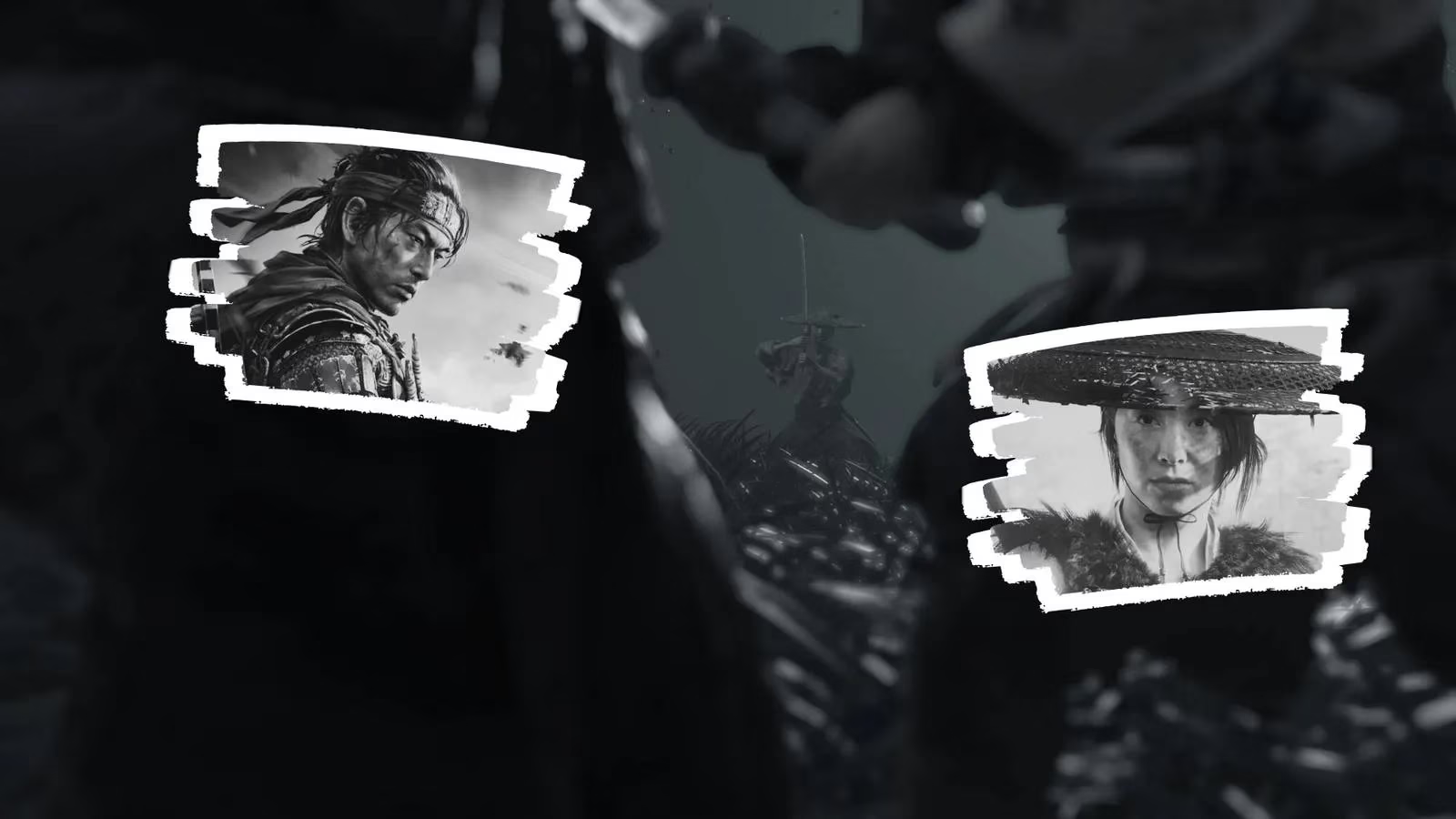
The Relentless Ticking of the Development Clock
Ghost of Yotei is targeting a 2025 release. That creates a five-year gap between the original Tsushima adventure and this new chapter. When you toss in the Legends multiplayer mode, the Director's Cut, and the PC port, it's a pretty standard pace for a blockbuster of this scale—mirroring the gaps between the Horizon games and the Spider-Man titles. But here's the kicker: if Sucker Punch had dreamed of a full Jin Sakai trilogy, letting his story unfold across three acts? Well, grab a calculator. At this pace, it would take them a whopping 15 years to complete. That's three whole console generations!
Let's put that in human terms. Imagine a game developer starting their career bright-eyed at 20. If they spent a third of their entire working life—from 20 to 65—on just Jin's story, that's... kinda wild, right? And that's assuming they could even stay at one studio for a decade and a half in this industry. The logistics alone are enough to make your head spin.
The Ghost That Got Away: A Tale of Two Eras
This slower pace really puts things in perspective. Take the beloved Ezio Auditore from Assassin's Creed. Gaming's favorite Renaissance man got the luxury of a full trilogy where his character could grow and evolve, and all three of those games landed one after another in just three years. If games were still made at that frantic clip, or even at half-speed, there's no doubt Jin would have gotten another shot. His story in Tsushima offered enough closure for the developers to move on, but a sequel in, say, 2021 or 2022? I would've been first in line. (Because, you know, you always add a little something extra to the glass, don't you?)
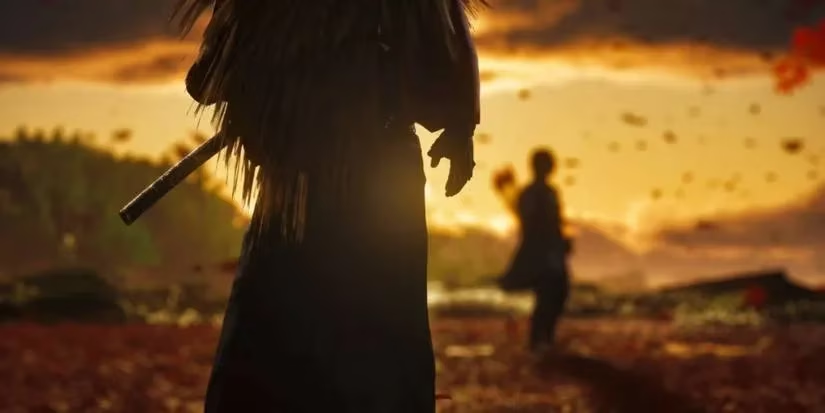
Instead, Sucker Punch looked at the calendar and the map and chose a fresh start. Making Ghost into a Japanese anthology series—hopping to new locations, eras, and characters—simply has more potential than retreading the path of a samurai who has already faced his darkest hour. It's a more interesting move, creatively speaking. But you can't help but wonder... what if?
The Ripple Effect: Why Sony's Heroes Keep Moving On
Jin's situation isn't unique. Look around the PlayStation ecosystem, and you'll see a pattern of legacy heroes passing the torch or stepping aside entirely. It's the way of things now.
| Franchise | Original Hero | Current Status / Successor | Reason for Shift |
|---|---|---|---|
| Spider-Man | Peter Parker | Miles Morales (being set up) | Planned evolution & new stories |
| God of War | Kratos | Atreus (being prepared) | Concluding Norse saga |
| The Last of Us | Joel | Ellie (and potentially beyond) | Narrative consequences |
| Ghost of... | Jin Sakai | Atsu (in Yotei) | Anthology potential & development time |
Insomniac nailed it with Peter Parker, but they've had an exit strategy for years. A Miles Morales game, then a team-up, smoothly sets Miles up to lead before the studio swings away to tackle Wolverine. God of War wrapped its Norse story in two entries and is clearly prepping Atreus for bigger things. And The Last of Us... well, we all know what happened to Joel, and Part III might not even focus on Ellie. The message is clear: in 2026, sticking with one protagonist for too long is a rare and massive commitment.
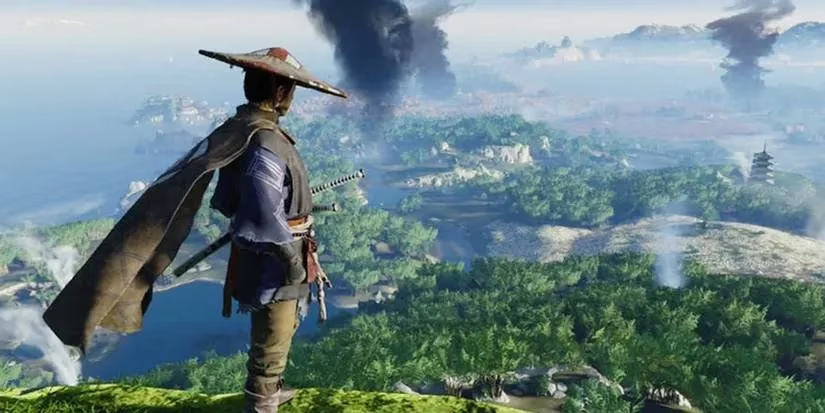
So, why did Jin get left behind after just one game when others got a second act? Maybe a general sense that he slightly weighed down the first game played a part. Or perhaps the pull of the 17th-century setting for Yotei was just too strong for the developers to ignore. It's also possible they felt Jin's story was told—his ending was pretty definitive, all things considered.
But if we're being honest, the biggest villain here wasn't a lack of ideas. It was time. When games take five times as long to make, the decision to stick with a known quantity or twist into something new becomes five times as weighty. Choosing to start fresh with Atsu wasn't a rejection of Jin; it was a pragmatic, and perhaps braver, choice for the long-term health of the franchise. Maybe Atsu will get a longer saga. Or maybe we'll meet another new ghost in 2030 or 2031. Seeing that '30' in the year feels a bit surreal, doesn't it? But that's modern gaming for you. You plan not for the next holiday season, but for the next console generation.
In the end, both the players who found Jin a bit bland and the developers who would have lived and breathed his world for another half-decade can now approach Ghost of Yotei with renewed energy. It's a clean slate, a new legend to forge. Jin Sakai's chapter is closed, but the book of Ghost is just beginning its next, thrilling volume. The silence after a story ends isn't empty; it's full of potential for the next tale.
Comments