
I have been playing games for decades, and I used to think that a difficult choice meant picking between a shotgun and a rifle. Then narrative-driven adventures matured, and by the time I reached the 2020s, I realized that some decisions can leave a scar far deeper than any boss fight. In 2026, with photorealistic storytelling and branching paths everywhere, I still measure every new moral dilemma against a handful of classics that broke my heart: Ghost of Tsushima, Mass Effect 2, Life is Strange, Far Cry 4, and The Walking Dead. These are the choices that made me pause, walk away from the screen, and wonder what kind of player I really am.
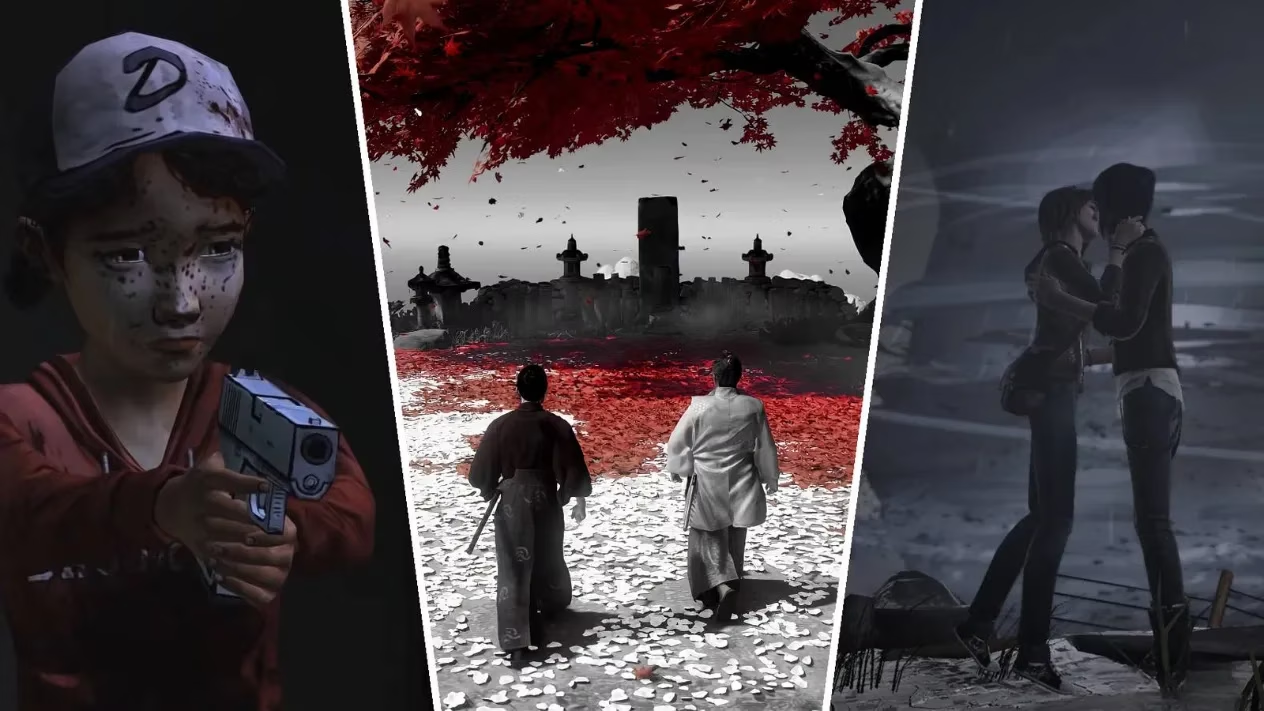
Ghost of Tsushima: The Duel With Lord Shimura
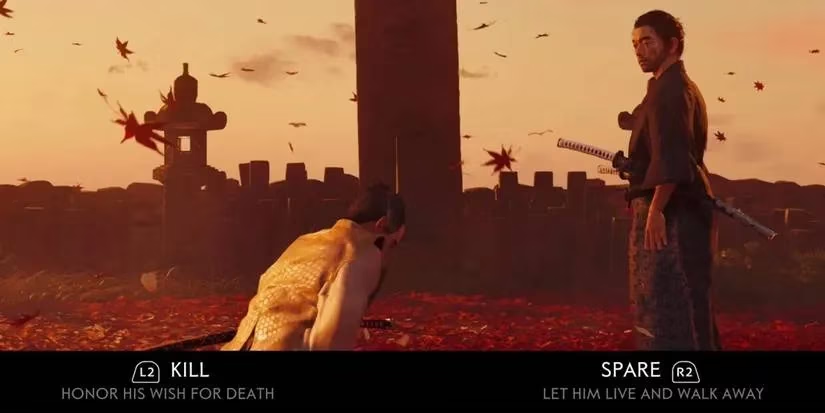
I still remember the snow, the red leaves, and the unbearable silence before the final duel in Ghost of Tsushima. The game had already forced Jin to sacrifice his honor, his freedom, and his relationship with Lord Shimura for the good of his people. But at the very end, the game handed me the controller and asked me to decide whether Jin should kill the man who was both a father figure and a symbol of the samurai code. Shimura blames himself for Jin breaking that code, and he wants Jin to kill him. That does not make it fair. I sat there for ten minutes, because killing him felt like mercy and sparing him felt like cruelty. In 2026, I still think about that choice. It is one of the rare moments where the player must carry the weight that the protagonist has been carrying all along.
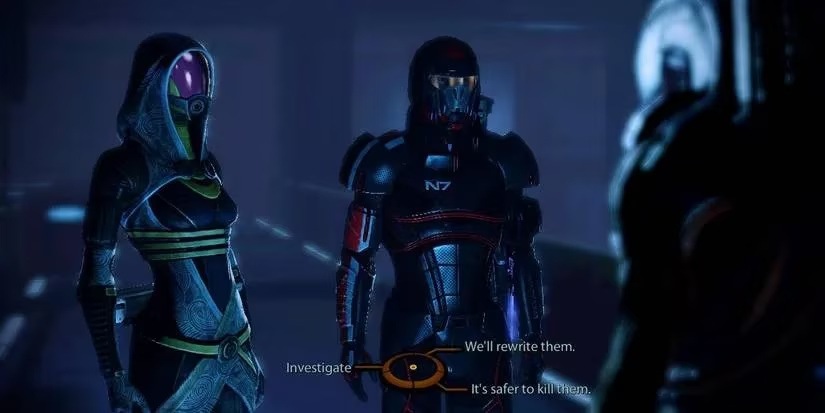
Mass Effect 2: Destroy or Rewrite the Geth Heretics
The Mass Effect series is famous for tough calls, but Legion's loyalty mission in Mass Effect 2 gave me one of the hardest. At the end, I had to decide whether to destroy the Geth heretics or rewrite their code so they no longer worship the Reapers. Rewriting them sounds humane because it neutralizes the threat without genocide. But it also strips away their free will. Many people are defined by their beliefs, and I wondered if a swift death would be kinder than forced conversion. Destroying them felt like admitting that some differences cannot be reconciled. Rewriting them felt like playing god. Even now, in 2026, I do not know which choice was truly right. That is what makes it great.
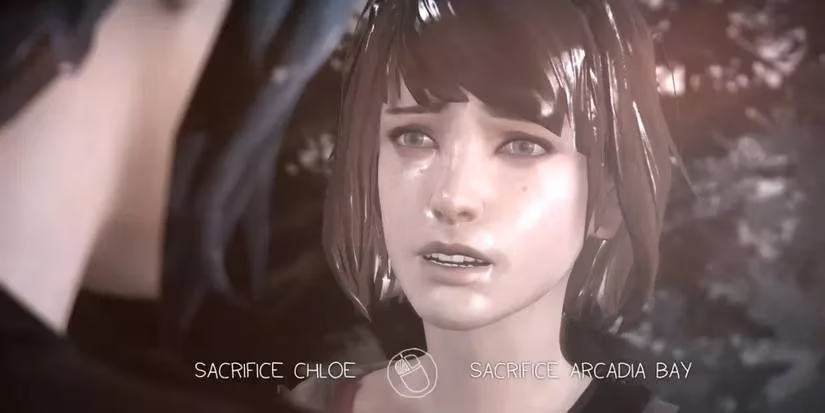
Life is Strange: Sacrifice Chloe or Arcadia Bay
Life is Strange asked me to choose between one person and an entire town, and it did so after I had spent hours getting to know both. Sacrificing Chloe to save Arcadia Bay is a little like the ending of Fable 2, where you choose between loved ones and a larger group of innocents. But this one hurt more because many people in Arcadia Bay are characters I had interacted with. I knew their names, their problems, and their small dreams. The game also asked me to decide who lives and who dies, not who should be brought back. I chose to save Chloe on my first playthrough, and I felt selfish. I chose the town on my second, and I felt like a murderer. There is no clean answer.
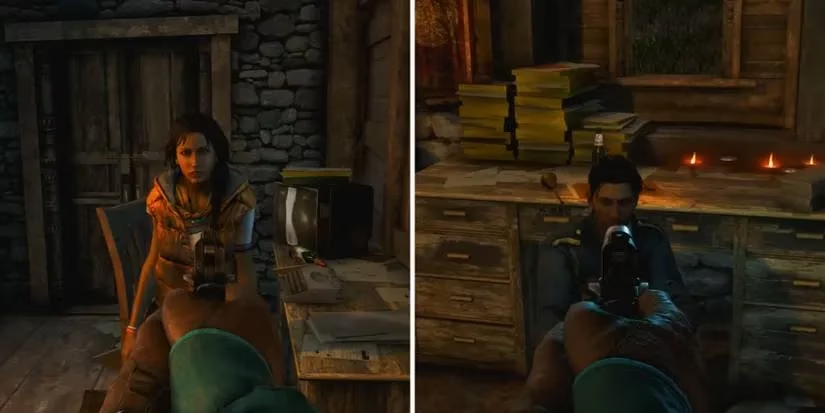
Far Cry 4: Sabal or Amita
Far Cry 4 introduced me to Pagan Min, a brutal dictator with a short fuse and no regard for human life. I wanted to bring him down. The problem was that the two rebel leaders I could help were arguably no better. Sabal wanted a theocracy where heretics are executed for treason. Amita dreamed of a totalitarian regime where children are conscripted to guard endless drug fields. Neither future sounded good for Kyrat. I remember staring at the choice screen and feeling like the game had tricked me into thinking there was a right side. In 2026, that kind of moral grayness is common in games, but Far Cry 4 did it with a smile and a grenade launcher. I picked Amita once and Sabal once, and both endings left a bad taste.
The Walking Dead: Kill Lee or Let Him Turn
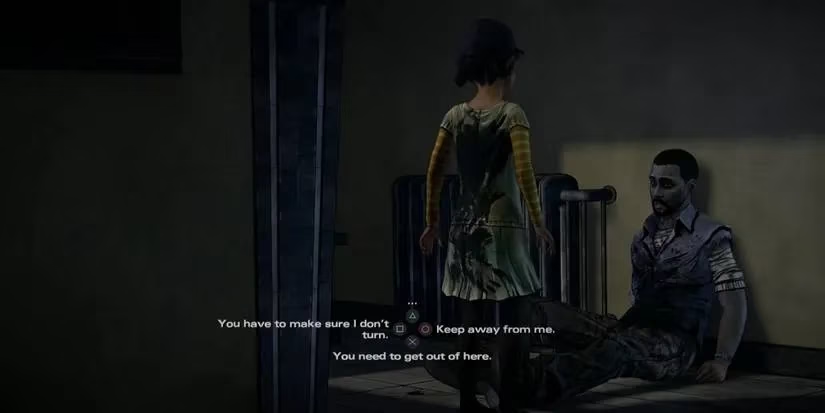
Choosing whether to kill one man may seem small compared to saving or destroying a whole species or town. But The Walking Dead made it devastating because the man was Lee, and he was going to die soon anyway. The real choice was whether eight-year-old Clementine would have to pull the trigger. Lee is a father figure and guardian to her throughout the Telltale game. Asking a child to put down the person who protected her is cruel in a way that few games dare to be. I chose to have Clementine kill Lee, and I cried. I chose to let him turn on another playthrough, and I felt worse. There is no heroic option, only a painful one.
Why These Choices Still Matter in 2026
| Game | The Choice | What It Costs |
|---|---|---|
| Ghost of Tsushima | Kill or spare Lord Shimura | Honor, family, and peace |
| Mass Effect 2 | Destroy or rewrite the Geth heretics | Free will and survival |
| Life is Strange | Save Chloe or Arcadia Bay | Love and a whole town |
| Far Cry 4 | Side with Sabal or Amita | Freedom and morality |
| The Walking Dead | Kill Lee or let him turn | A child's innocence |
In 2026, I can boot up these games on modern hardware and stream them in seconds. The graphics have aged, but the choices have not. If anything, they hit harder now because I have more life behind me and more understanding of what loss means. 😔
Great narrative games do not just ask what you want to do. They ask who you are willing to become. That is why I keep returning to these five moments. They are not puzzles to solve. They are mirrors. And even after all these years, I am still not sure I like what I see.
Comments