
I still remember the first time I rode through the pampas grass of Tsushima. It was 2020, and Ghost of Tsushima felt like the PlayStation 4's final, beautiful exhale. Jin Sakai's desperate defense of his home against the Mongol invasion wasn't just another open-world game to me. It was a poem written in steel, wind, and crimson leaves. Sucker Punch had already proven itself with inFamous, but this was a leap—a gorgeous, culturally rich leap that made me feel like I was walking through a Kurosawa film with a controller in my hands.
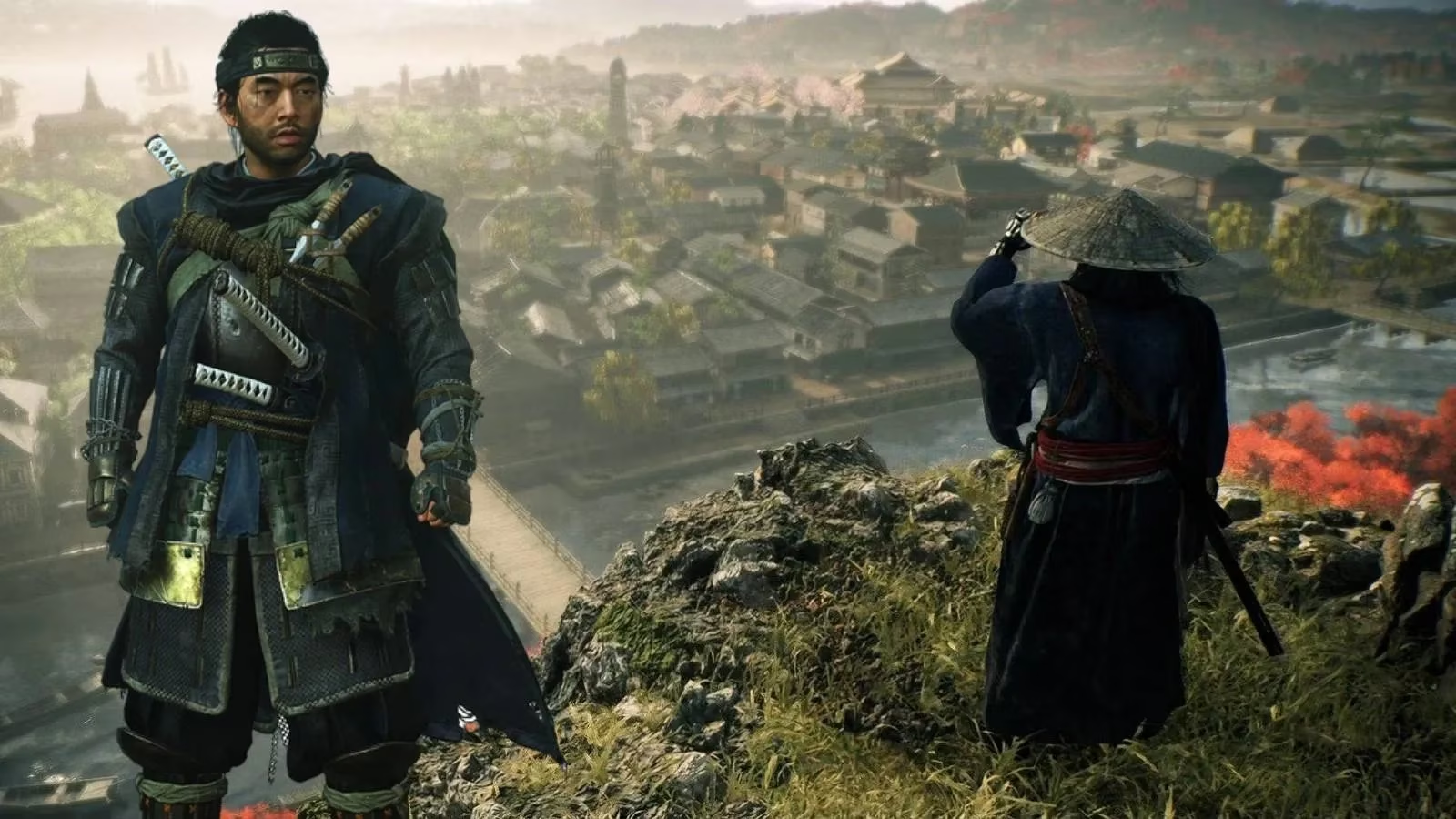
Then came September 2022. I watched the State of Play, and there it was: Rise of the Ronin. Team Ninja, the studio behind Nioh and Dead or Alive, was making a PS5 exclusive set in 1863, during the Bakumatsu. A ronin beholden to nobody. An open world. Choices that could shape the story around my own beliefs. Man, oh man, I was intrigued. The trailer looked instantly familiar, and that was both its blessing and its curse.
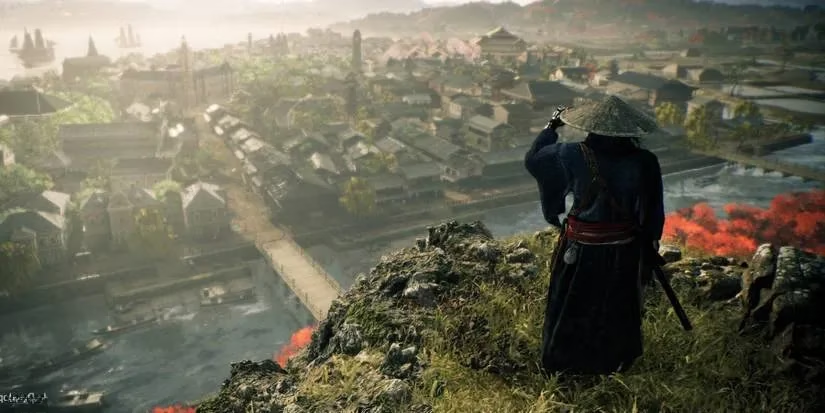
At the time, I couldn't help comparing it to Ghost of Tsushima. Both games promised a lone warrior carving their own path through a turbulent Japan. But Ghost of Tsushima told a rather rigid story with side quests aplenty, while Rise of the Ronin promised a degree of choice. Its Bakumatsu setting—the end of the nearly 300-year Edo period—offered more conflict than ever before. Centuries separated the two games, yet they shared atmospheric and cultural similarities. That could be a benefit... or a detriment. The samurai genre was getting crowded. Assassin's Creed Red, later known as Assassin's Creed Shadows, was on the horizon. Trek to Yomi had already shown how smaller-scale samurai stories could shine. Rise of the Ronin risked getting lost in the pack.
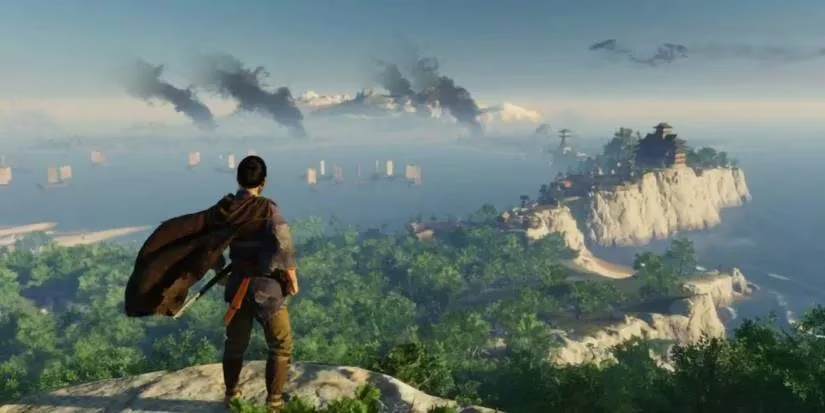
But here I am in 2026, looking back. Rise of the Ronin launched in March 2024, and I played it. It wasn't perfect—Team Ninja's combat was sharp, the open world a bit uneven, the story sometimes scattered. Yet it had soul. It let me be a blade without a master, and that freedom mattered. Ghost of Tsushima never got a direct sequel called Ghost of Tsushima 2. Instead, Sucker Punch gave us Ghost of Yotei in October 2025, a new protagonist, Atsu, and a new region, Ezo, around Mount Yotei. It wasn't Jin's continuation, but it was a spiritual successor that proved the studio still knew how to make feudal Japan feel alive.
So the fierce competition that people feared? It didn't destroy either game. Rise of the Ronin found its audience. Ghost of Yotei carried the torch. And I, a simple player, got to enjoy two different visions of samurai fantasy. Honestly? I was hooked all over again.
Here's a quick comparison I keep in my head:
| Element | Ghost of Tsushima / Yotei | Rise of the Ronin |
|---|---|---|
| Setting | 1274 Tsushima; 1603 Ezo | 1863 Bakumatsu |
| Protagonist | Jin Sakai; Atsu | Player-created ronin |
| Story style | Rigid, cinematic, side quests | Choice-driven, branching |
| Developer | Sucker Punch | Team Ninja |
| Vibe | Kurosawa homage, poetic | Historical chaos, combat-focused |
I mean, come on—how often do we get two big-budget games that treat Japanese history with such care? Not often enough. The old article I read back in 2022 worried that Rise of the Ronin would be in the firing line of a hopeful Ghost of Tsushima sequel. In a way, it was. But the industry didn't collapse. The samurai crown wasn't snatched; it was shared. Team Ninja didn't need to dethrone Sucker Punch. It just needed to offer something different.
And then... silence. That's what I love about these games. They leave room for reflection. The wind in the grass. The clash of steel. The choice to spare or strike. In 2026, I can replay Ghost of Tsushima, Ghost of Yotei, and Rise of the Ronin side by side, and each one teaches me something new about honor, violence, and freedom.
If Sucker Punch ever returns to Jin's story, I'll be there. If Team Ninja makes another ronin tale, I'll be there too. The samurai genre isn't a zero-sum game. It's a garden, and we're all just wandering through it, swords drawn, hearts open.
For now, I'll keep riding through those fields, listening to the wind. Some stories end. Others just wait for the next blade to draw.
Comments