
It’s 2026, and I still remember the buzz back in early 2024 when Team Ninja’s Rise of the Ronin was just around the corner. Like a lot of you, I had poured countless hours into Ghost of Tsushima, slicing through Mongols with that sublime katana combat while the wind guided me across Tsushima’s golden fields. When Ronin was first teased, I couldn’t help but think: Could this be the one to finally steal the crown? Fast-forward two years, and after playing both games to death, I’ve got some thoughts—messy, honest, and maybe a little surprising.
Let me set the scene. The samurai action genre has been absolutely spoiled for choice lately. We’ve had Sekiro’s relentless duels, Nioh’s demon-infused chaos, and even indie gems like Trek to Yomi. Yet Ghost of Tsushima held a special place, you know? It was that rare blockbuster that felt both epic and deeply personal. When Rise of the Ronin dropped on March 22, 2024, I was stoked—and a bit nervous. Would it make Ghost feel obsolete? Two years later, I realize I was asking the wrong question.
First off, the setting makes a colossal difference. Ronin throws you into mid-19th century Japan, a time of revolution and gunpowder, while Ghost is firmly rooted in the 13th century. The moment I got my hands on a revolver and a grappling hook in Ronin, I knew I wasn’t in Tsushima anymore. Remember that forest sword fight from the early trailers?
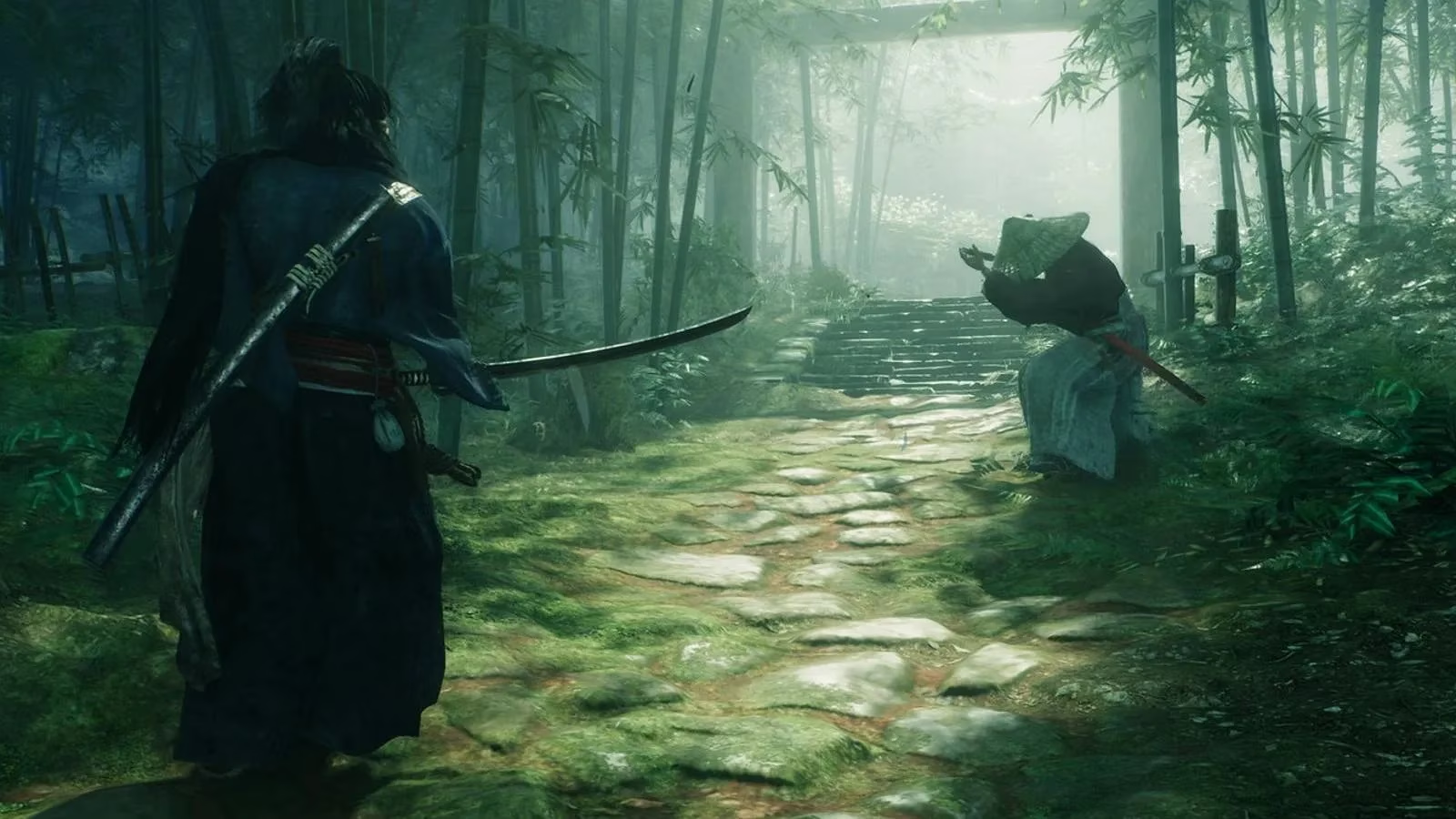
That blend of tradition and technology is Ronin’s whole identity. You can glide off rooftops, snipe enemies from afar, and then close in for a blistering katana flurry. Ghost of Tsushima, by comparison, feels almost meditative—no firearms, no flying gadgets, just you, your blade, and a handful of ghost weapons. And honestly? I kinda prefer that purity. But I’m not going to pretend Ronin’s versatility isn’t a rush.
Now, about the combat… Man, where do I even begin? Team Ninja’s DNA is all over Rise of the Ronin. If you’ve played Nioh or Wo Long, you’ll recognize that bone-crunching speed, the split-second parries, the way every fight feels like a dance on a knife’s edge. Ronin isn’t just a faster Ghost; it’s a different beast entirely. In Ghost, I’d often slow down, observe enemy patterns, and strike with deliberate precision. That methodical rhythm is baked into the game’s soul. But in Ronin? It’s pure adrenaline. You block, you dash, you swap stances on the fly, and if you blink, you’re dead. I gotta say, the first time I beat a boss by chaining together a grapple-hook kick into a mid-air rifle shot, I giggled like a kid. That said, some days I just want to get lost in Ghost’s quieter brutality, where a single well-timed stance change can end a duel in seconds.
Here’s where things get a little tricky, though. Ghost of Tsushima was a Sony first-party darling, and it showed. The cinematic storytelling, the jaw-dropping facial animations, the way a sunset would set an entire field ablaze with orange light—chef’s kiss. Rise of the Ronin didn’t chase that same level of polish. Team Ninja’s priorities have always been elsewhere: tight mechanics, deep RPG systems, and combat that demands your full attention. The voice acting and character models in Ronin are… fine, but they don’t leave my jaw on the floor the way Jin Sakai’s journey did. And because I’m a sucker for a good story, Ghost still lives in my head rent-free. The opening title sequence after the Komoda Beach massacre? Pure cinema. I didn’t find those moments in Ronin, and that’s okay, because Ronin gave me freedom—branching choices, faction dynamics, and a historical sandbox I could genuinely shape.
Oh, and the world design. Ghost of Tsushima’s island is a watercolor painting you can walk through. Every bamboo forest, every shrine, every hidden hot spring felt handcrafted. Team Ninja has never been known for breathtaking environments—they’re more about functional arenas—and Ronin follows that pattern. The cities and countryside are interesting from a historical perspective, but they rarely made me stop and just stare. After two years of playing both, I find myself returning to Tsushima when I need visual therapy, and to Ronin when I need my palms to sweat.
So, does Rise of the Ronin replace Ghost of Tsushima? Not even close. But it was never supposed to. They’re two sides of the same coin, you feel me? One is a poetic Hollywood epic; the other is a gritty, player-driven samurai simulator. And in 2026, while we’re still painfully waiting for any real news on Ghost of Tsushima 2, having both in my library feels like a blessing. Ronin scratched an itch I didn’t know I had, but Ghost remains the king of my heart—until Sucker Punch finally decides to hand Jin a grappling hook. Just kidding… maybe.
In the end, pitting them against each other is like comparing a katana to a bayonet. Both cut deep, but in completely different ways. And honestly? I wouldn’t have it any other way.
Comments