
I still remember the moment the early morning sun cut through the fog over Izuhara, casting long, swaying shadows across the pampas grass. Even now in 2026, booting up Ghost of Tsushima Director's Cut on my PC instantly transports me back to that first breathtaking encounter. Sucker Punch’s open-world masterpiece has aged like the finest sake, and the PC version, handled with surgical care by Nixxes, remains the definitive way to experience Jin Sakai’s transformation into the Ghost.
There’s something profoundly serene about riding through the island’s fields, watching leaves and embers dance on the wind. On a properly tuned rig, every particle seems to tell its own story. The game’s artistic direction is so strong that it never feels outdated, even against the flashier titles of 2025 and 2026. I’ve spent hundreds of hours in this world, and the PC enhancements simply let me see more of that beauty than ever before.
The sense of immersion is magnified by the ultrawide support Nixxes baked in. I’ve been using a 32:9 super-ultrawide monitor for the past year, and the game feels almost panoramic. During a duel in a windswept temple courtyard, I can see the bamboo groves bending to the gale on both edges of my vision without panning the camera. The 48:9 triple-monitor setup is overkill for most, but I tried it once at a friend’s gaming den, and the cinematic field of view made me feel like I was directing my own Kurosawa epic.
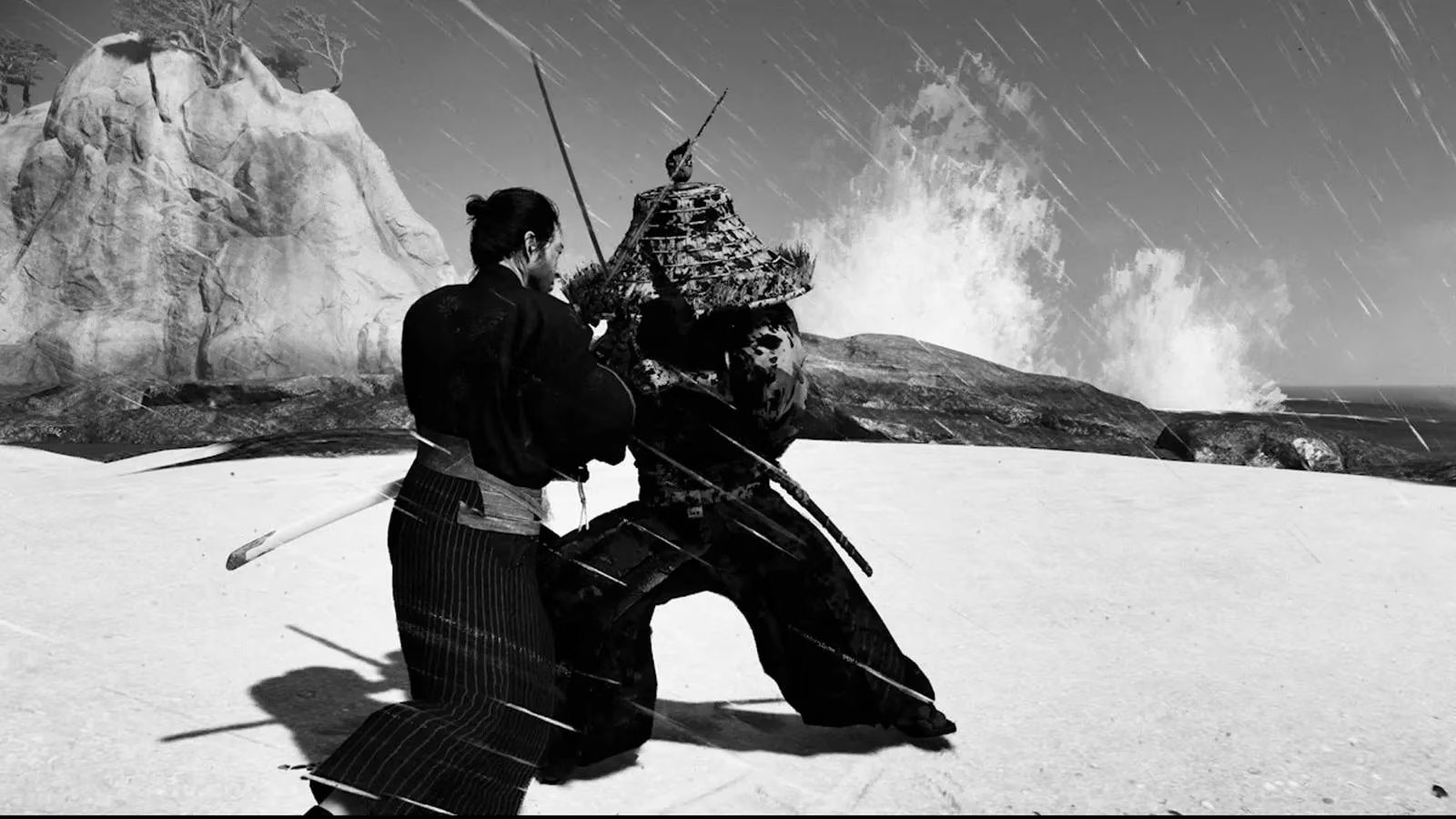
Speaking of which, the Kurosawa Mode remains a wonderful novelty that I revisit when I want to fall in love with classic cinema again. The grainy black-and-white filter, combined with the Japanese voice track, turns every swing of the katana into a frame from Yojimbo. It’s not a mode I play through entirely, but when I’m in the mood for a rainy standoff, nothing beats it. The PC’s variable frame rate also makes those perfectly timed parries feel more responsive than ever, even when the emulated film grain is tickling the screen.
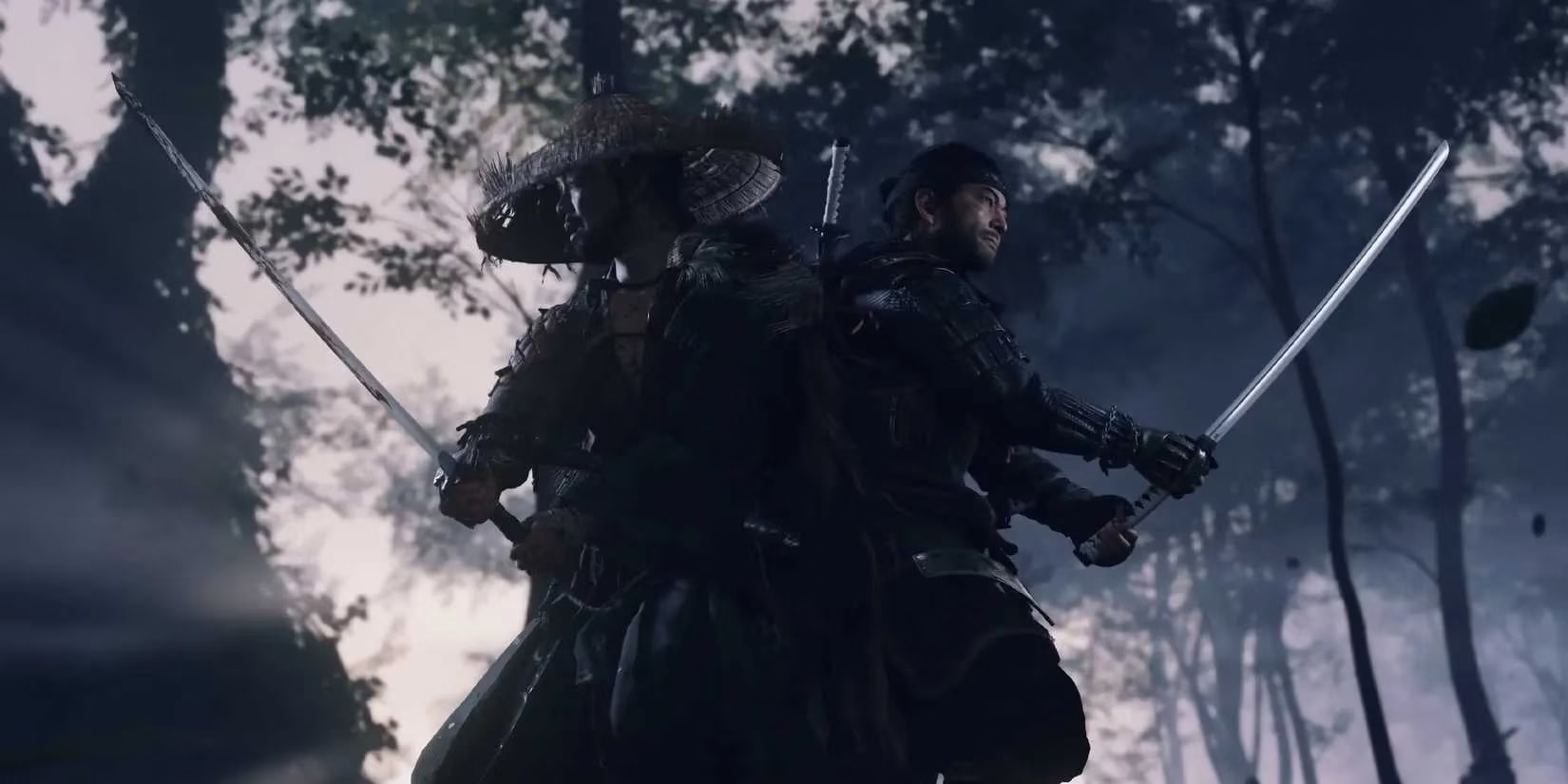
What truly keeps Ghost of Tsushima alive in 2026, though, is the momentum carried by the Legends multiplayer mode. I was initially skeptical about the co-op horde-style experience, but Nixxes’ implementation of cross-play between PC, PS4, and PS5 turned it into a persistent social glue. I regularly team up with friends who never left their PlayStation consoles, and in-game voice chat works seamlessly—no third-party apps required. Overcoming wave after wave of oni with a Hunter and Samurai duo still gets my heart racing.
The class system—Samurai, Ronin, Hunter, Assassin—offers enough variety that I’ve genuinely tried to master all of them. In survival mode, I love how a well-timed Ronin revive can flip the momentum of a losing fight, while the Hunter’s spirit bow can clear entire spawn points from a cliffside. The four-player raids introduced post-launch remain challenging even now, requiring real coordination. Earning Honor and Blessings to upgrade gear still feels rewarding, not like a chore, because each new tier noticeably shifts how my samurai handles in combat.
The trophy progression was a delightful surprise when I first launched the game on PC. I had already earned the Platinum on PS5 back in 2021, and the moment I logged into my PlayStation Network account through the new overlay, a cascade of achievements popped on my Steam profile. That overlay is entirely optional for single-player, but I recommend setting it up if you want to carry over your legacy or keep your friends list visible. It’s a clean, unobtrusive tool that unifies the experience across platforms without breaking immersion.
Performance tuning is where Nixxes truly flexes its muscles. Even with the older hardware I initially had in 2024—a modest GTX 1060—I could hold a steady 30 FPS at medium settings thanks to the well-implemented AMD FSR 3 upscaling. Today, with my RTX 4080, I’m running the game at 4K with NVIDIA DLSS 3 frame generation and nothing drops below 120 FPS. That liquid smoothness makes following the intense one-on-one duels against Ryuzo or Kojiro feel like a choreographed dance rather than a video game encounter.
The PC system requirements remain accessible. For those building a new rig in 2026, the recommended specs haven’t shifted dramatically. A Core i5 or Ryzen 5 paired with an RTX 2060 still gets you 60 FPS at 1440p, which is a testament to how well-optimized this port is. The full range from “Minimum” to “Ultra” presets means the game scales gracefully across a decade’s worth of hardware. I’ve even helped my nephew run it smoothly on a gaming laptop with Intel XeSS, and the visual fidelity held up impressively.
Beyond the technical bravado, the heart of Ghost of Tsushima lies in its quiet moments: composing a haiku at a cliff’s edge, following a golden bird to a hidden hot spring, or reflecting on Jin’s internal conflict between honor and survival. These vignettes are given a new layer of depth on PC because the unlocked frame rates and richer draw distances let the environment breathe. The Iki Island expansion, included in the Director's Cut, adds even more emotional weight, and the smoother performance makes those hallucinogenic sequences with the Eagle feel disorientingly vivid.
Having played through the entire campaign three times now since the PC launch in May 2024, I can confidently say this port wasn’t just a cash grab—it was a love letter to a wider audience. The combination of cross-play, the optional PlayStation overlay, extensive upscaling support, and ultrawide optimization makes it a standout even in a 2026 library filled with remasters and remakes. If you’ve never walked the path of the Ghost, the PC Director’s Cut is still the sharpest edge Jin Sakai has ever wielded. 🗡️🌿
Comments