
In the year 2026, Ghost of Tsushima remains a defining achievement in interactive storytelling, a title that captivated audiences upon its unexpected release during the global pandemic and continues to offer a deeply resonant experience. Its legacy is only amplified with the recent launch of its successor, Ghost of Yotei. While the game grants players remarkable freedom within its beautiful, war-torn rendition of Tsushima Island, there are foundational, unwritten principles that, when followed, unlock the full depth of Jin Sakai's transformative journey. Ignoring these tenets can lead to a less immersive and thematically hollow experience.
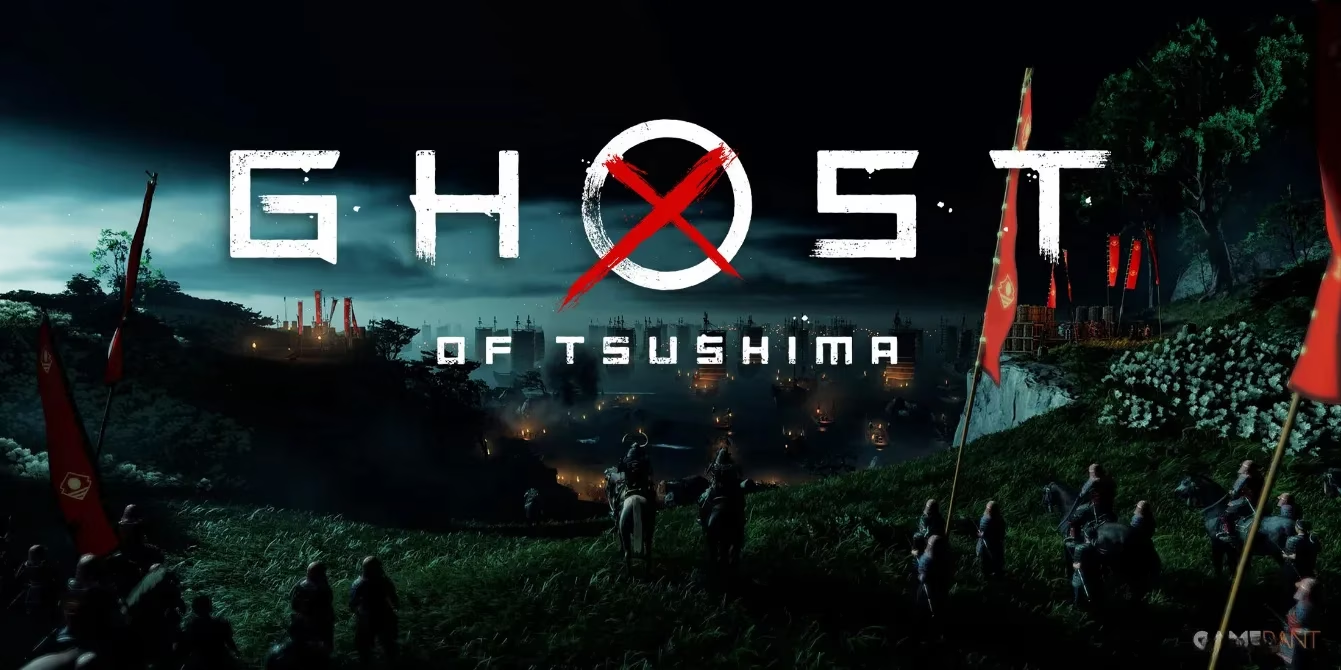
One of the most significant missteps a player can make is treating the stealth mechanics as merely optional. This is not simply a gameplay choice; it is the very heart of the narrative's central conflict. Jin Sakai is a samurai, trained in a code of honor that demands open, face-to-face combat. The brutal Mongol invasion, however, forces him to make an impossible choice: uphold tradition and likely witness the annihilation of his people, or adapt and become the dishonorable 'Ghost' who strikes from the shadows. To abandon stealth entirely is to sideline this profound internal and external struggle. The tension between Jin's samurai upbringing and his pragmatic new identity, especially in his strained relationship with his uncle Lord Shimura, is the story's core. By engaging with stealth, players don't just clear enemy camps; they actively participate in Jin's moral descent and his ultimate redefinition of what it means to protect his home.
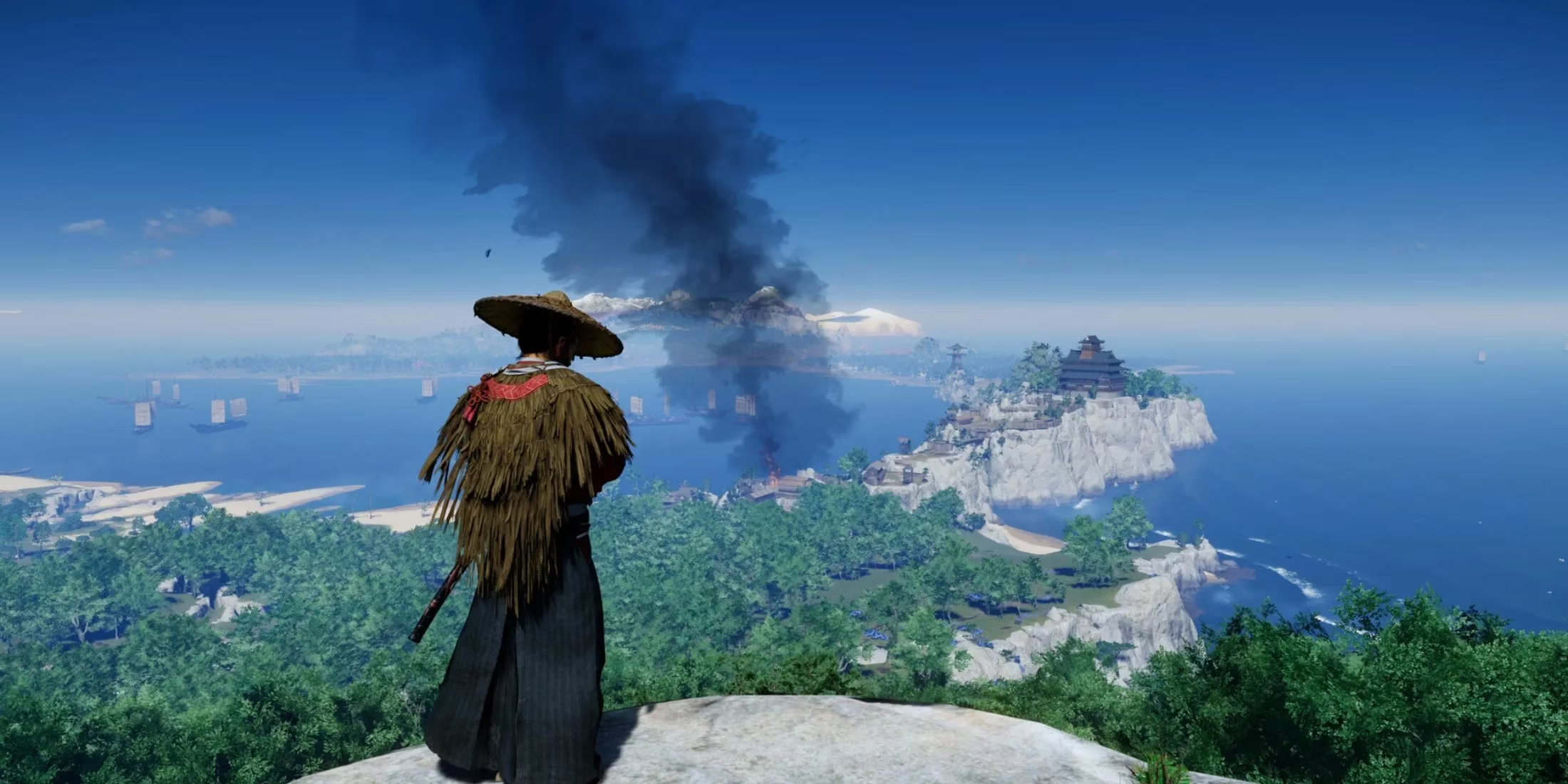
Conversely, the game's world offers a masterclass in environmental guidance, and a cardinal sin is to overlook it by over-relying on the map screen. The Guiding Wind is more than a convenient navigation tool; it is an integral part of the game's atmospheric immersion. Instead of a cluttering mini-map or compass, players are guided by the natural sweep of the wind and the flight of birds, pulling them deeper into the world's serene beauty and haunting landscapes. Constantly opening the map or using fast travel at every opportunity severs this connection. It transforms the journey from a contemplative exploration of a living world into a series of menu-driven checkpoints. The Guiding Wind encourages players to look up, to observe, and to discover Tsushima's secrets organically, making every trek an integral part of the experience.
While stealth is essential, another pitfall is becoming overly reliant on a single playstyle. Ghost of Tsushima offers a versatile combat system for a reason. The game's design encourages a dynamic approach:
-
The Samurai's Honor: Engaging enemies head-on with katana duels is not only valid but often thrilling. Mastering parries, dodges, and standoffs embodies the way of the warrior Jin was raised to be.
-
The Ghost's Cunning: Utilizing smoke bombs, kunai, and fear-inducing tactics to break enemy morale from the shadows represents Jin's necessary evolution.
-
The Hunter's Precision: Jin is also a master archer. Using the longbow or half-bow to eliminate key targets—like archers on watchtowers or shield-bearing brutes—from a distance is a strategic and effective method to control engagements.
The most rewarding gameplay emerges from fluidly blending these styles. A player might begin a Mongol camp assault by thinning the ranks with arrows from a ridge, then descend for an honorable standoff with the remaining guards, only to vanish into a smoke cloud for a final, decisive assassination if overwhelmed. This adaptive approach mirrors Jin's own hybrid identity and is what the game's mechanics are designed to support.
Ultimately, Ghost of Tsushima's enduring appeal lies in how seamlessly its gameplay mechanics are woven into its narrative and thematic fabric. The choices the game presents are rarely just about efficiency; they are about role-playing and embodying a character in crisis. The table below summarizes these unwritten rules and their impact on the experience:
| Cardinal Sin | Why It's a Problem | The Intended Experience |
|---|---|---|
| Ignoring Stealth | Severs the connection to Jin's central character arc and moral conflict. | Engage with the tension between honor and necessity that defines the story. |
| Overusing Map/Fast Travel | Breaks immersion and disconnects the player from the beautifully crafted world. | Allow the Guiding Wind and environment to lead you, making exploration part of the journey. |
| Relying on One Playstyle | Makes combat repetitive and ignores the versatile toolset Jin acquires. | Adapt fluidly between samurai, ghost, and archer tactics based on the scenario. |
Players who recognize and respect these design philosophies are the ones who will fully appreciate everything Ghost of Tsushima has to offer. They will feel the weight of Jin's choices, the beauty and tragedy of Tsushima, and the satisfaction of a combat system that rewards thoughtful engagement. As the community looks back from 2026, with Ghost of Yotei now expanding the saga, these principles stand as a testament to why the original game remains a timeless classic—a perfect harmony of style, substance, and player agency in an open world. 🗾⚔️
Comments